
REVIEW – One of Control’s greatest tricks has always been its ability to make completely ordinary objects feel as though the badly assembled underside of reality is hiding behind them. A refrigerator that becomes lethal if nobody watches it, a telephone almost nobody can use safely, or a carousel horse moving as though somebody attached a rocket to it. When Control Resonant was revealed as a game that would leave the relatively contained spaces of the Oldest House and open up a sizable chunk of Manhattan, I worried Remedy might trade its supernatural focus for the usual open-world checklist. Thankfully, it has not replaced the weirdness with an open world; it has simply given the weirdness more room. The result can be repetitive, and its map occasionally seems personally offended by the idea of helping you navigate, but whenever Remedy cuts loose, Control Resonant is every bit as spectacular, bizarre, and playfully unpredictable as I hoped.
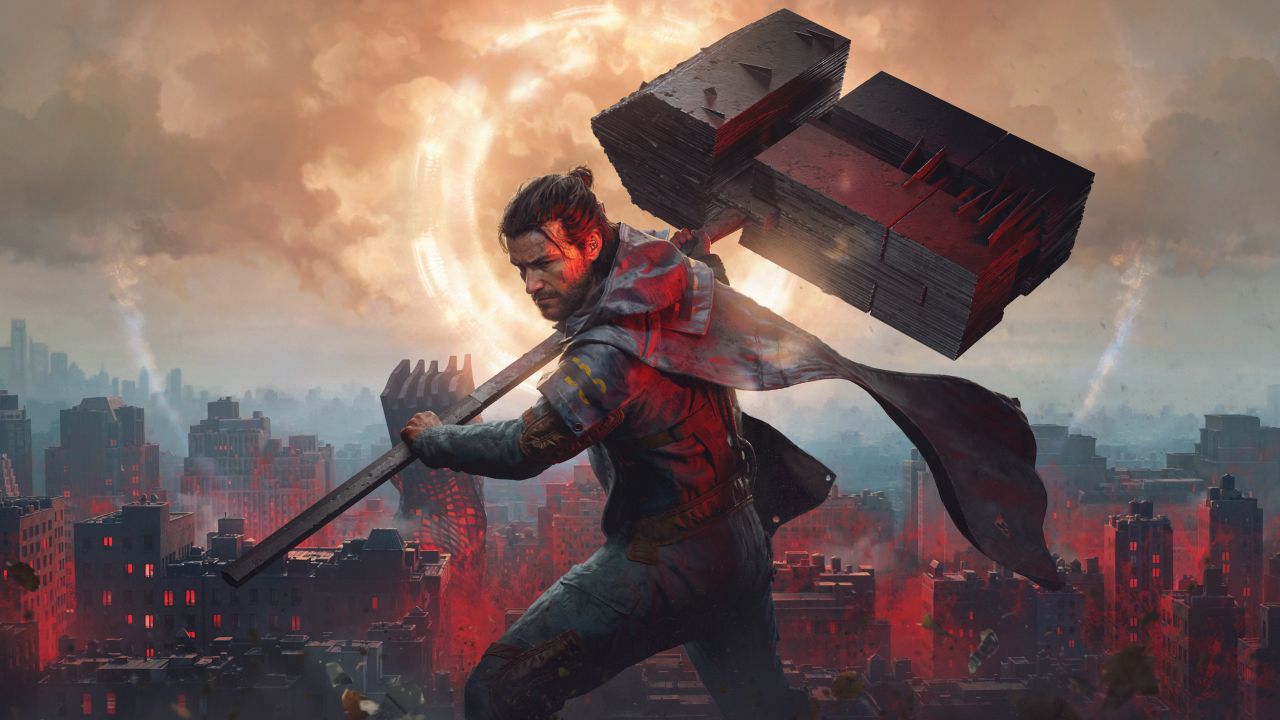
This time we play as Dylan Faden rather than Jesse. Seven years have passed since Jesse’s previously Hiss-controlled brother was cleansed of the corruption and fell into a coma, and his awakening is not exactly followed by a peaceful rehabilitation. The Oldest House lockdown has been breached, Jesse is missing, and a sizable chunk of Manhattan has effectively disconnected itself from what most people would call ordinary reality. Remedy adds a new supernatural force called the Patterning, positioned in direct opposition to the Hiss, while the Mold has apparently decided that peaceful gardening is not an option either. Dylan wakes in the middle of three overlapping supernatural problems and somehow has to find his sister between them.
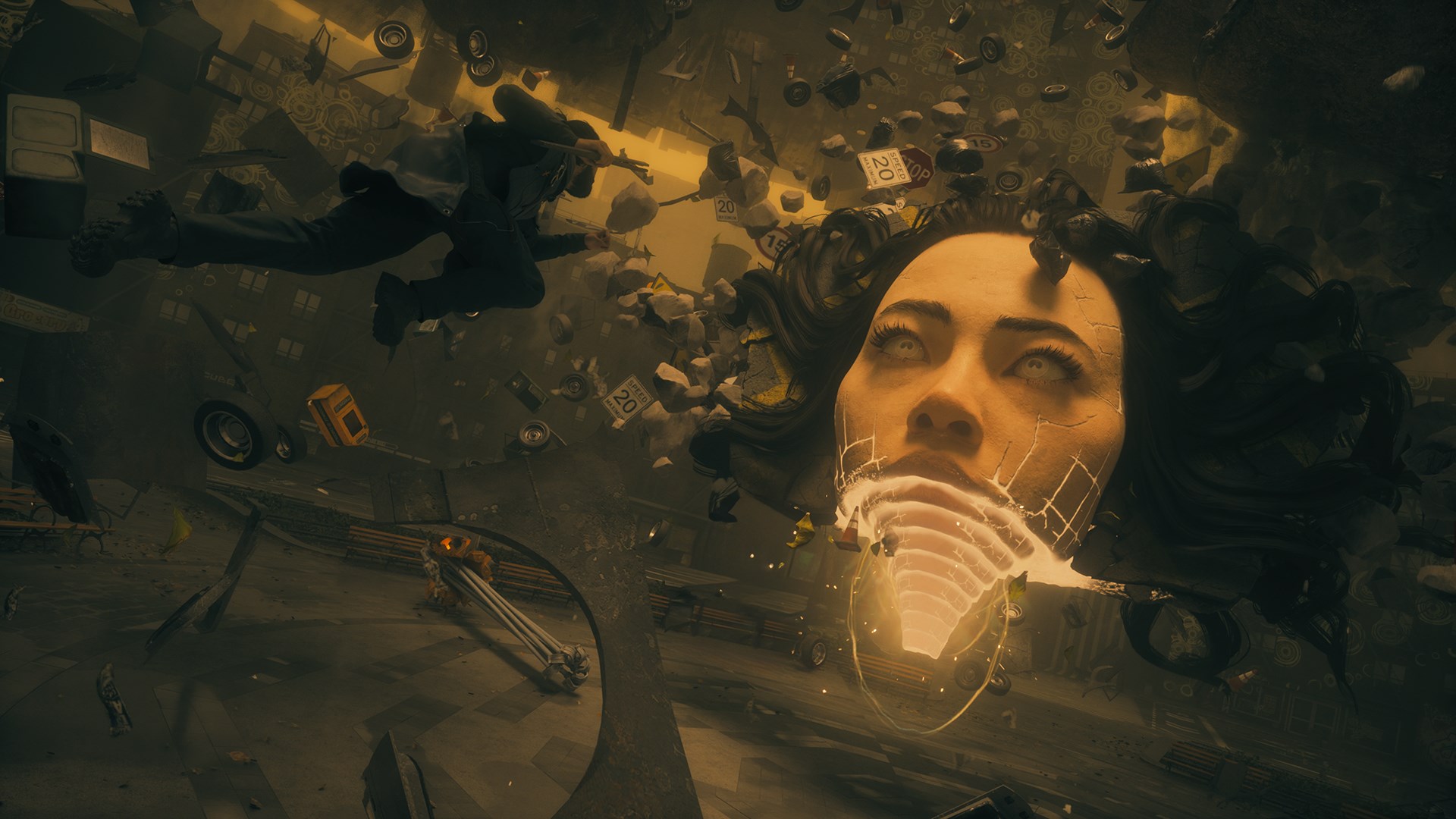
It is a lot to absorb narratively, but the competing factions give the world meaningful variety both visually and mechanically. Downtown is saturated in Hiss red, with people floating eerily between towering buildings. The Park has been consumed by blue Mold, with pieces of architecture barely visible beneath it. Elsewhere, Patterned zones simply rewrite spatial logic: buildings point in the wrong direction, walls become floors, and skyscrapers hang upside down. Remedy has built an unexpectedly diverse world from a limited geographical area, and purely as a place to wander around and look at, this is one of my favorite open worlds in quite some time.

Manhattan After Someone Switched Off Gravity
Control Resonant takes place entirely within this reality-detached section of Manhattan, which could easily have resulted in dozens of interchangeable streets, office blocks, and rooftops. Remedy instead gives each zone a strong identity. It is not merely a matter of changing the color palette; the way you read space, the enemies that dominate each area, and even what counts as a floor can shift. Patterned zones are the clearest demonstration that this was never intended to be a conventional urban sandbox: when a building is literally pointing in the wrong direction, traversal and combat both have to adapt.
The best material, however, still arrives whenever Remedy turns mundane objects into full-blown supernatural problems. Side quests can involve hunting down stereo speakers, rescuing people from a possessed karaoke machine, and similarly absurd incidents that carry the spirit of the first Control. Not all of these quests are automatically placed on your map, so curiosity is genuinely rewarded. You can sprint directly toward the next story objective, but doing so means missing the sort of bizarre world-building that made this universe so appealing in the first place.
The problems begin when you try to thoroughly clear Manhattan’s zones outside those stronger side quests. Random events usually boil down to killing groups of Hiss or Mold creatures, and the formula begins repeating itself fairly quickly. They are worth completing if you want to level up each area and unlock its rewards, but after a while I stopped feeling as though I were stumbling into something new and started feeling as though I were checking off another copy of the same task in a different district.
General exploration suffers from a similar issue on a smaller scale. There are plenty of rewards hidden around the world, but it soon becomes obvious that the interior environments are assembled from a fairly limited set of components. Italian restaurants, gyms, coffee shops, galleries, and then another Italian restaurant that looks suspiciously familiar. The supernatural transformations regularly breathe new life into reused assets, so this never ruins the visual experience, but the repetition becomes difficult not to notice.
Then there is the map. I do not know why Remedy seems to treat cartography as a recurring personal challenge, but Control Resonant’s map occasionally behaves as though it is an Altered Item itself. Icons disappear or appear in the wrong place, while vertical navigation is especially painful in a city filled with multiple floors, rooftops, tunnels, and upside-down architecture. In a more linear game, this would be an annoyance. Here, I regularly found myself searching not for an objective but for the elevation on which the objective might theoretically exist.

The Service Weapon Is Gone, So Get Closer
Combat is one of the biggest departures from the previous game. Jesse’s mixture of firearms and telekinetic abilities has been replaced by Dylan’s almost entirely melee-focused system, making Control Resonant much closer to a hack and slash than a third-person shooter. Devil May Cry and the modern God of War naturally come to mind, although Remedy’s combat is not as fluid as either. During the opening hours, it can feel genuinely clumsy: Dylan’s initial toolkit is limited, attacks do not yet connect into anything particularly exciting, and for a while I wondered whether changing Control’s combat this dramatically had been a good idea.
Then the abilities begin arriving. There are three primary weapons, each with different speeds, strengths, and roles, while each enemy faction has elemental weaknesses that discourage relying on a single solution throughout the game. Status effects can be chained together, weapon switching gains genuine tactical value, and additional powers are granted as major story milestones are reached. Several hours in, the same combat system that initially felt stiff becomes full of rapid switches, layered abilities, and moments where more things explode in three seconds than any reasonable building insurance policy should cover.
Encounters with Resonants are the high points of that progression. These are powerful enemies hidden throughout the zones, testing not only reflexes but how well you have learned to combine Dylan’s full toolkit. They also tend to come with their own stories, which brings back the kind of world-building Remedy has been almost unfairly good at for years. One boss, for example, was once a struggling scientist who neglected his partner and children in pursuit of his research, only to end up transformed into a jittering mass of limbs. He works as a boss mechanically, but by the time the fight begins, you are not merely staring at a health bar; you know how this person ended up here.
Those moments matter because Control Resonant’s combat is not flawless even after it fully develops. At its best, it is frantic, chaotic, and spectacular, but animations and transitions can occasionally feel less precise than a melee-heavy system really demands. Once you are switching weapons, chaining abilities, using the environment, and manipulating gravity at the same time, however, the game reaches a speed where those rough edges become much easier to forgive.
When Remedy Forgets It Made an Open World
The best parts of the main story are the moments when Control Resonant stops behaving like a conventional open-world game altogether. The narrative regularly pulls you into longer, more directed sequences where Remedy can precisely control the pacing, music, imagery, and the exact moment when the world literally turns upside down. Quiet, oppressive passages can suddenly explode into audiovisual spectacles that send Dylan zipping between walls, manipulating gravity, and eventually making the question of which direction is “up” feel almost quaint.
These are the moments that explain why the weaker open-world sections are worth tolerating. Remedy still has an unusually distinctive way of combining image, sound, typography, brutalist architecture, and supernatural absurdity. Control Resonant is not merely technically attractive; it has an identity, which is considerably rarer. Plenty of AAA games are visually impressive and almost impossible to recall two weeks later. Several sequences here felt burned into my memory while I was still playing them.
That creates the game’s central contradiction. The more freely it lets you wander around clearing generic world events, the more ordinary it becomes; the tighter Remedy takes control, the more special it feels. That does not make Manhattan unnecessary. The visual construction of the world, hidden side quests, and supernatural zones add a great deal to the experience. It simply means that traditional open-world structure occasionally weighs down a studio that clearly does its best work when it refuses to behave traditionally at all.
Control Resonant is therefore a peculiar combination of strengths and weaknesses. It is one of Remedy’s most exciting games in terms of art direction and world-building, yet it is also an open-world game that can fall into the same routines as much less interesting examples of the genre. The map is terrible, random events repeat too often, certain interiors become suspiciously familiar, and melee combat does not immediately reveal what it will eventually become. Despite all of that, I kept wanting to return to this broken version of Manhattan, because there was always a chance that the next corner would contain not another coffee shop but something completely deranged that only Remedy would attempt.
The studio has not completely solved the open-world problem; it has simply filled the structure with enough of its own madness that I frequently forgot how familiar the structure actually was. Dylan is a compelling lead, Jesse’s disappearance gives the plot an effective personal motivation, while the Hiss, Mold, and Patterning keep both enemies and environments varied for a long time. Combat expands enormously after its awkward opening; the Resonants make excellent use of it, and whenever the story reaches another major set piece, Remedy once again demonstrates why nobody else really makes games quite like this.
-Gergely Herpai „BadSector”-
Pro:
+ An incredibly varied, distinctive world with classic Remedy style
+ Chaotic and highly entertaining combat once the systems open up
+ Fantastic main-story set pieces and excellent world-building
Contra:
– Open-world events become repetitive fairly quickly
– Interior assets are reused too aggressively
– The map remains one of Remedy’s supernatural nightmares
Developer: Remedy Entertainment
Publisher: Remedy Entertainment
Genre: action RPG / hack and slash / open world
Release: September 24, 2026
Control Resonant
Gameplay - 8.3
Graphics - 9.3
Story - 8.5
Music/Audio - 8.7
Ambiance - 9.1
8.8
EXCELLENT
Control Resonant occasionally lets its open world drift too close to familiar genre routine, but whenever Remedy plays by its own rules, Manhattan becomes a spectacular supernatural playground. Melee combat opens up beautifully with time, the visuals and world-building are first-rate, and the directed story sections repeatedly show the studio at its best. The awful map, repetitive events, and reused interiors drag the experience down somewhat, but Remedy fans should still consider this essential.