
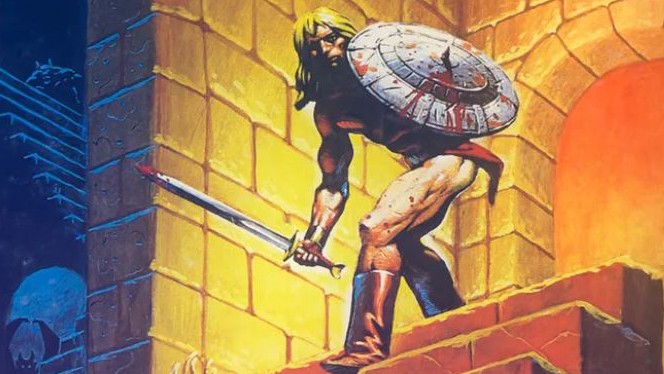
Richard Garriott took a step toward regaining ownership of Ultima by citing a 35-year-old copyright law that he finds peculiar.
In a conversation with Jesse Petrilla, Garriott confirmed that he is working to reclaim the series’ copyrights from Electronic Arts, the publisher to which he sold his studio, Origin Systems, more than three decades ago. Garriott cites Section 203 of the U.S. Copyright Act.
“I’m in a very interesting moment right now. I sold Origin to Electronic Arts in 1992. There’s a strange United States copyright law that says if you are the original copyright holder and assign or sell your copyright to a publisher or other entity, after 35 years, you can take it back. No money needs to transfer. All you have to do is notify them a year before you take it back. In April of this year, I informed Electronic Arts that I was going to reclaim the Ultima copyrights. They wrote back and said, ‘Yeah, we know that’s the law. We will act accordingly.” I’m currently in active discussions with them as to whether there’s anything we should do together. We’ll figure it out, but I officially get it back in 2027. I’ve got most of a year to figure out what that means. At the very least, I could re-release the earlier Ultimas and sequel them. The point is, I’m going to have control again of the future of my seminal product line,” said Garriott.
Last month at Dragon Con in Atlanta, Garriott touched on this topic during a roundtable discussion with Starr Long and Chris Spears. According to an account by a participant shared on Ultima Codex, Garriott expressed his desire to reunite with the Ultima series developers, though it has not yet been decided whether the new game will be a single-player RPG or an MMO. He concluded by saying that the best of the beloved fantasy RPG series is yet to come. However, there is one important exception: this move concerns copyright, not trademarks. Electronic Arts registered new Ultima trademarks in June, meaning Garriott can’t simply release a game called Ultima. Should he create a new installment, his proposed solution would be to use the name Lord British’s Ultima, referencing his famous nickname in Ultima Online.
Garriott’s role in the history of RPGs is significant. Born in Cambridge, England, in 1961, he released Akalabeth: World of Doom, which sold more than 30,000 copies. Ultima followed in 1981, and Garriott oversaw all nine main installments directly, up to Ultima IX: Ascension, while taking on the persona of Lord British throughout the series. In 1983, Garriott co-founded Origin Systems with his brother, Robert. The studio’s 1997 release, Ultima Online, became one of the defining early MMORPGs. After leaving Electronic Arts in 2000, Garriott joined NCSoft and led the development of the sci-fi MMO Tabula Rasa. However, it shut down in 2009, less than two years after its release. Outside the gaming world, Garriott made headlines in 2008 when he became the first second-generation American to travel to space (he is the son of NASA astronaut Owen Garriott).
His most recent major game, the crowdfunded Shroud of the Avatar: Forsaken Virtues, was presented as the spiritual successor to Ultima. However, the game was not successful. Upon its release in March 2018, it received a lukewarm reception, attracting only a small player base while drawing fierce criticism for its revenue model based on expensive backer packages and virtual land plots. Portalarium sold the game’s assets and development responsibilities to Catnip Games, which is owned by the company’s former CTO and president, Chris Spears. Catnip continues to work on the game and recently released an update with major technical improvements and numerous bug fixes.
Since the Ultima copyrights may revert to him next year, Garriott has his best chance in decades to shape the future of Ultima directly. It remains to be seen whether this will lead to a new game, re-releases, or a collaboration with Electronic Arts. One thing is certain, though: It would be great to see new Ultima role-playing games since nearly 27 years have passed since the release of Ascension.
Source: WCCFTech






Leave a Reply