

MOVIE REVIEW – Ben Affleck has directed thrillers in which crime, place, and character genuinely seemed ready to tear each other apart. Animals feels more like somebody took the premise of Akira Kurosawa’s High and Low, photocopied it onto Netflix stationery, then photocopied the copy. There is a kidnapping, a seven-million-dollar ransom, a political campaign, a collapsing marriage, secrets, and Gillian Anderson wearing the expression of a woman who has already seen everybody in the room make the wrong decision. What is missing is suspense. Affleck’s film never explodes; it slowly runs out of battery like a campaign phone nobody remembered to charge.
Mark Kimball is running for mayor of Los Angeles, trailing by four points, buried in debt, and carrying the kind of family baggage an opposing campaign could dismantle before breakfast. He and his wife Abigail still look convincing enough as a wealthy, successful couple from the outside, while the structure is already creaking internally. Then Halloween brings a phone call: their son has been kidnapped, the ransom is seven million dollars, and Mark has to admit that the money Abigail thought existed has largely been poured into his campaign.
On paper, this is excellent material. A politician who talks about responsibility, public service, and morality suddenly faces a choice in which every principle can be measured in dollars, votes, and human life. Animals soon complicates the kidnapping in a way that should tighten that moral vise even further. Instead, the movie turns its dilemma into a prolonged domestic conference in which characters tend to reveal their secrets before the audience has had enough time to suspect them.

After Kurosawa, This Is Almost Insulting
The central idea of High and Low was brilliant because a single kidnapping became an X-ray of an entire society. Money, class, responsibility, and selfishness became different faces of the same decision, and Kurosawa was interested not only in what his protagonist would do, but in what the society around him made that choice mean. Spike Lee’s Highest 2 Lowest at least tried to transplant the material into his own city, music, and rhythm. Affleck moves it to Los Angeles, makes his protagonist a politician, and then shows surprisingly little curiosity about either Los Angeles or politics.
Mark runs as an independent, which is enormously convenient for the screenplay. It means the film never has to say much about what he actually believes, the political environment he occupies, or the voters he is so desperate to win. Immigration, wealthy white politicians, Latino employees, campaign money, optics, and hypocrisy all appear, but mostly as keywords on a presentation slide. The film knows which subjects ought to produce something interesting. Instead of an argument, it usually gives us another plot point.
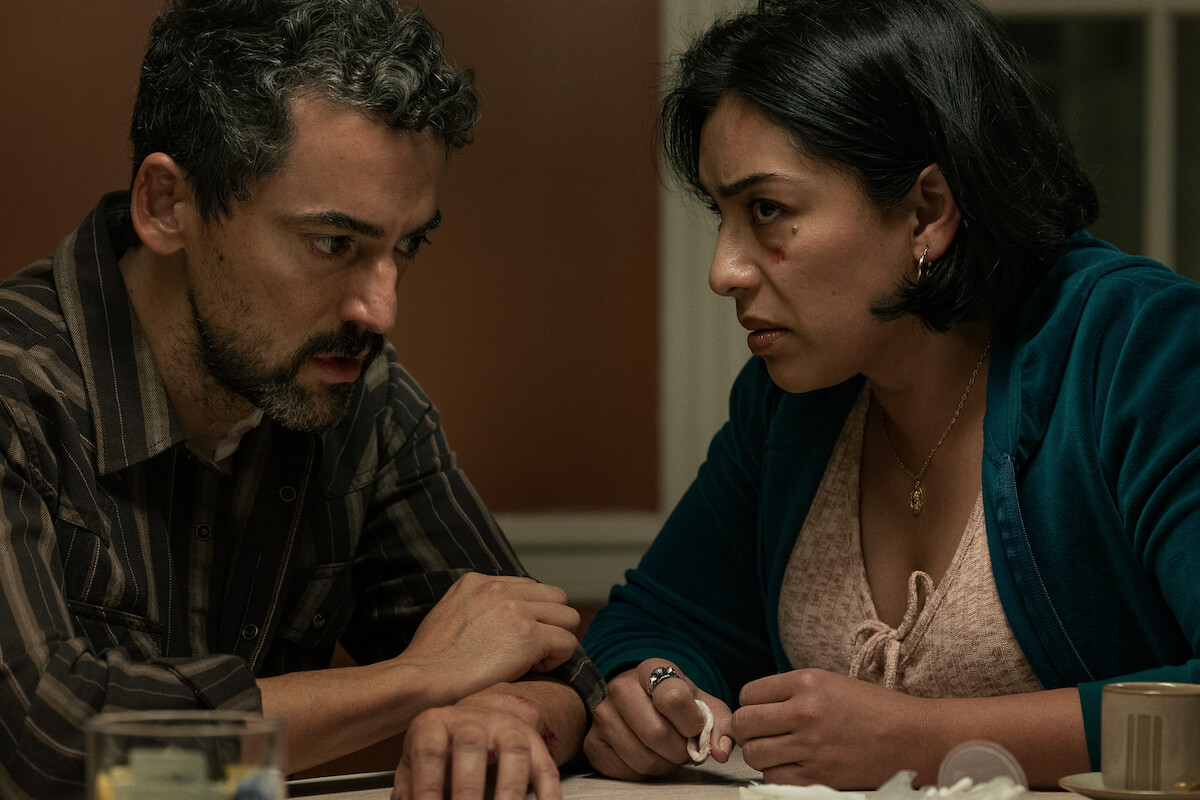
The most frustrating casualty is Luis Gerardo Méndez’s Ramon. He is the one character whose position could have turned the entire movie into something more personal and cruel: he has no power, no political operation, no elegant living room, yet he experiences the consequences of everyone else’s decisions most directly. A bolder film would have built itself around him or at least allowed his point of view to genuinely collide with Mark’s. Animals keeps running back to Affleck, as if the movie is as incapable of leaving him behind as Mark is of leaving his campaign.
The Suspense Apparently Got Stuck With the Ransom
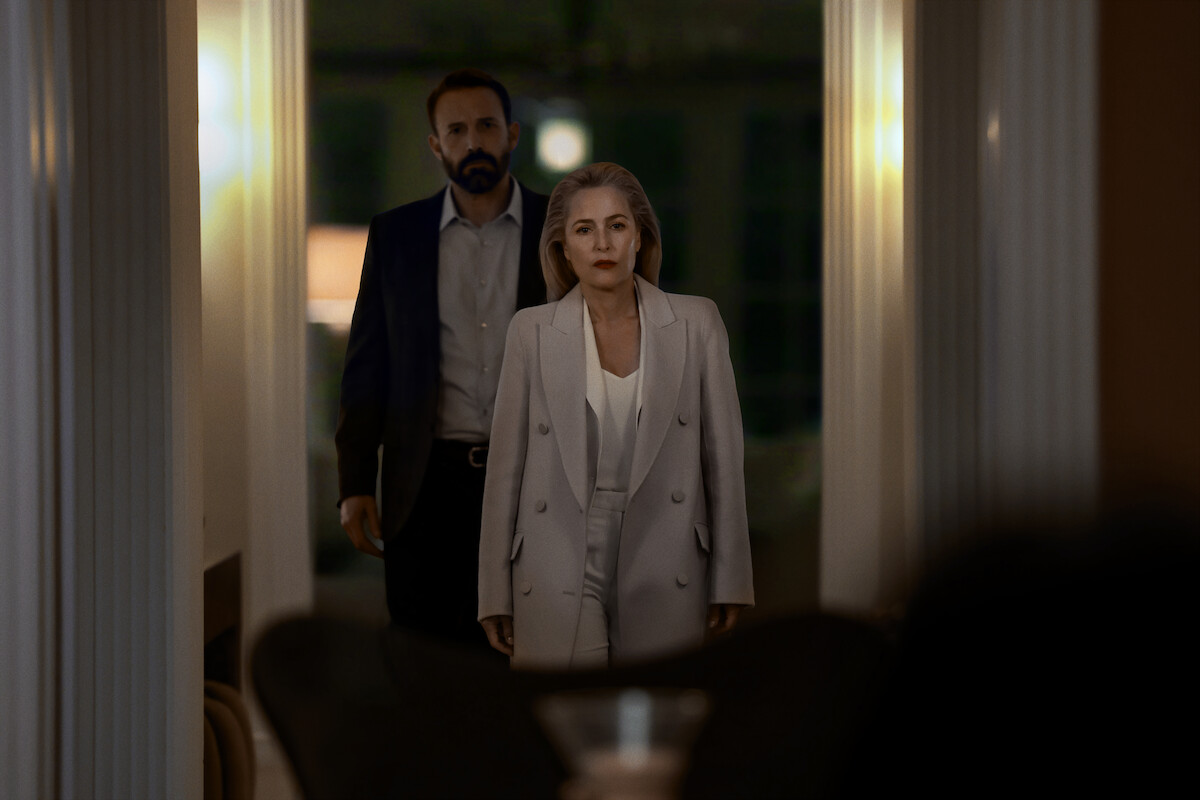
A kidnapping thriller should occasionally make us believe that something terrible might actually happen. Animals instead builds scenes in which people talk nervously, then talk more nervously, then walk into another room to continue talking. Mark and Abigail’s marital secrets emerge one by one, Steven Yeun’s campaign manager behaves suspiciously, and Ray Fisher’s brief appearance might as well come with a flashing arrow saying, “Remember this guy.” By the time the screenplay wants to reveal something, there is often very little left to reveal.
Affleck is capable of much more as a director. Gone Baby Gone, The Town, and even Argo understood how to wire a location, a community, and a character’s nervous system into the same story. Here, even with Robert Elswit behind the camera, the images are strangely sterile. Much of Los Angeles looks like footage cut from one of Netflix’s autoplay previews: expensive, clean, professional, and almost entirely gone from memory five minutes later.
Kerry Washington gets a few stronger moments, but the script too often turns Abigail into a volume control: as the stakes rise, so does she. Gillian Anderson’s Dayle is cool, elegant, and visibly more familiar with situations like this than everyone else in the room, but there is barely a character beneath that surface. Steven Yeun is reliable, while Affleck works reasonably well as a politician constantly calculating whether he should be behaving as a husband, father, or candidate. The film simply refuses to let any of them become deep enough for the answer to matter very much.
The finale is especially awkward. This is where a kidnapping story should tighten everything it has built, but Affleck scatters the motivations and then tries to replace missing suspense with action around the Los Angeles River. Spike Lee, working from similar material, at least staged a ransom handoff with geography, rhythm, and nerves. The climax of Animals mostly demonstrates that a scene does not become exciting simply because everybody finally leaves the living room.
AI or Not, Somebody Still Had to Write Human Beings
Affleck has openly said that artificial intelligence was used for various parts of the filmmaking process, without specifying exactly where. That does not mean AI can be blamed for every problem in Animals, and it would be cheap to pretend an algorithm must have written the weak scenes. The meta-joke is nevertheless difficult to ignore: it has been a while since I saw a movie with this much expensive talent, this many recognizable actors, and this much professional infrastructure feel quite so impersonal.
Every ingredient is familiar. Here comes the marital crisis, there goes campaign cynicism, over there sits social inequality, and then an ice-cold fixer arrives to pour a little prestige-thriller flavor over everything. On paper, the components sound promising; nobody has cooked them into a satisfying meal. Animals feels like the daily special at an expensive restaurant assembled from leftovers: I can recognize where every bite came from, but that does not make any of it fresh.
That may be the movie’s greatest failure. The problem is not that it resembles Kurosawa, because great stories can be reimagined, nor that it uses familiar genre machinery. The problem is that it risks almost nothing. Its politics are too vague to hurt, its marriage drama too calculated to feel intimate, and its kidnapping too mechanical to make us worry. In a movie where almost every character is compromised, the film itself somehow remains the safest thing on screen.
Affleck’s earlier directing makes Animals land even harder. If an anonymous Netflix journeyman had delivered this on a Friday night, we might simply shrug and say we have seen worse. From the director of The Town and Argo, it is reasonable to expect at least one sequence that genuinely tightens around the throat. Instead, we get a nearly two-hour thriller in which characters panic over seven million dollars while I found myself wondering what to watch next on Netflix.
-Gergely Herpai „BadSector”-
Animals
Direction - 3.8
Actors - 5.6
Story - 3.2
Visuals/Music/Sound - 4.7
Atmosphere - 3.1
4.1
WEAK
Animals turns a terrific premise and a strong cast into a surprisingly lifeless Netflix thriller. It looks especially thin in Kurosawa’s shadow, but the comparison is not the only problem: there is too little suspense, too little political depth, and nobody we seriously fear losing. A kidnapping movie that ultimately holds the audience’s time hostage more effectively than any of its characters.