
TECH NEWS – Elon Musk says it is possible to compete with China’s massive production machine.
He believes that, while China is the best in the world at scaling up production once it fine-tunes its manufacturing equipment, the country may face difficulties working with next-generation memory chip platforms, such as 3D stacking and “memory-on-logic” architectures. Musk’s tweets are the latest in a series of thoughts he has shared about China’s chip manufacturing capabilities and expertise in semiconductor production as he focuses on the Terafab project to meet his companies’ needs.
Last week, China’s CXMT made a significant announcement in Shanghai, stating that it is on track to launch DDR5 memory modules based on hybrid bonding and 4F² technology by the end of the year. This announcement is noteworthy because Samsung, one of the world’s leading memory module manufacturers, is not expected to ship these products until 2028. 4F² technology is one of the most important developments in the memory module industry because it stacks memory module cell components vertically rather than horizontally, thereby saving space and increasing performance. Another emerging memory module technology is 3D stacking, which stacks different memory layers on top of each other within the chip. Qualcomm takes a different approach: placing an AI accelerator beneath the LPDDR memory to achieve benefits such as higher bandwidth and lower costs.
When China figures out how to manufacture a product, their ability to scale is often greater than the rest of the world combined. We saw this with lithium batteries and solar, for example.
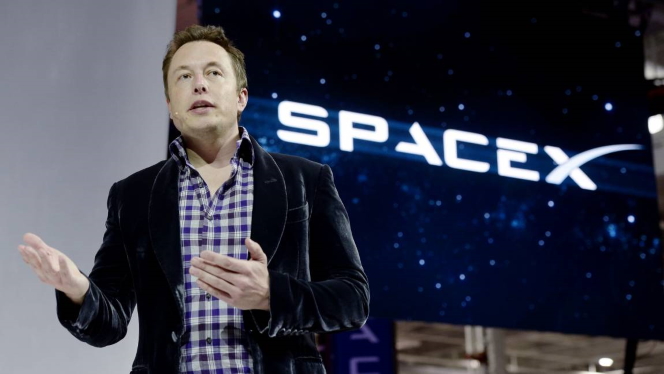
SpaceX is a rare counter-example, where its mass to orbit is roughly an order of…
— Elon Musk (@elonmusk) October 12, 2026
Musk’s latest comments on China were in response to a tweet questioning CXMT’s ability to ship its 4F² memory modules on a large scale at competitive prices and volumes. Musk explained that examples such as lithium-ion batteries and solar energy products clearly demonstrate China’s capacity for economies of scale often exceeds that of the rest of the world combined. The only exception to this “matrix” of mass-production capabilities spanning multiple industries, according to Musk, is SpaceX, as his company consistently outperforms China in terms of the tonnage of payloads placed into orbit. Most of SpaceX’s rocket launches are for the Starlink satellite internet constellation, which has placed tens of thousands of small internet satellites into orbit to provide global internet connectivity.
Regarding memory modules, Musk remained optimistic, suggesting that RAM module production might be another exception. However, he added that LPDDR5 and LPDDR6 memory modules are designed to a standard that China appears to be catching up to quickly. While China may find it easier to adapt to uniform memory module standards, Musk believes that new technologies, such as HBM architectures and 3D stacking, will be more challenging for the country to master.
In the field of 3D DRAM, Naura, a Chinese chip manufacturing technology developer, achieved a significant breakthrough earlier this year. The company demonstrated that it can improve metrics such as etch selectivity and loss ratio in a 64-layer 3D DRAM structure containing silicon (Si) and silicon-germanium (SiGe) layers using a two-step process.
Source: WCCFTech







Leave a Reply