
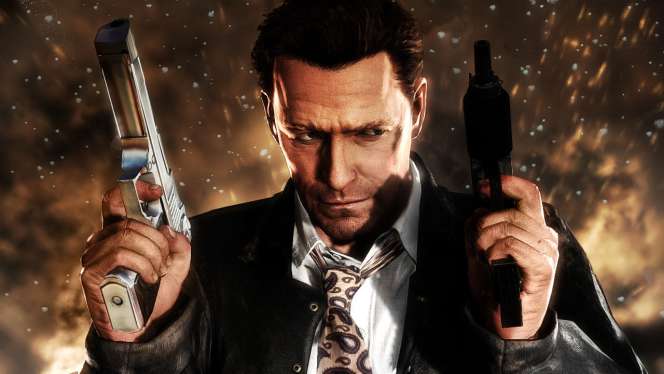
Rockstar Games co-founder Dan Houser believes he failed to carry forward Sam Lake’s legacy with Max Payne 3, even though the game has earned growing recognition over the years.
Few games in Rockstar’s catalogue have divided players as sharply as 2012’s Max Payne 3. The first two entries were defined by Remedy Entertainment and Sam Lake’s unmistakable authorial voice, while the third was developed entirely by Rockstar. Dan Houser has now reflected on that transition and admitted that he regards his work on the sequel as a personal failure. Houser’s explanation is disarmingly simple: he was not Sam Lake. Although Rockstar tried to preserve Max Payne’s identity, bleak humour and wounded internal monologue, he felt that part of the audience understandably missed the voice of the original writer. As one of the main creative decision-makers and writers on the project, Houser placed the responsibility on himself.
A twelve-hour action movie with barely a break
That does not mean Houser has forgotten what the team achieved. Max Payne 3 deliberately stepped away from Rockstar’s open-world formula and embraced a tightly controlled, linear structure. The developers wanted the experience to play like a roughly twelve-hour film, with levels and cinematics flowing together while loading remained almost invisible.
The words flashing across the screen, distorted visual effects, aggressive editing and oppressive atmosphere all served that ambition. HEALTH’s pounding industrial score and James McCaffrey’s exhausted, bitter performance gave the game a powerful identity of its own. Moving the story to São Paulo was a radical departure from snowy New York, yet it continued to explore Max’s self-destruction, guilt and inability to escape his past.
The reception at launch was complicated. Many critics praised the technical craftsmanship and the exceptional gunplay, but some long-time fans rejected the new setting and the absence of Remedy’s style. Take-Two also said in 2012 that sales had come in below expectations, which may have reinforced Houser’s feeling that the project failed to achieve what it was supposed to do.
Time has been far kinder to Max’s third descent into hell
The years since release have dramatically changed the conversation around Max Payne 3. It is now regularly cited as one of the finest third-person shooters ever made. Its precise aiming, spectacular shoot-dodging, destructible environments and extraordinarily detailed animations still create a sense of impact that few later games have matched. Rockstar’s refusal to simply imitate the previous games also looks more like a strength today. Brazil’s heat, saturated colours and deafening urban energy gave familiar noir themes a fresh frame. Max is still running from his history and narrating his own downfall with caustic one-liners, but he is doing so in a place that makes him feel even more alienated than before.
Houser’s self-criticism is understandable. Following a beloved series means every creative choice will be measured against the people who established it. Yet Max Payne 3 matters precisely because it did not attempt a perfect imitation of Sam Lake’s work. It offered a distinct, brutal and intensely cinematic interpretation of the character. It may remain divisive, but calling it a creative failure does the game a serious disservice.
Source: PC Gamer





Leave a Reply