

SERIES REVIEW – Crystal Lake tries something the Friday the 13th franchise has rarely bothered with: putting actual characters, trauma, and something resembling genuine drama next to the machete. Linda Cardellini delivers a Pamela Voorhees performance far beyond what this series has historically demanded from its actors, but the season occasionally becomes so fascinated with its own tragedy and mythology-building that Jason could probably walk around the lake faster than the plot reaches its next major turn.
There is something inherently amusing about a horror franchise spending decades pretending it has built an enormous mythology when everybody knows the foundations are basically a lake, a machete, several irresponsible camp counselors and, eventually, a hockey mask. Friday the 13th never became immortal because it was telling Shakespearean tragedies. Jason Voorhees arrived, saw somebody, reduced them to several smaller pieces, and everybody moved on to the sequel.
Crystal Lake, however, decides that if Pamela Voorhees and her son are going to be revisited, a couple of flashbacks will not be enough. Brad Caleb Kane’s series spends eight mostly 50-plus-minute episodes exploring how a grieving mother becomes the Pamela Voorhees we met in the 1980 film. That turns out to be a considerably more interesting idea than it initially sounds, and with Linda Cardellini at its center, it sometimes works remarkably well.
The problem is that eight episodes provide an enormous amount of space. Sometimes far too much of it.
Mom, Where’s My Machete?
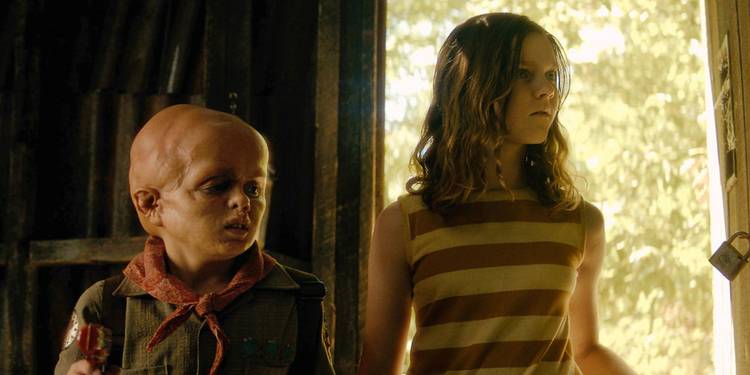
The series opens in blood, with Pamela staring into a mirror, in a state that makes it hard to believe she merely had an unfortunate evening making tomato sauce. From there, the story jumps back nine months to a cleaner, calmer Pamela working in the kitchen at Camp Crystal Lake, while Jason is still an 11-year-old boy rather than one of cinema’s most durable human meat grinders.
Callum Vinson’s Jason is relentlessly mocked because of his physical abnormalities. His only real friend is Grace, played by Gwendolyn Sundstrom, while Pamela understandably tries to surround her son with enough love to keep the cruelty of the outside world at bay. She even orders him a package of camping gear. A tent, cooking supplies, everything a boy needs. And, naturally, a machete. There are moments when you can almost hear four decades of franchise history giggling somewhere offscreen.
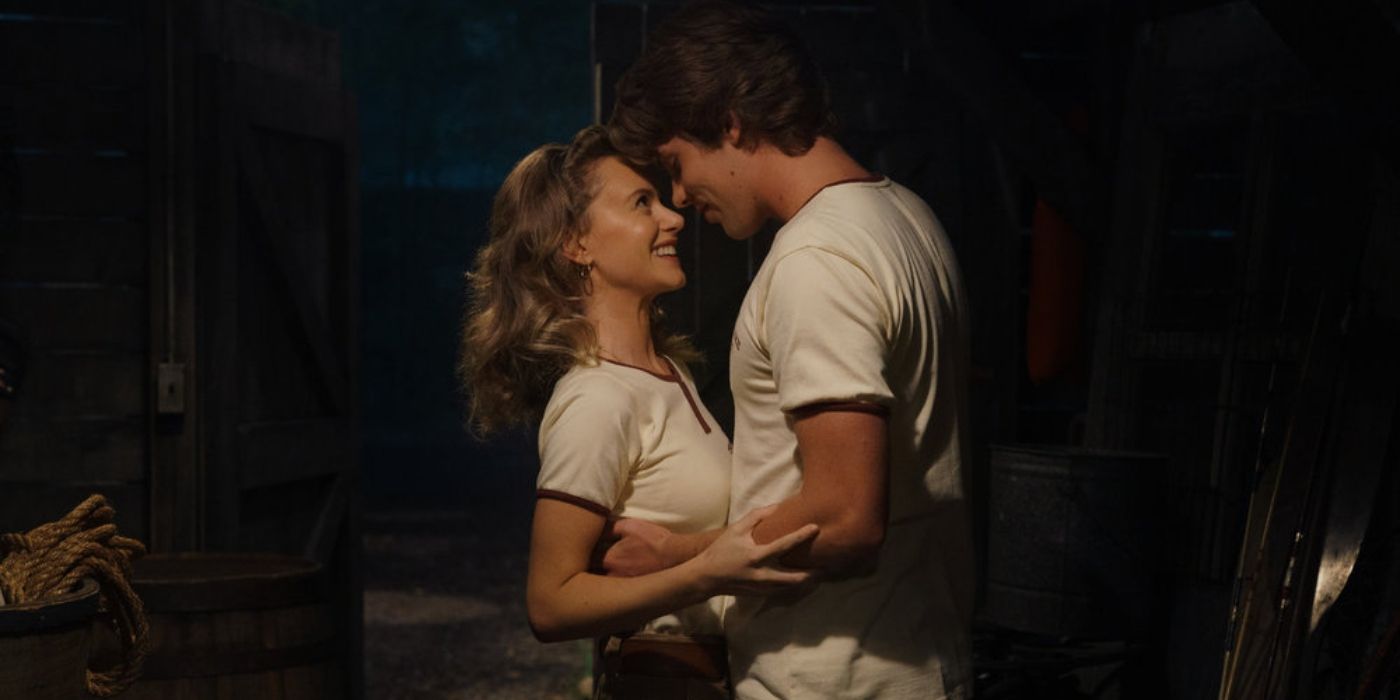
The show wants more from Jason’s tragedy than a familiar origin-story wink, though. He is already a poor swimmer, he ends up in the water without supervision, and counselors Claudette and Barry have found something more entertaining to do in a barn than watching children. Anyone who has seen the original movie knows there is no pleasant road out of this situation. Crystal Lake does not rewrite the basic tragedy. Instead, it lingers on what Jason’s disappearance does to Pamela, especially because his body is never recovered.
When the story returns to its present, somewhere around 1971 or 1972, Pamela has stopped moving forward. The community tries to drag her back toward normal life, particularly Levon, the local sheriff and widower with secrets from his earlier police career in Newark, played by William Catlett. Bowling, town picnics, tentative romance: all the ingredients of an ordinary existence are sitting right in front of her. Pamela, unfortunately, no longer inhabits quite the same reality as the people trying to help her.

Eight Episodes That Occasionally Feel Like Twelve
The first stretch of Crystal Lake clings surprisingly closely to the very simple mythology established by the original Friday the 13th. Fans can recognize parts of the camp and town, and Ralph returns as well, effectively the franchise’s long-serving official representative of the “do not go there, you idiots” department. Here he has been reframed as a Vietnam veteran suffering from severe PTSD, which immediately signals that Kane wants more than a procession of Easter eggs.
Then two threatening strangers arrive, begin asking questions about Pamela’s past, and the story starts drifting away from the road mapped by the films. That is not inherently a problem. Bates Motel became much more interesting once it realized that its job was not simply to move pieces across a board toward Hitchcock’s Psycho. Unfortunately, during the middle of its first season, Crystal Lake does not always know what to do with its newly acquired freedom.
A larger conspiracy starts taking shape, sometimes feeling more like a subplot from a Stephen King novel than something belonging to Friday the 13th. Briana, Levon’s journalist sister, spends a long time searching for a useful role in the story, and even after she finds one, it is not difficult to imagine much of the season surviving without her. There is also a full episode centered on a 1970s self-actualization retreat, where Pamela effectively encounters a fork in the road between emotional liberation and chopping irresponsible counselors into manageable portions. Admittedly, that description makes group therapy sound a lot more entertaining.
The problem is not that the series experiments. Quite the opposite: most of its best material arrives when it moves away from the familiar franchise machinery. The issue is pacing. After a promising beginning, the story settles into a multi-episode lull, and those near-hour runtimes do not always have enough meaningful material to justify themselves. The final stretch regains momentum, but there are periods when Crystal Lake is no longer creating slow-burn tension. It is simply making us wait.
Every Bloodstain Looks Better in Seventies Grime
The period setting saves a great deal. Early-1970s America is an excellent backdrop for Pamela’s story. The lingering paranoia associated with Manson, distrust of institutions in the Nixon era and the growing fight over women’s rights give her anger and grief a context that pushes them beyond basic slasher motivation. Thankfully, the series does not attempt to retrofit Pamela into some machete-wielding feminist folk hero, but it does show the personal and social pressures tightening around her.
Michael Lennox and the other directors also make strong visual use of the era. Washed-out colors, grimy cars, decaying buildings and a grindhouse-friendly texture are mixed with occasionally broad performances and cheerfully inappropriate soundtrack choices. It works especially well when the show shifts, without warning, from mundane everyday life to something profoundly disgusting.
And there is no shortage of disgusting.
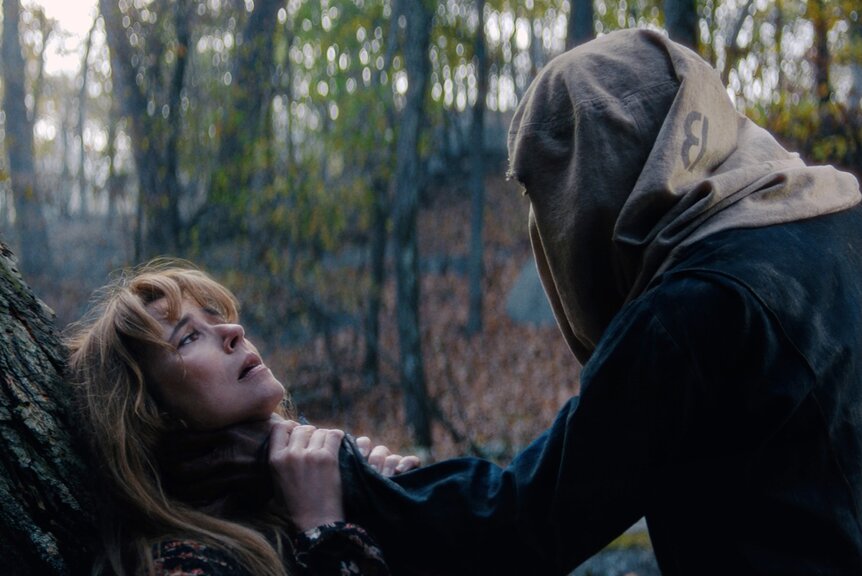
Anyone worried that the longer television format might tame the Friday the 13th universe can relax. Or worry more, depending on their relationship with detached facial tissue. The kills in Crystal Lake are determined to outdo one another. There is little reason simply to stab somebody when skin can be removed first, another unpleasant finishing touch can follow, and the body can then be disposed of with additional enthusiasm. Some of the effects appear heavily digital, but the results are usually appropriately revolting.
That matters because if an episode spends 45 minutes preparing for something, the eventual payoff needs to land with some force. Crystal Lake is not shy in that department. The storytelling may occasionally move fast, but the gore makes sure dinner is served.

The Show Finally Arrives Just Before It Ends
The sixth and seventh episodes are where the entire production noticeably shifts into a higher gear. The installment directed by Celine Held and Logan George, followed by Quyen Tran’s episode, finally uses the format with the sort of confidence the series had previously shown only in fragments. The flashback chapter is especially strong, combining the color palette of 1950s melodrama with the paranoia of a 1970s conspiracy thriller.
Suddenly, what Crystal Lake has spent most of the season searching for clicks into place. This is no longer merely an origin story and no longer eight hours of franchise fan service. For one episode, the series develops an identity of its own. There is a little David Cronenberg in the mixture, a little Douglas Sirk, and still enough of the Voorhees family’s diseased inheritance to keep the whole thing recognizably attached to this universe. It is just unfortunate that the season takes so long to reach that point.
The finale is more solid than spectacular, but the last third at least proves that there is more potential here than simply adding background information behind a famous mask. A bold reworking of material connected to the first film also suggests that the creators do not plan to spend forever cautiously walking the edges of established canon.

Without Cardellini, This Lake Would Dry Up Quickly
Crystal Lake‘s greatest asset remains Linda Cardellini. Pamela Voorhees served more as a narrative function than as a fully developed character in the original film, but Cardellini builds a person around her. She plays Pamela as strong, brittle, furious and desperately attached to the love that once defined her entire life. Losing Jason does not simply take away her son. It dismantles the identity she constructed around being his mother.
The unraveling begins quickly, and Cardellini can be frightening without turning Pamela into a cartoon lunatic from one scene to the next. Instead, there is a sense that something is constantly pressing beneath the surface, waiting for the smallest crack. Whether the series can continue to demand sympathy for her in the long run is another question, because Pamela herself eventually makes that task increasingly difficult.
Gwendolyn Sundstrom also works beautifully as Grace. She is one of the rare Crystal Lake residents for whom we do not quietly begin rooting for the machete in the next scene. Danielle Kotch and Phoenix Parnevik, as Claudette and Barry, produce almost the exact opposite reaction, which is hardly accidental given the destination built into the franchise’s mythology.
William Catlett’s Levon feels partly grafted onto the mythology, and the mystery surrounding his Newark police past never becomes the season’s most urgent concern. Catlett nonetheless has a strong screen presence, and there is something unexpectedly tender about the hesitant attraction between Levon and Pamela as two damaged people circling each other. Among the supporting players, Manon Gage’s troublesome hippie, Joy Suprano’s budding feminist ally and even one extremely hungry brown bear manage to display more personality than some entire casts from the old movies.
The Best Friday the 13th? Let’s Not Get Carried Away
The biggest compliment and the cruelest criticism of Crystal Lake are essentially the same thing: it probably tells a better story, with stronger performances and more actual characterization, than a large portion of the Friday the 13th movies. The problem is that the bar has never been especially high. This franchise survived through simplicity, iconography and inventive slaughter, not because audiences spent days analyzing the emotional development of its doomed counselors.
That leaves the series in an odd position. When it tries hardest to behave like prestige television, it can feel more serious than the material truly requires. When it loosens its grip, dirties up the image, lets Cardellini take control and allows the horror to be ugly, sad and slightly sick in equal measure, the justification for its existence suddenly becomes obvious.
The threads planted for future seasons do not necessarily inspire enormous confidence, particularly the wider conspiracy material. Still, this first season has already cleared the low bar its own franchise buried in the ground decades ago. If the continuation can lose some of the detours and keep more of the nerve displayed in episodes six and seven, the most dangerous thing around Crystal Lake may eventually turn out not to be a machete, but a good idea that somebody finally remembers not to stretch to death.
-Gergely Herpai „BadSector”-
Crystal Lake
Direction and Visuals – 74/100
Performances – 85/100
Story – 59/100
Atmosphere and Horror – 76/100
Pacing and Dramaturgy – 46/100
68/100
GOOD
Source: The Hollywood Reporter
Crystal Lake
Direction - 6.8
Actors - 8.2
Story - 6.2
Music/Audio - 6.2
Ambience - 6.8
6.8
FAIR
Crystal Lake is considerably more interesting than a Friday the 13th prequel series has any obvious right to be, largely thanks to Linda Cardellini's excellent Pamela Voorhees, a convincing early-'70s atmosphere and several genuinely brutal horror sequences. Its sluggish middle episodes, overgrown side plots and uncertain conspiracy material repeatedly drag the season down. When the show finally finds its own identity, it works remarkably well, but getting there requires swimming through far too much of the lake first.







Leave a Reply