

REVIEW – Twelve years can change a lot of things, but apparently they are not enough to wash the blood, cigarette smoke and bad decisions out of Fabletown. The Wolf Among Us Remastered gives Bigby Wolf’s old case a substantial visual overhaul and adds worthwhile extras, yet wisely refuses to disguise what it has always been: a superb, grimy, choice-driven Telltale noir.
The Wolf Among Us was born when Telltale’s episodic adventures had practically become a genre of their own. After The Walking Dead, the studio knew exactly how to fill a relatively straightforward interactive framework with strong characters, moral pressure and a story paced well enough to keep players coming back for the next episode. Bigby Wolf’s investigation had a very different personality, though. It was less sentimental, more cynical and much closer to a dirty detective thriller, except that half the suspects happened to come from fairy tales.
The inhabitants of Fabletown hide behind human appearances while carrying problems that are disappointingly ordinary: poverty, addiction, jealousy, resentment and power struggles. Bigby, once known as the Big Bad Wolf, is now the sheriff trying to keep this unstable community together alongside Snow White. Then a body appears, and what initially looks like a relatively contained murder investigation rapidly begins to expose something much larger underneath the surface.
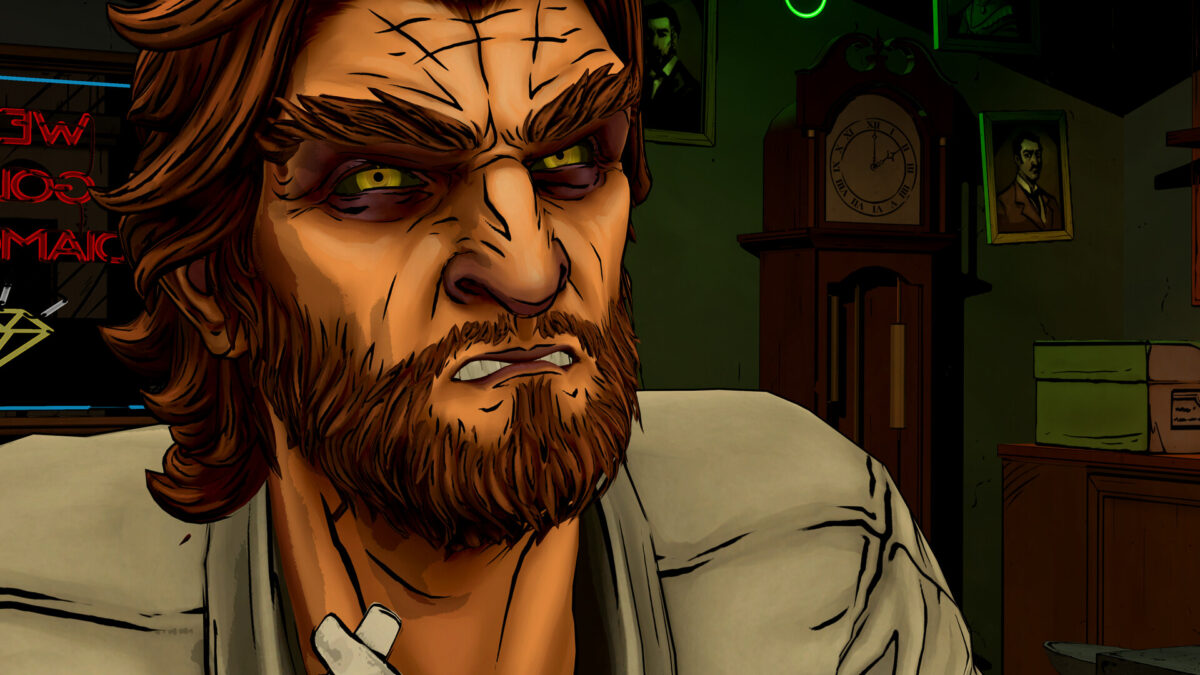
One body is all it takes
The story still works because the investigation is never merely about identifying a murderer. Every interrogation, threat, and badly chosen sentence drags Bigby into another conflict, while the game gradually reveals just how fragile Fabletown really is. Its characters are not interesting simply because they are modern versions of familiar fairy-tale figures. That gimmick fades surprisingly quickly, leaving behind people who are damaged, compromised, frightened and often difficult to trust.
Bigby has aged particularly well as a protagonist. He is a cop, an enforcer, an outsider, and a man everyone knows is never far from becoming a monster again. One of the game’s smartest decisions is to make this part of the player’s responsibility rather than something restricted to cutscenes. Dialogue choices determine how civil Bigby remains, when he runs out of patience, and how much of the old wolf he allows back out.
The five episodes generally run about two hours each, and although the pacing isn’t flawless, the story rarely stays still for long. From poking around Toad’s apartment to the inevitable trouble at the Trip Trap bar and the darker turns that follow, there is almost always another lead, argument or confrontation waiting around the corner. Small personal disputes gradually connect to larger problems inside Fabletown, giving the mystery an escalation that many episodic games never managed.

The grime looks better under new lighting
The easiest way to botch a remaster like this would have been to increase the resolution, sharpen a few textures, and attach a new price tag. Thankfully, considerably more work has gone into The Wolf Among Us Remastered. Character models are more detailed, faces are cleaner, environments have greater depth, and lighting and animation have been revised without sacrificing the original’s graphic-novel identity.
That matters because The Wolf Among Us’s visual identity was never simply a technical concern. Fabletown’s purple, red and blue neon, filthy corridors, smoky interiors and heavily outlined characters are as important to the mood as the dialogue and music. The remaster improves exactly what it needs to improve. It doesn’t try to drag the game toward photorealism; instead, it presents the original art direction with much more clarity and detail.
Noir Mode sounds like an obvious addition. This is a neo-noir detective story, so why not let people play it in black and white? Some individual scenes certainly look good, but over an entire playthrough the feature begins to work against the game. Color is fundamental to Fabletown’s design, which means the monochrome filter removes much of what makes the remastered visuals attractive in the first place. More practically, the directional prompts during QTE sequences are harder to read without their bright colors, so Noir Mode occasionally becomes a usability problem rather than a simple aesthetic preference.

Extras that are actually worth opening
The bonus material is thankfully more substantial than a handful of hastily assembled galleries. There is more than an hour of developer interviews and behind-the-scenes material explaining aspects of the production, the characters and the process of bringing the game forward to modern hardware. It is particularly worthwhile for returning players who already know Bigby’s investigation and want some context for how Telltale’s version of Fabletown came together.
An art gallery containing more than a hundred pieces includes early character concepts, environmental designs and other visual material. More written commentary alongside the artwork would have made it considerably stronger, since several images practically beg for an explanation of what changed and why. Even without that, however, it feels like a genuine archive rather than an extras menu assembled because a remaster was expected to have one.
The more interesting addition is five playable deleted scenes restored from material cut from the original release. One takes place after Bigby’s early confrontation with the Woodsman, while another expands the final sequence. Five scenes aren’t enough to transform the game, but they are meaningful restored content rather than disposable bonuses. Some strange visual glitches can appear when you access these scenes through the Extras menu, though the main campaign isn’t affected the same way.
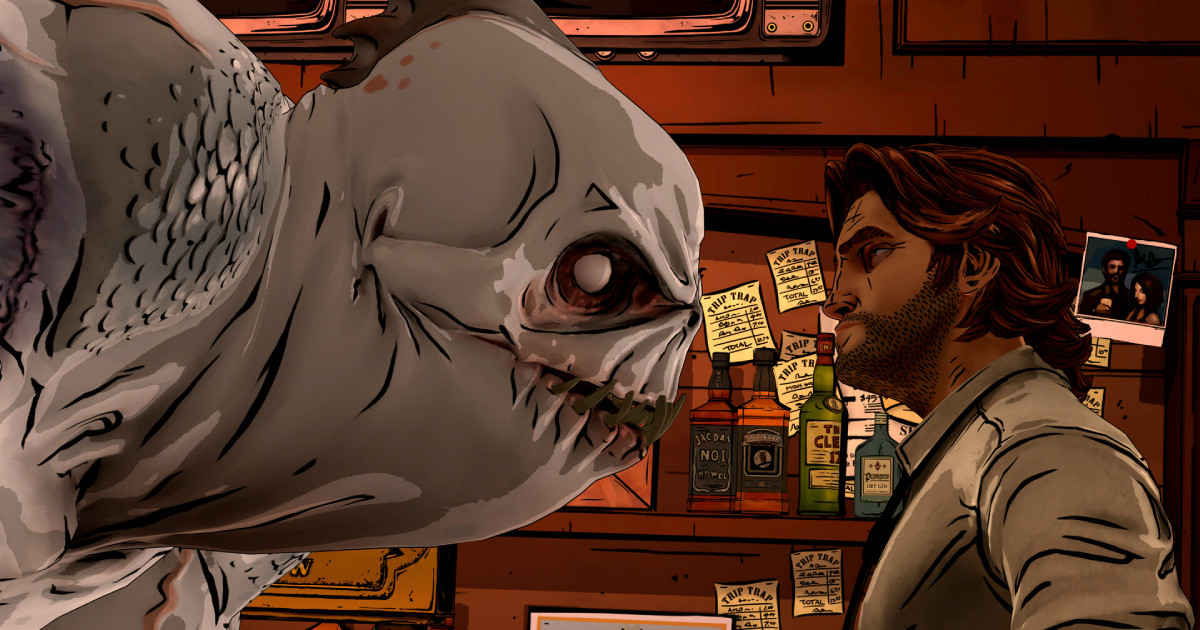
The gameplay is still from another era
The remaster’s most important decision may be how little it changes the actual gameplay. That is both one of its strengths and its clearest limitation. Dialogue choices remain timed, decisions still shape later reactions, action scenes still rely on QTEs, and investigative sections involve walking through compact environments, examining objects, and questioning characters.
None of this feels especially modern in 2026. Slowly moving through small rooms and checking interactive objects one by one can be cumbersome, and some interactions feel stiff enough to immediately reveal the game’s age. Replacing those systems entirely, however, would have changed the rhythm of the whole experience. Bigby’s throwaway observations about seemingly insignificant objects often tell us more about him than a lengthy cutscene would, so even some of the older mechanics continue to serve a narrative purpose.
The QTE system hasn’t suddenly gained depth after twelve years either, but the action scenes still work. Telltale was extremely good at turning a small number of prompts into sequences that made players feel more involved than the mechanics technically justified. On paper, it is simple. Combined with sharp editing, music and animation, it can still create genuine tension.
Bigby’s story still has teeth
The Wolf Among Us Remastered succeeds because it does not try to turn an old game into an entirely new one. It recognizes that the foundation still works and leaves it alone. The visuals, presentation, and audio receive the attention they need, useful bonus material has been added, and then Bigby, Snow, Toad, and the rest of Fabletown are allowed to carry the experience just as they did before.
Noir Mode is more of an interesting experiment than an essential feature, while several old gameplay systems now feel noticeably rigid. Neither issue changes the fact that the writing, cast and setting remain among Telltale’s strongest work. For newcomers, this is clearly the version to play. For people who already know every stage of Bigby’s first investigation, the improved presentation, five restored scenes and extensive archive material provide enough incentive to return.
This remaster doesn’t try to reinvent The Wolf Among Us, and that is exactly why it works. The story, characters, and sickly charm of Fabletown can still carry the game more than a decade later. Bigby’s coat has been brushed down and the neon lights burn a little brighter, but the rot underneath the city remains exactly where we left it. That is exactly why coming back feels so good.
-Gergely Herpai „BadSector”-
Pro:
+ The story and characters still work exceptionally well
+ A genuinely strong visual and presentation overhaul
+ Worthwhile bonus material and five playable deleted scenes
Contra:
– Several gameplay elements clearly show their age
– Noir Mode takes more away from the visuals than it adds
– Some visual glitches appear in the bonus scenes
Publisher: Telltale
Developer: Telltale / Trick Studios
Genre: narrative adventure, detective, neo-noir
Release date: October 29, 2026
Platform: PlayStation 5, Xbox One / Xbox Series X|S via backward compatibility, PC
The Wolf Among Us Remastered
Gameplay - 7.8
Graphics - 8.7
Story - 9.1
Music/Audio - 8.4
Ambiance - 8.7
8.5
EXCELLENT
The Wolf Among Us Remastered does exactly what a remaster like this should do: it leaves the parts that still work alone while substantially improving the visuals, presentation and bonus content. Noir Mode could easily have stayed on the drawing board, but Bigby's first case remains one of Telltale's strongest stories, and this is now the best way to wander through Fabletown's filthy streets again.






Leave a Reply