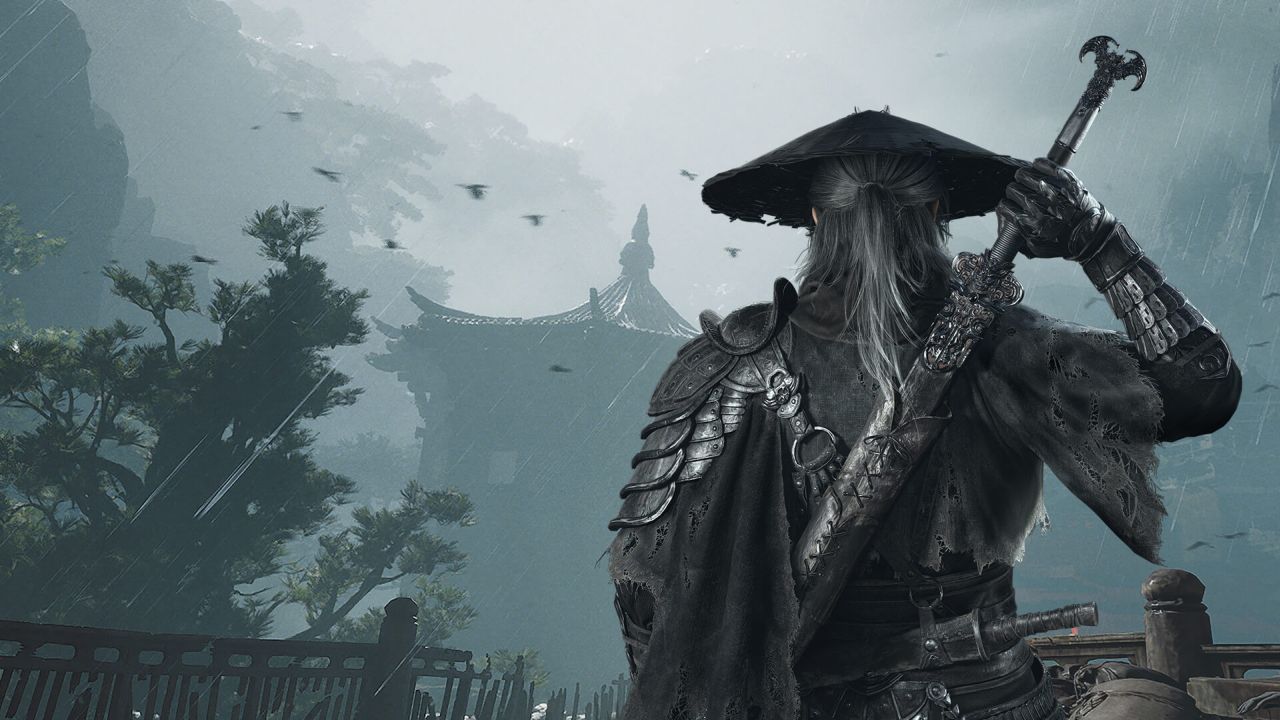
REVIEW – China’s new wave of action games was heading toward a familiar dead end: make it gorgeous, make it dark, give everyone a sword, then punish the player behind every second bush. Phantom Blade Zero thankfully has other ideas. S-GAME’s wuxia action RPG is fast, spectacular, and aggressive, and its combat shines when you stop trying to survive and start moving like you have spent the last twenty years chasing people across rooftops in Chinese martial arts movies.
Phantom Blade Zero wastes no time before throwing Soul into trouble. The protagonist begins the game locked in a lethal confrontation with his brother, Zuo Shang, a duel neither man exactly wins. Soul is subsequently granted another 66 days to discover what happened, why his brother turned against him, and what the Order, the Mandate, and several other organizations with increasingly easy-to-confuse names are doing behind the scenes.
The setup is simple. Everything surrounding it is considerably less so. S-GAME blends wuxia traditions with steampunk machinery, demons, porcelain creatures and industrial nightmares, calling the resulting mixture “kungfupunk.” It sounds like marketing jargon until you play the game and realize it is actually a surprisingly accurate description of traditional Chinese martial arts after somebody has attached steel teeth, mechanical limbs and half a factory to them.

Wuxia Finally Escapes the Souls-Like Template
The crucial difference becomes obvious within minutes. Phantom Blade Zero does not want to be another Dark Souls, nor does it deliberately slow combat into a sequence of solemn, carefully rationed duels. Soul is fast, basic attacks flow together almost instantly, and his opponents are generally just as eager to tear through him.
Light and heavy attacks, dodging, blocking and precisely timed deflections form the core system. Heavy moves and defensive actions consume Sha-Chi’s stamina, while a successful deflection eats into the opponent’s reserve. Break that bar and the enemy becomes vulnerable to a vicious execution animation, presented with enough confidence to suggest S-GAME knows perfectly well it has just sold you on another ten hours.
The real trick lies in weapon switching. Soul carries two primary weapons and two limited-use secondary tools, and you can swap primary weapons mid-combo. Doing so fully restores stamina, turning weapon switching from a convenience into a core part of combat rhythm. Learn the system properly and you can escape pressure, switch weapons and immediately launch another offensive without allowing the fight to stall.
Generally, avoid red attacks, while blue ones invite a deflection. That may initially sound like another game built entirely around perfect parries, but thankfully it is not. A good Phantom Blade Zero player doesn’t block everything. It is someone who understands when to push forward, when to hold ground and when to get out of the way before an elegant martial arts exchange turns into a very short funeral.

Your Arsenal Becomes Your Fighting Style
The game offers more than thirty primary weapons and roughly twenty secondary tools, and the numbers aren’t just brochure material. The better weapons genuinely behave differently. Some control space, some drain stamina, and others offer teleporting attacks, projectiles, or substantial buffs; their individual identities become increasingly pronounced as you upgrade them.
Each primary weapon has thirty power levels, with new passive or active traits arriving every five levels. For example, the Scarlet Wraithblade scatters flowers across the battlefield that drain enemy stamina, then gradually gains stronger heavy attacks, teleporting projectiles, and additional bonuses. Reaching the final upgrade tiers requires special treasures, often hidden behind side quests or areas you’ll need to revisit later.
The other major progression currency is Dust, which comes from almost everything. Enemies drop it, secret areas contain it, glowing objects hide it, and after a while it feels as though Pangzhen probably files its taxes in the stuff. Dust pays for materials and universal skills, like extra accessory slots or special attacks triggered during weapon switches.
The system succeeds because advancement is tangible. Soul doesn’t just get bigger numbers. He gains more possibilities. Early in the game, you carefully dismantle the guard of an ordinary enemy; twenty or thirty hours later, you clear groups with two primary weapons, secondary tools, and special abilities, while the game rewards well-executed sequences with new connective animations.

The Map Looks Beautiful and Explains Almost Nothing
Phantom Blade Zero is not an open-world game. Its adventure is divided across seven major regions that are broadly linear but regularly branch into side routes, secret rooms and obstacles that require you to return later. The structure fits the pace well, and the final third introduces several wider areas that provide a welcome change after the tighter early environments.
Returning to old locations is not always pleasant. The maps are elegant, stylized and visually attractive, but as navigational tools they can be about as useful as an ancient ink painting. Small passages, underground routes, and side alleys often disappear from the map entirely, so finding a locked door you noticed ten hours earlier can become an adventure in itself.
That is particularly frustrating because S-GAME has hidden genuinely valuable content throughout the world. Side quests regularly lead to bosses, rare upgrade materials and new weapons, while anyone aiming for the true ending will want to explore thoroughly. Numerous fast-travel checkpoints reduce the pain, but backtracking remains one of the experience’s less graceful parts.

With Fifty Bosses, the Camera Eventually Joins the Enemy Team
S-GAME certainly did not ration its bosses. The game features roughly fifty major encounters, and although some reuse familiar enemy ideas or feel less memorable than others, the strongest battles deliver exactly what the game’s presentation promises. Flying swordsmen, steel-fisted martial artists, lion-dance-inspired monsters, and enormous chains of choreographed attacks regularly make fights feel more like action cinema than conventional boss encounters.
The underlying design is often more conservative than the spectacle. Many bosses require you to dismantle an endurance gauge through dodges, deflections and heavy attacks before opening a short window for serious damage, after which the loop begins again. Against harder enemies, the system can reward defensive play so strongly that taking the initiative feels less effective than the game’s overall speed suggests.
Some design shortcuts are harder to ignore. Certain enemies get unusually generous periods of invulnerability, while multi-phase bosses can push players to burn through nearly all healing items and ammunition during the opening phase. Respawning directly into a later phase is convenient, but it also turns what should be a continuous dramatic escalation into an oddly segmented affair.
The camera can be a bigger problem. Against a single opponent it generally behaves, but target switching becomes unreliable in group fights and attacks arriving from behind can make the lock-on system struggle. With giant enemies, there are moments when the central question is no longer what the boss is doing, but why the camera has decided that a nearby patch of grass deserves top billing.

The Story Fragments, but the World Still Comes Together
Narrative delivery is Phantom Blade Zero‘s weakest major component. The Wulin, the Order, the Mandate, the Three Pillars of Kunlun, the Eleven, the Herald of the Veil and a considerable collection of religious, historical and mythological terminology arrive at a rate that can make the game feel like preparation for an exam in esoteric Chinese politics. A proper glossary would have helped enormously; the existing bestiary is not enough.
Flashbacks and large quantities of notes scattered throughout the environment further fragment the plot. Some of this is deliberate because Soul himself is trying to understand what happened to Zuo Shang and why his world turned against him. Even so, the information often comes across chaotically. Ignore too many documents and the plot becomes difficult to follow; read everything and you occasionally begin to wonder whether your weekend has been reassigned to archival work.
That is unfortunate because the story becomes considerably more interesting once its pieces are arranged properly. Classic wuxia themes eventually blend with steampunk, religious mysticism and even touches of cosmic horror, while the final act does a surprisingly strong job of pulling earlier fragments into a coherent climax. The route toward the true ending contains some of the strongest narrative and gameplay material in the entire adventure.
Artistically, however, the game leaves much less room for argument. Glowing red forests, mechanical citadels, mountains bound together by vivid crimson threads, plague-stricken villages and dreamlike spiritual spaces continually replace one another. Unreal Engine 5 is not simply another logo on the splash screen here; S-GAME has built a world that regularly makes you stop and reach for the screenshot key.
Caisheng Bo’s soundtrack is equally willing to mix traditions. Classical Chinese instrumentation sits alongside rock and electronic music, while exploration often relies on restrained, almost ethereal soundscapes before major battles push the score in a completely different direction. Not every stylistic jump will work for everyone, but the music has a distinct identity and rarely sounds like generic action-game wallpaper.
The PC version improved substantially during the review period. An earlier side-quest issue could prevent access to the true ending, and performance drops also appeared; patches near launch addressed several of these problems. The camera, a few questionable boss behaviors and enough uncertainty around overall technical polish remain to keep the PC build from being called flawless.
Completing most of the main and side content takes roughly thirty-six hours, after which New Game Plus becomes available. There is also 66 Days mode, where the player has only 66 lives before being sent back to the beginning, presumably for anyone whose blood pressure remains offensively normal after the campaign. The content is hard to fault, especially since many of the more substantial side quests lead to meaningful bosses and rewards rather than filler.
Phantom Blade Zero is not compelling because every part of it is perfect. Its storytelling is unnecessarily fragmented, the camera occasionally seems to be playing a different game, and some bosses test patience more effectively than skill. But when Soul changes weapons mid-combo, turns a deflection into a dodge, and finishes the exchange with an execution, S-GAME shows exactly why there was room for a Chinese action RPG that didn’t want to become another Souls clone.
-Gergely Herpai „BadSector”-
Pro:
+ Exceptionally fast, spectacular and layered combat
+ Outstanding art direction and genuinely distinctive weapons
+ Huge amount of content, strong bosses and excellent music
Contra:
– Needlessly fragmented storytelling
– Camera problems during group fights and encounters with giant enemies
– Backtracking and several boss mechanics can disrupt the pace
Publisher: S-GAME Publishing
Developer: S-GAME
Genre: Action RPG, wuxia
Release Date: October 29, 2026
Platform: PC, PlayStation 5, GeForce NOW
Phantom Blade Zero
Gameplay - 9
Graphics - 9.5
Story - 6
Music/Sound - 9.1
Atmosphere - 8.4
8.4
VERY GOOD
Phantom Blade Zero's combat, visual design and enormous arsenal are easily strong enough to make S-GAME's first major international release memorable. Fragmented storytelling, camera issues and a handful of questionable boss decisions keep it from greatness, but as a wuxia action RPG it has an identity of its own that feels especially welcome in the current flood of Souls-likes.