
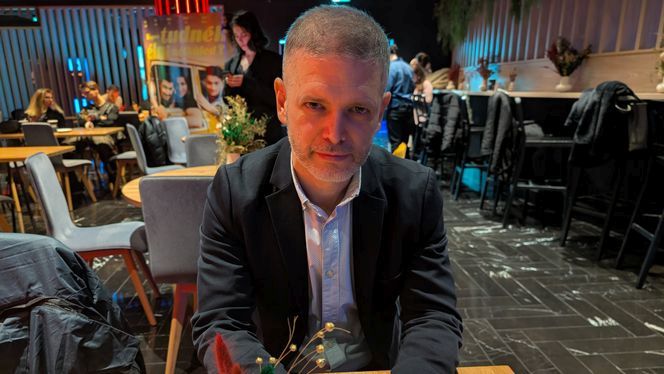
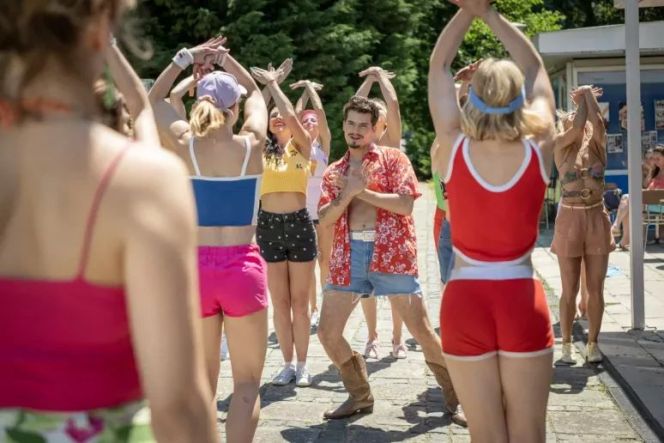
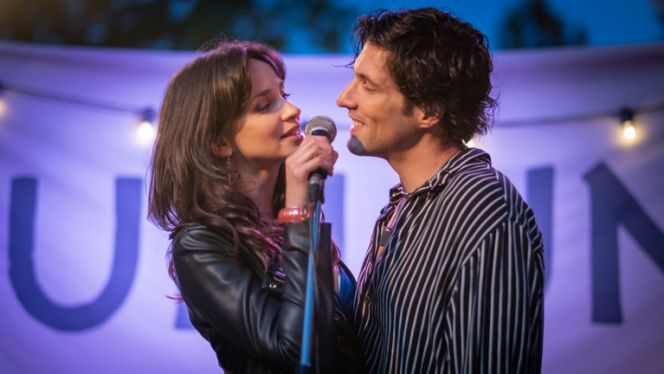
INTERVIEW – The musical How Can I Live Without You? is a unique piece of Hungarian filmmaking, evoking the iconic music world of the 90s with the help of a completely fictional story. In the interview, director OD talked about the film’s genre specifics, the challenges of musicals, and the state of Hungarian comedy.
During the conversation, we touched on topics such as the state of the musical genre in Hungary, the inspirations of the 90s, and the question of why more films about the lives of famous Hungarian musicians are not being made. Below is the full interview with the director, which provides an insight behind the scenes of How Can I Live Without You?.
theGeek: Why is the romantic comedy genre so common? It seems like it’s overrepresented.
Dénes Orosz: Now it might seem like there’s more, but that’s more of a coincidence. Comedies are generally popular because they can reach a wide audience with a relatively low budget.
tG: How much is How Can I Live Without You? related to Ferenc Demjén’s life or real events?
OD: It is not related to his life at all, we wanted to capture his spirit. It is important to emphasize that this is not a biographical film, but a completely fictional story. Similar to Mamma Mia!, the story is based on the songs of a performer, but it is not related to Ferenc Demjén’s personal story.
tG: For example, Wicked has just appeared on the musical market. To what extent do you see this as competition?
OD: Of course, we were aware of the appearance of Wicked. It is a huge-budget production, but it seems that it did not appeal to the audience here.
tG: Why aren’t there more films about the lives of famous Hungarian musicians? In America, this is a very popular genre, just think of the works depicting the lives of Elvis or Johnny Cash.
OD: That is a good question. Maybe because these works represent a serious financial and creative risk. However, I think there is a need to process the lives of iconic music legends. And that is why a series was made here, for example, about the life of Jimmy Zámbó.
tG: Now that you mention it, I remember that something like that was made. Maybe I’ll watch it someday. Back then, there were classics like Kopaszkutya, which can be considered semi-biographical. But these types of films seem to have completely disappeared recently.
OD: Made in Hungária can be considered a kind of Fenyő biography.
tG: What do you think makes How Can I Live Without You? special within the musical genre?
OD: On the one hand, we wanted to capture the atmosphere of the 90s, which Ferenc Demjén’s songs evoke so well. On the other hand, the story is completely fictional, and we created a world that is both nostalgic and fresh. The songs are tied to a specific era, but the message of the story is universal. It is always a big challenge in musicals to find the balance between music and plot. We hope we managed to achieve this.
tG: In the case of rom-coms, it’s pretty clear that viewers love them, but I think there’s more interest in them from a production standpoint. Is that true?
OD: As I said, rom-coms are simpler and more cost-effective than, for example, an action movie or a fantasy. These are Hollywood genres that we can’t compete with – and we don’t need to. Comedy, on the other hand, has a strong tradition in Hungary, especially in the 30s and 40s, when great works were made. Now that we’ve started writing and directing them again in the last twenty years, I feel like they’re starting to work.
tG: You also mentioned that the crime genre is also difficult and expensive, but for example, the horror film Post Mortem, although it wasn’t perfect, showed that exciting, spectacular action can be made at home too.
OD: The horror genre requires a level of expertise that takes time to master. And in the case of crime fiction, perhaps the biggest problem is that it doesn’t really have a tradition in Hungary. It’s very difficult to put together a well-functioning, twisted story.
tG: That’s why there are such attempts recently, for example Játszma, which is a spy thriller. Have you seen that?
OD: Not yet.
tG: And what about classic Agatha Christie-style thrillers? And yet they are now hugely popular worldwide.
OD: Writing such a story is very difficult. The twisty plot, the precise development of the twists and turns is an extremely big challenge. This requires direction and talent, which is not typical of all Hungarian creators. That’s why you see that such films are rarely made in our country. And the problem with thrillers is that they don’t really bring in a lot of viewers.
tG: In the case of foreign films either?
OD: It’s different, if it’s full of stars, then of course it works, but Hungarian attempts somehow don’t attract viewers. They tried, but they weren’t very successful.
tG: For example, there was Weekend, which… well, it wasn’t a good film. It flopped quite a lot, if I remember correctly.
OD: Making a thriller is also not easy, and if it doesn’t work, the audience doesn’t react positively to it either.
tG: Yes, and in Weekend, for example, there was a chase scene with Attila Árpa, which was completely foreign to the style of the film. If the story had been developed better, it might have worked.
OD: A well-developed script is also key here.
tG: Speaking of scripts, how much of a guarantee is there of success in rom-coms and comedies?
OD: Not at all. It’s not true that a rom-com will automatically be successful. In fact, there have been several Hungarian rom-coms that didn’t bring the expected viewership.
tG: Returning to the film How Can I Live Without You?: how involved was Ferenc Demjén in the filmmaking process?
OD: I was mainly in contact with János Menyhárt, who is the film’s musical director and also the composer of several Demjén hits. Of course, Ferenc Demjén also knew about the project and gave it his blessing. He watched the film and was happy with what he saw.
tG: He has a short cameo in the film, right?
OD: Yes, he appears in a short scene, but I don’t want to spoil exactly where and how.
tG: It’s interesting how these well-known ’90s songs were incorporated into the story. How conscious was this at the script level?
OD: The songs had to be inserted in such a way that they were not just independent musical inserts, but also moved the story forward and reflected the emotional state of the characters.
tG: It’s interesting how strongly You Have to Let Go! or You Broke My Heart Into Pieces can be tied to the story.
OD: These songs all contributed to making the film not only musically but also emotionally impactful.













Leave a Reply