

REVIEW – As someone who enjoys both classic turn-based JRPGs and high-octane action games, Clair Obscur: Expedition 33 had me intrigued from the first moment. A game that blends tactical, turn-based strategy with real-time, reflex-based action—and looks absolutely stunning while doing it? There was no way I could pass that up. Now that I’ve played through the whole experience, I can honestly say I’m glad I did. French indie studio Sandfall, with just twenty developers, has delivered an epic adventure that not only stands toe-to-toe with the genre’s titans but occasionally outshines them. The gaming world is starving for RPGs like this.
For me, Clair Obscur: Expedition 33 was the year’s first real shock—in the best possible sense. I was expecting a charming indie RPG crafted with care, the kind of project only a small, passionate team can pull off. And while it absolutely fits that bill, it also brings so much more to the table. What I didn’t anticipate was just how much personality and emotional depth I’d find along the way. It’s technically a JRPG, sure—but maybe it’s time we started calling it an FRPG, because Sandfall wears its French identity proudly. You can feel it in the game’s creative choices, its atmosphere, and most of all in its willingness to tackle subjects and ideas that most RPGs wouldn’t dare approach.

On the Brink of Collapse, Beneath a Haunting Countdown
If you’re out of the loop: Expedition 33 takes place in a fractured world where the city of Lumiere has been isolated from the rest of the continent by a strange, world-shattering event. On the horizon, a massive, ominous monolith looms—engraved with a number that counts down every year, from 100 to zero. Each time it ticks, everyone whose age matches the number disappears without a trace. It’s a haunting setup, and what makes it even more compelling is how Sandfall refuses to spell everything out. The game doesn’t hand you answers—it lets you stew in the mystery. What’s going on? Who’s responsible? And what happened to the previous expeditions?
These aren’t just throwaway questions either—the whole narrative leans into them. Expedition 33 thrives on ambiguity, offering up a cast of emotionally rich characters who aren’t afraid to show their inner turmoil. The story is full of twists—some surprising, others completely wild, and a few that feel slightly forced, simply because the game keeps so much hidden until the final act. But even when the story strains a little, the tension keeps you locked in.
And we haven’t even talked about the game world itself. Expedition 33 builds a uniquely stylized fantasy setting. The design is bold, the world rules are unconventional—and while this is subjective—it’s not the most memorable JRPG world I’ve seen. There’s a distinct apocalyptic gloom to everything; instead of bustling towns or lively NPCs, the game feels more like a vast, oppressive dungeon. The closest thing to a comforting presence are the gestrals—small creatures that feel like France’s answer to Final Fantasy’s moogles. They’re adorable, sure, but also weirdly solemn and solitary.

The Most Dynamic Turn-Based Combat I’ve Ever Played
So far we’ve talked about the world—but now comes the real treat: the combat system. To put it plainly, I was blown away by what Sandfall has crafted here. They’ve taken the bones of traditional turn-based combat and supercharged it with action-focused mechanics, creating a rhythm where boredom simply doesn’t exist. Every attack and ability is enhanced by a small quick-time event, letting you boost your damage or trigger bonus effects. But the real magic lies in defense. With every enemy strike, you have the chance to dodge or block, and it’s all on you—no stats, just raw reflexes.
Dodging is easier, but a perfectly timed parry lets you counterattack, dealing serious damage. It’s a high-stakes risk-reward system that completely hooked me. I spent hours just trying to read enemy patterns—attacks keep getting more deceptive and unpredictable, and pulling off a flawless fight becomes a near-impossible feat.
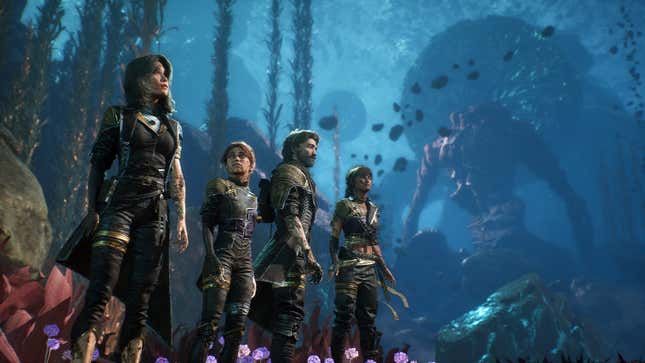
Despite all the action, the tactical layer remains intact. The UI is reminiscent of Persona, but the gameplay loop feels more like something out of Hearthstone: you’ve got nine Action Points to spend per turn. The more powerful the ability, the more it costs—so you’re constantly weighing whether to blow your resources now or hold out for a stronger follow-up. Each character brings their own twist: Gustave charges up a gauntlet with every hit until it explodes into a devastating attack, while Sciel combines light and dark cards to unleash apocalyptic combos. Figuring out each system is a joy in itself.
If anything slows things down, it’s the Pict system. These passive perks can be unlocked using special points—but managing them means diving into menus far too often. It’s a great system in theory, but it breaks the flow of exploration just enough that I started ignoring it outside of key moments. Thankfully, if you’re good at dodging and parrying, the game isn’t overly punishing on normal difficulty. Still, every fight feels intense—like your life is on the line—and it nails that classic RPG thrill: when everything seems lost, but you somehow pull off the win.
More Than Eye Candy – It’s Visual Storytelling
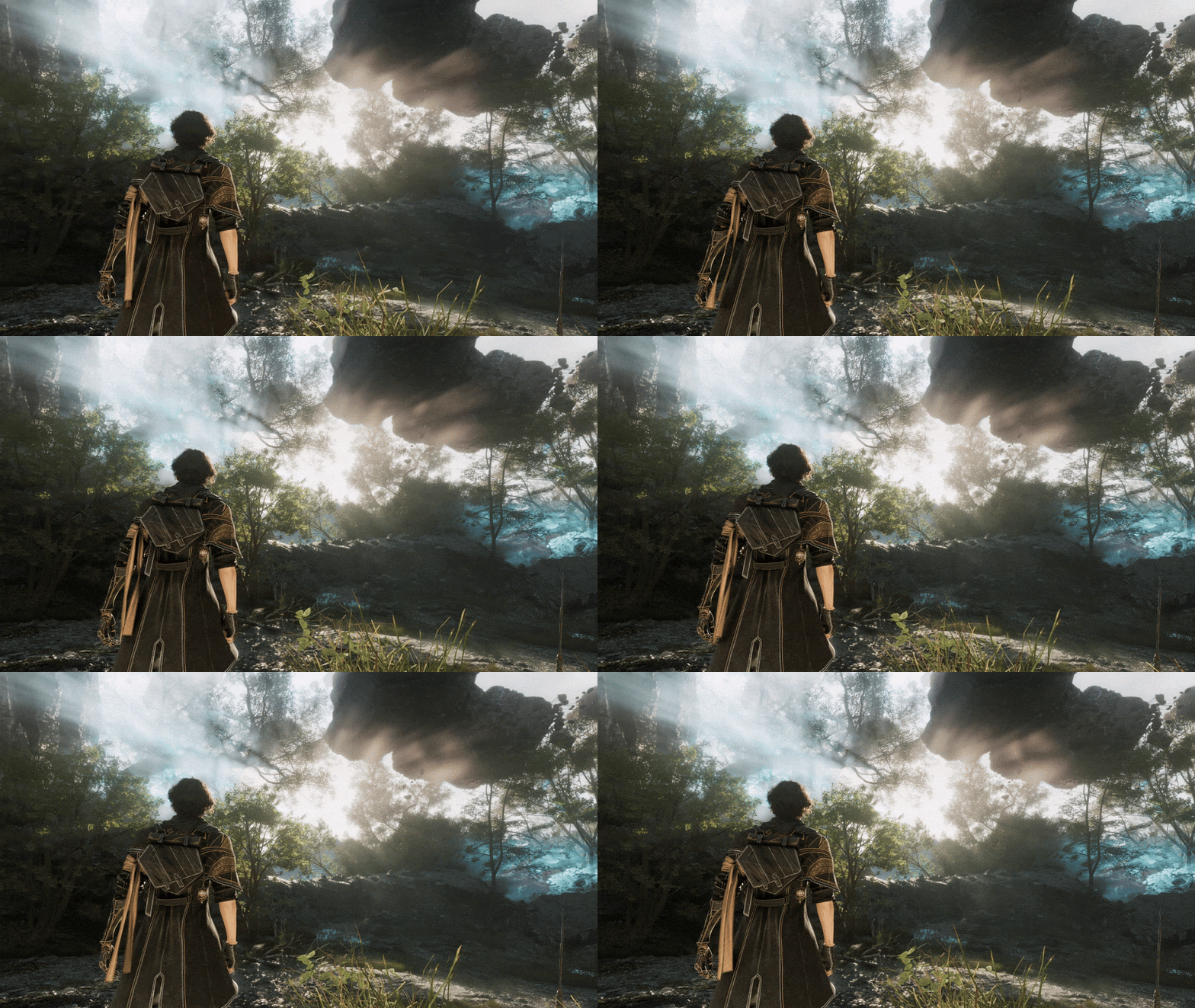
What makes Expedition 33 stand out even more is its art direction. Sure, it’s technically impressive—Unreal Engine 5 powers the whole experience without a hitch—but what hits hardest is the visual style. This game ditches the usual open-world template and goes old-school: a lush world map with linear but intricate zones to explore. As you progress, each area becomes more complex and layered. Optional mini-bosses, hidden secrets, and clever minigames are tucked into every region. And unlike modern games that handhold you with objective markers and quest logs, this one proudly throws you back to the classics. No hints, no glowing icons—just raw discovery, the way it used to be.
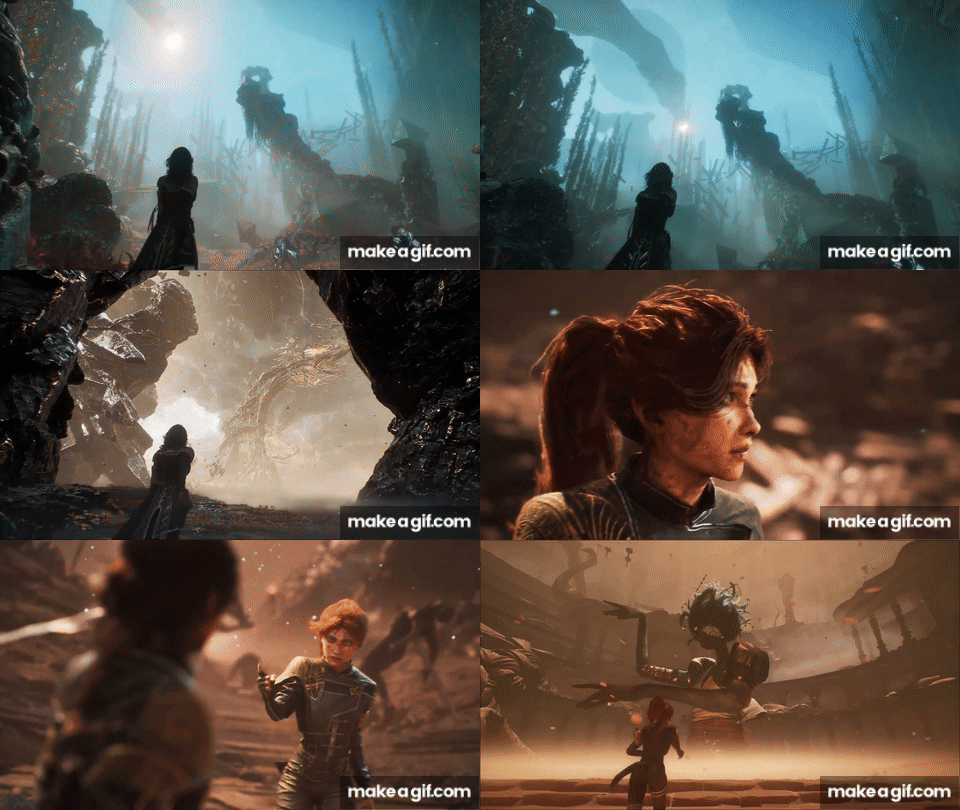
As I said, it’s not just about tech—it’s about the soul of the design. Expedition 33 is a heartfelt creation, and nowhere is that clearer than in its character animation. The developers clearly poured time and care into the motion capture and facial expressions, and it shows. The world itself is a fragmented dream—a surreal, fantastical vision of Paris and Belle Époque France, scattered with mythical flourishes… and a borderline-obsessive amount of rose petals.
And then there’s the music—easily one of the game’s strongest assets. If I had to describe it in one word, it would be: charged. It’s not just catchy—it’s unforgettable. From melancholic neoclassical pieces reminiscent of Nier, to guitar-driven battle themes sung in French that kick in right when things get brutal, the soundtrack keeps ringing in your head long after the console’s off. I’m calling it now: this is one of the best game scores of the year, no question.
Speaking of Nier, Expedition 33 has something else in common: emotional sensitivity. There’s a definite Yoko Taro vibe here—melancholic but deeply human storytelling that some players will connect with instantly, while others may bounce off. One thing’s for sure: people will be talking about this game’s final act for a long time. It’s bold, wild, and completely different from everything that came before it. Like I said earlier, not everything on the road there lands perfectly—some moments feel contrived, like characters staying silent just to dump exposition all at once. If you can’t click with that style, you might fall out of the experience. But if you do connect… you’ll feel it, hard. I sure did.
This Game Doesn’t Care If You Like It – And That’s Its Power
Let’s be clear: the story in Expedition 33 is absolutely worth your time. Despite the narrative chaos, the characters are always front and center. They don’t always get the screen time they deserve—because so many twists remain hidden until the end—but the game never forgets them. And that’s what allows them to be deeply tied to the game’s core themes: loss, sacrifice, and even the idea of finding refuge in art. This game doesn’t leave you indifferent. It’s too human for that. Even its title, Clair Obscur, carries meaning—it’s not just a painting technique, but a reflection of the story’s moral and emotional contrast. You’ll only understand that if you see it through to the end.
So let’s put it plainly: if you’re into JRPGs, the combat system alone will win you over. But if that’s not enough, Expedition 33 also dares to launch at a very modest price point—around 45 to 50 euros, which is practically half of what modern AAA games demand. It also respects your time: you can reach the credits in about 30 hours, though completionists will easily spend double that. Sandfall left no room for excuses—whether you’re a hardcore fan of the genre or just curious about turn-based systems and fantasy worlds, this one deserves your attention. It’s one of those rare games we hope to see each year: a title where the creators’ fingerprints are visible in every scene. The kind of game we think about when we complain that modern releases feel soulless and formulaic. It won’t be for everyone—but that’s exactly what defines a bold game.
This Isn’t Just a JRPG – It’s a French Artistic Uprising
When I first heard about Clair Obscur: Expedition 33, I was expecting a solid JRPG. What I got was something far richer: a game overflowing with personality and emotional depth. The story and combat both break conventions while keeping everything wrapped in an air of mystery. Sandfall Interactive doesn’t hand out answers—it poses questions and lets your curiosity lead the way. The world they’ve created feels a bit strange, with a lonely, apocalyptic tone—more like a giant dungeon than a vibrant universe. But the combat surprised me: it blends traditional turn-based strategy with real-time input, quick-time challenges, and a defense system built around parries and dodges. Each character has their own unique mechanics, and discovering them is a treat. Visually, the game is stunning, with an artistic flair that’s hard to forget—and the soundtrack is simply unforgettable. But what will shake people most is the story: melancholic, human, packed with twists and characters that leave a mark… and yes, it’s divisive. You might not connect with all of it—but if you do, this will be an experience you won’t forget. If you love JRPGs and want something that truly stands out, this one’s for you.
-Gergely Herpai “BadSector”-
Pros:
+ A twist-filled story that sparks discussion long after the credits roll
+ A unique JRPG style with a dynamic parry-based combat system
+ Visually stunning, with one of the best soundtracks in recent memory
Cons:
– The bleak, apocalyptic tone won’t appeal to everyone
– The story withholds answers a bit too long, which can be frustrating
– Limited optional content might reduce replayability
Pros:
+ A twist-filled story that sparks discussion long after the credits roll
+ A unique JRPG style with a dynamic parry-based combat system
+ Visually stunning, with one of the best soundtracks in recent memory
Cons:
– The bleak, apocalyptic tone won’t appeal to everyone
– The story withholds answers a bit too long, which can be frustrating
– Limited optional content might reduce replayability
Developer: Sandfall Interactive
Publisher: Kepler Interactive
Genre: Turn-Based Role-Playing Game
Release: April 24, 2025
Clair Obscur: Expedition 33
Gameplay - 9.4
Graphics - 9.4
Story - 9.6
Music/audio - 10
Ambiance - 8.9
9.5
MASTERPIECE
Clair Obscur: Expedition 33 is a bold and refreshingly original JRPG that fuses classic turn-based gameplay with responsive, real-time mechanics. Its story is deeply emotional, its world visually arresting, and its music absolutely unforgettable. If you’re looking for something unique in the genre, this is the one not to miss.











Leave a Reply