
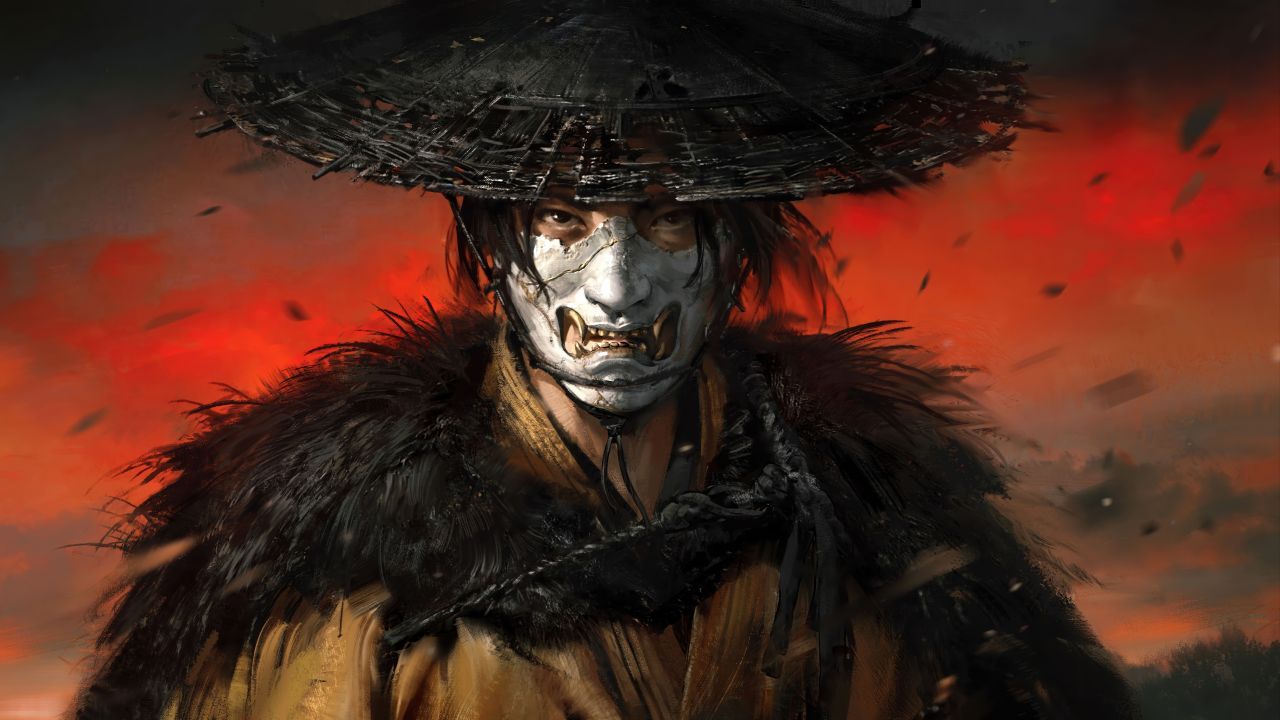
REVIEW – Ghost of Yotei isn’t just a sequel; it’s another chapter in the blood-stained clash between vengeance and honor. Five years after Ghost of Tsushima, Sucker Punch returns to Japan’s northern reaches, where legends breathe, snow turns crimson, and a lone bounty hunter named Atsu wages war against the ghosts of her past. It’s a meticulously staged, brutally beautiful journey on the knife-edge between death and redemption.
On the remote northern lands of Japan, in Ezo, whispers tell of a vengeful spirit who doesn’t stalk the innocent but strikes down the region’s most feared crime lords. The tale says that sixteen years ago an entire family vanished in a single night; myth and reality meet at one point: this is Atsu’s origin story. Our heroine swore she wouldn’t lay down her blade until every member of the Yotei Six pays for the massacre.

When the Past Won’t Let Go: Blood and Shadow on the Road to Japan’s Heart
A revenge tale isn’t novel on its own, but Ghost of Yotei pulls you in from the very first minutes with a bold audiovisual signature. The opener fires instantly: tight cutting, pulsing score, sweeping compositions—together they build an atmosphere that sets a high bar. In the early hours, it’s easy to believe a landmark adventure is taking shape; later, the story leans on familiar beats, so the endgame doesn’t spring big surprises. Even so, the pacing holds because character shading, the consequences of conflict, and a few smart turns keep attention engaged. Combat, stealth, and short recon/investigation stretches now alternate more evenly, which does a lot for the game’s overall tempo.

The Land of the Rising Sun Has Rarely Looked This Stunning
Yotei doesn’t chase raw photorealism: with a saturated palette, dense particle effects, and carefully lit frames, it composes more poetic images. The camera often leans on cinematic letterbox bars and strong contrast; on horseback, spaces feel expansive and the landscape “breathes.” Technically, Tsushima was often steadier, yet this feels more delicate with micro-details: the way grass ripples, how fog pools in valleys, or how a shadow rides the edge of a mask all serve the scene’s drama. The main campaign’s visual direction therefore lands more cohesive and intentional.
This Ronin Can Do Just About Anything…
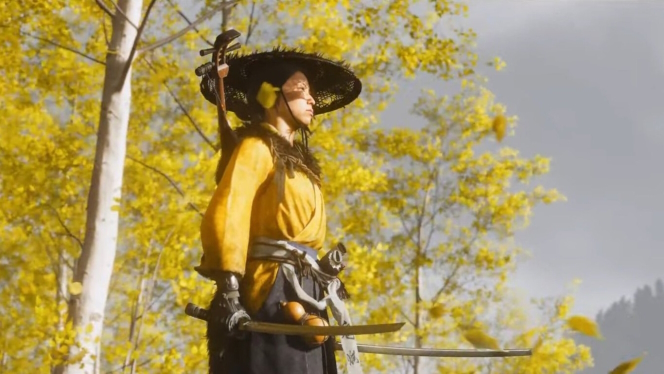
Exploration is built around reading the world rather than chasing a blizzard of map icons: the map is cleaner, and what you see and hear in the world—tracks by the roadside, smoke on the horizon, offhand comments from locals—sets you in motion. If you’re here to roam, you leave the path out of curiosity, not because an icon barks at you. Tips from locals sometimes give precise directions and sometimes just rumors—and that ambiguity actually helps the rhythm. The main objective remains pinned, but side content surfaces organically: contracts, chance encounters, legend-driven quests, and—for the first time in the series—a premium bounty-hunting track that gives side activities their own identity.
Narrative memory scenes don’t accompany the entire runtime; once they recede, you may miss those personal flashbacks. Even so, side missions feel more varied in structure, though staging often stays conservative. Over time, a few classic activities begin to repeat—the fortress clear-outs and vertical climbing paths can slip into routine in the back half—but the designers do play with expectations here and there (not every guiding animal leads to the same reward), so the tempo rarely flatlines.

Draw the Katana! (And Plenty More…)
Atsu isn’t a samurai but a bounty hunter—her move set is accordingly broad. Alongside the base katana you can secure twin blades, the long-hafted yari, the chain-and-sickle kusarigama, and the colossal odachi. The latter three aren’t mandatory, but you’d be remiss to skip them: each demands a distinct combat mindset and is taught by dedicated masters, which brings fresh air to progression. The weapons’ strengths and weaknesses relative to enemy types read cleanly, so in group fights you’re constantly swapping to keep the mob under control. The returning Spirit resource still fuels special maneuvers and smart health management—now even a quick swig of sake can restore momentum mid-scrap. Duels, challenges, and one-stroke finishes also make a comeback.

Sometimes the Chaos Creeps In…
Combat is a Sucker Punch hallmark: it’s hard-edged, timing-driven, and rewards clean reads. When too many foes close in, though, the scrum can fracture—camera work has improved, but it can’t always keep everything framed perfectly. Stealth sections haven’t been radically reimagined; they function, but show little evolution. There are a few welcome wrinkles: you can grab and toss opportunistic battlefield weapons, the disarm/being-disarmed system works both ways, and firearms now spice up the cadence (the quick-draw musket is surprisingly handy).
The wolf teased in the trailers isn’t a permanent companion. Early on it appears sporadically; later it can be tamed and summoned before fights. It even has its own skill tree, which progresses as you free dens across the map—bringing a new type of exploration with it. It’s a helpful crowd-breaker, but just as importantly, it mirrors Atsu’s arc: a loner learning to trust.

The New PS5 Sensation?
Ghost of Yotei can paint panoramas with real presence: generous draw distances, consistent production design, and weather effects that set the mood. Up close, some seams show: certain NPC and animal models vary in quality, and indoor scenes—when the lighting is less dramatic—can look a touch flat. Overall, though, there’s a meaningful step up: cutscenes feel more cinematic, facial animation reads clearer, and the world coheres more convincingly.
On a PS5 “Fat,” you get three display modes: Quality (30 FPS), Ray Tracing (30 FPS with stronger lighting), and Performance (60 FPS). On PS5 Pro, Ray Tracing Pro delivers enhanced lighting and detail at 60 FPS—the best-looking option. Even on the standard PS5, performance is steady and confident.
The final build still sports a few technical hiccups. We saw a quest title persist onscreen long after completion; in another case, a required NPC wouldn’t respond; and in the central region the cinematic black bars eventually vanished and can’t be toggled in the menu—some players will find that distracting. Armor clipping through cloaks also rears its head now and then.
Promising Sequel or Instant Classic?
Ghost of Yotei doesn’t topple every pillar its predecessor built, but it’s a confident, large-scale action-adventure: the world invites organic exploration, the vistas linger in memory, and the combat system has satisfying depth. Sucker Punch has clearly advanced in structuring open spaces, and the central region keeps feeding you new stimuli for dozens of hours. Even past the 50-hour mark, we stumbled into surprises and chance encounters. If you’re shopping for a safe PS5 pick, Ghost of Yotei belongs on the shortlist.
-Gergely Herpai “BadSector”-
Pros:
+ Gorgeous vistas and sweeping panoramas
+ Dynamic, deep, and varied combat system
+ A living, organic world with constant discoveries
Cons:
– Side missions grow repetitive over time
– Technical issues and smaller bugs can occur
– Stealth sections haven’t meaningfully evolved
Developer: Sucker Punch Productions
Publisher: Sony Interactive Entertainment
Genre: Action-Adventure
Release Date: October 2, 2025
Ghost of Yotei
Gameplay - 8.8
Graphics - 9.5
Story - 8.3
Music/Audio - 8
Ambience - 8.9
8.7
EXCELLENT
REVIEW – Five years after the legendary success of Ghost of Tsushima, PlayStation and Sucker Punch are back with their katanas drawn: the spiritual successor, Ghost of Yotei, launched exclusively for PS5 on October 2, 2025.













Leave a Reply