
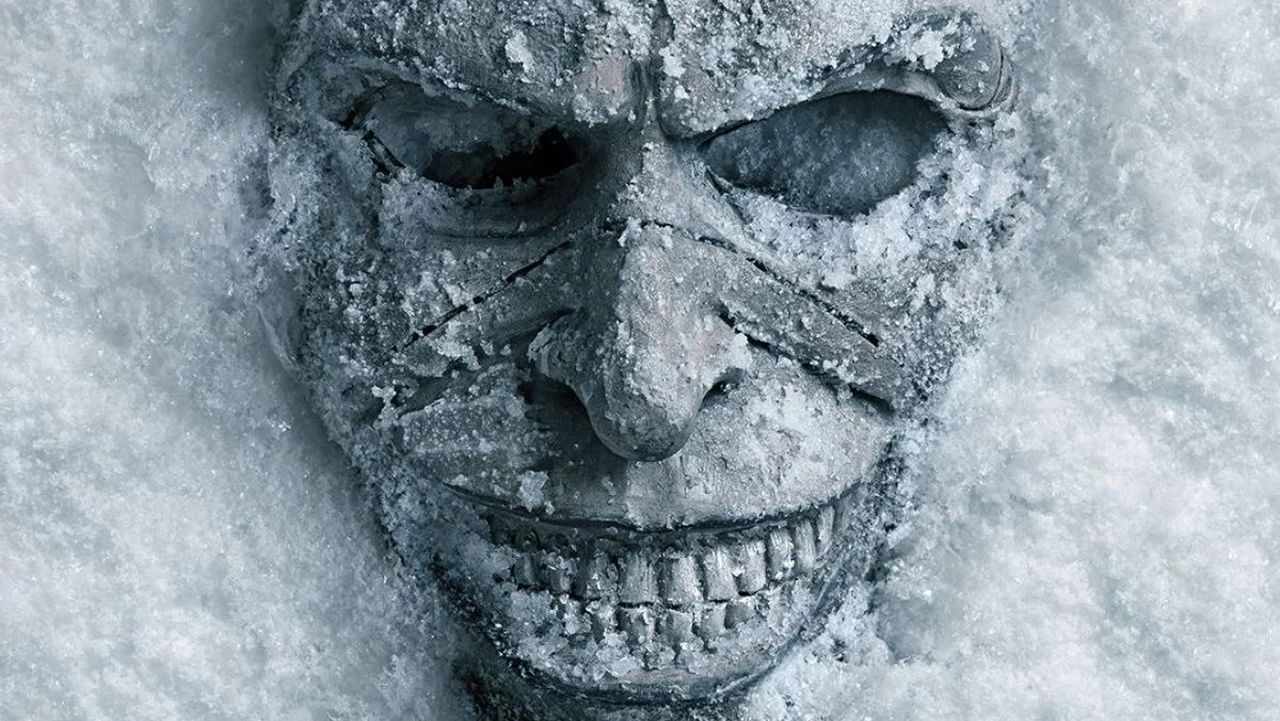
MOVIE REVIEW – Scott Derrickson brings the Grabber back, but this follow-up tosses the old playbook: set in 1982, the story skates along the edge of a snow-squeaking, half-dream dread where the tension tightens, slackens, then slithers back in again. The pace is purposefully drowsy and hypnotic, swapping cheap startles for a slow-burn creep that gets under the skin, while Ethan Hawke’s masked predator remains the kind of horror icon whose grin keeps flickering behind your eyelids long after the credits roll.
The Grabber (Ethan Hawke) returns, yet Derrickson isn’t flipping through the same rulebook he used last time: this sequel leans into A Nightmare on Elm Street-style dream logic with a healthy dose of winter-camp menace straight out of Friday the 13th. It favors a hovering, ominous vibe over jolt-a-minute scares; the suspense does ebb and flow, but Hawke’s frostbitten, mask-fixed predator is a magnetic center — by the time you leave, the image of that mask is still ghosting behind your eyelids.

Frostbitten Slasher Dream by Alpine Lake
Four years after the first film—adapted from Joe Hill’s short story—teenage Finney (Mason Thames) has stepped into the “resident tough kid” slot once held by his late friend Robin, beating a new classmate bloody on the playground. His sister, Gwen (Madeleine McGraw), is hardly reassured; the actor who once played Robin, Miguel Mora, now appears as Ernesto, Robin’s kid brother, tailing her around while Gwen keeps having brutal, snowy nightmares about children being slaughtered by an unseen killer. Those visions connect to a girl named Hope (Anna Lore), who calls from a Christian youth camp’s payphone back in 1957. Digging into the place, Gwen learns their mother once worked there; after some heavy persuasion, Finney agrees to follow her to the frozen camp as a counselor-in-training, their father Terrence (Jeremy Davies) three years sober and—apparently—finished with the belt.

Big Brother on Guard
Finney signs on not only to watch over Gwen but because he trusts her odd, lightning-flash intuitions—and because his own baggage is getting too loud. Telephones track him everywhere: the nerve-fraying trill, the curt reply—“I’m sorry, I can’t help.”—the decisive hang-up. On the other end are the restless dead asking for help, and Finney isn’t ready to answer. He’s been blunting the fear and fury with weed, which leaves him dulled-out and moody—yet it does nothing to stop the recurring visions of the Grabber’s sly smile behind that mask.
By the time Gwen, Finney, and Ernesto reach Alpine Lake, the movie has pitched its tent squarely between life and the hereafter. Derrickson turns Gwen into a tugged-from-beyond conduit, roaming a liminal in-between that he shoots on scratchy, jittering Super 8—his go-to texture whenever childhood pain takes the stage. Her dreams keep hauling her back to the Grabber’s house, where the basement’s black phone still connects to the dead—and where the Grabber’s presence lingers, despite Finney strangling him at the end of their first round. Once the trio reaches camp, the phone comes to life again: the old tormentor hisses, “Hell isn’t fire—it’s ice.”
Camp, With Extras
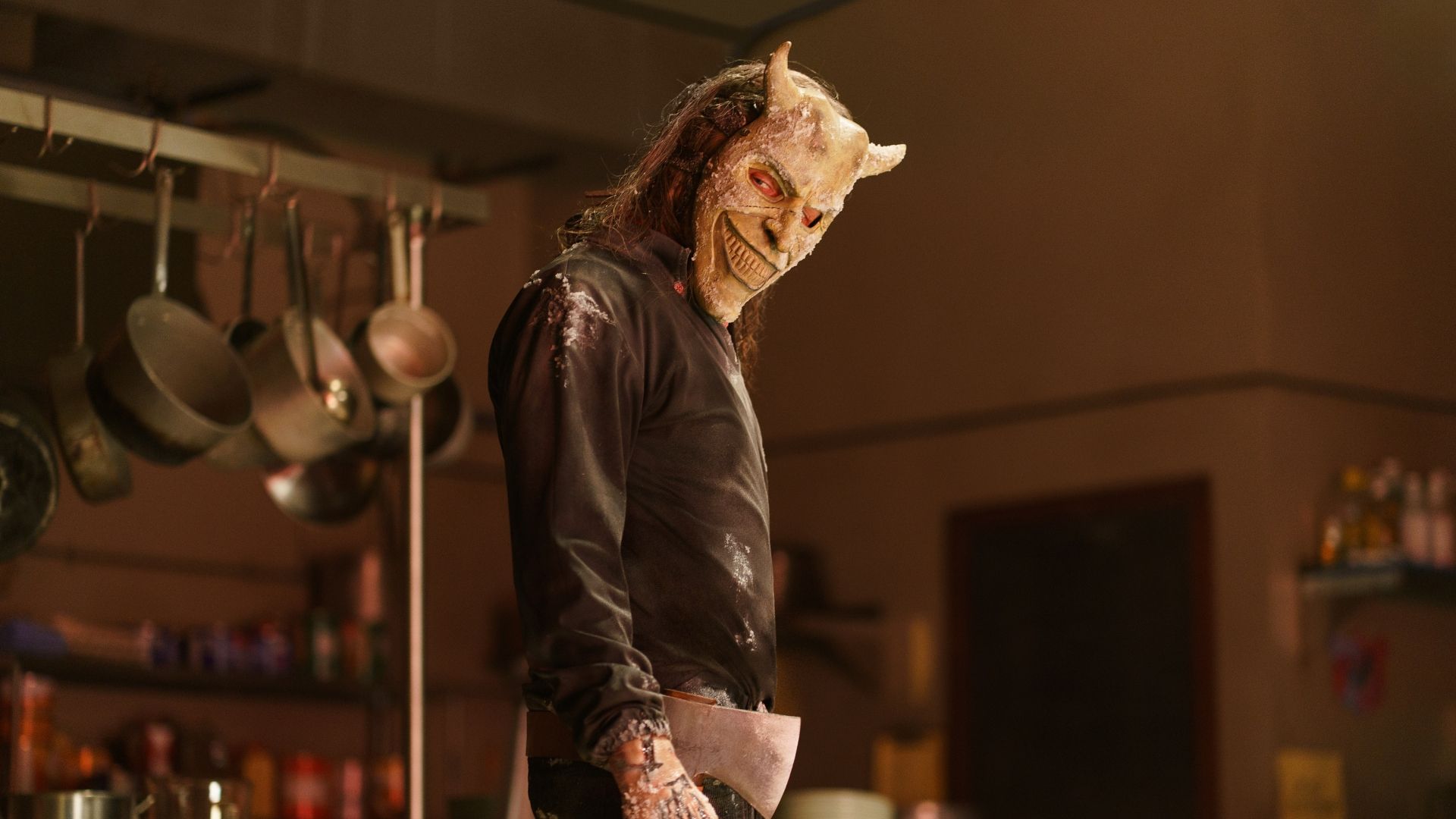
Most of the story unfolds at the snowed-in retreat, which the blizzard turns into a sealed arena. The kids are marooned with a small adult staff: the owner-director Armando (Demián Bichir), his niece Mustang (Arianna Rivas), and two employees, Kenneth (Graham Abbey) and Barb (Maev Beaty). Barb is the true believer of the bunch, endlessly scolding Gwen for her mouth and “godless” attitude. Derrickson and C. Robert Cargill lace the script with threads of faith—devout mother, skeptical father, Gwen clutching a personal strain of Christianity—but those ideas mostly dress the stage. The Grabber returns as a defiled child-killer whose time in the devil’s company has sandblasted away what was left of his humanity.
The series benefits from the switch to deep-freeze: the landscape is both a visual shake-up and a mirror to the characters’ emotional permafrost. Instead of replaying the abducted-child template, this chapter floors it toward the hallucinatory. Yes, the “fight the monster in dreamspace” beats occasionally nod hard toward Wes Craven, but the grainy, old-school look keeps the movie’s unreality its own. The standout image: the Grabber skating out of the fog across a glassed-over lake, axe in hand, bearing down on Finney, Gwen, and the others—even if Pär M. Ekberg’s night photography sometimes slips into murk.
Hawke’s Grabber: Full Psychopath or Just a Tease?
Derrickson reaches for a true pop-out scare only once; his focus is the trancey sense of danger. The film is at its creepiest whenever Hawke’s grinning specter glides into frame—though he could stand to haunt the screen more. The script handwaves his return with a couple of tossed-off lines, yet it’s enough to reset him as a proper boogeyman. Hawke salts every word with taunt and cruelty, and his poised, predatory posture is as menacing as that ear-to-ear smirk. By echoing scenes from the prior film—through direct flashbacks and sly visual rhymes, like the Grabber chopping ice in sync with Armando, mirroring Finney and Robin’s training—the movie gives its monster an almost perennial-wraith flavor.
What follows works both as a plunge into the afterlife and as a sibling therapy session in disguise: Finney and Gwen are clawing toward closure—bound by trauma, wrath, grief, and strange talents—while Derrickson and Cargill quietly pour the foundation for what might come next. Whether another round is in the cards is anyone’s guess, but as it stands, the series remains a distinctive nightmare—defined by a malevolent mask and a smile sharp enough to haunt a horror fan’s sleep.
-Gergely Herpai BadSector-
Black Phone 2
Direction - 8.2
Actors - 7.4
Story - 7.2
Visuals/Horror Mood - 8.2
Ambience - 7.8
7.8
GOOD
Derrickson steers Black Phone 2 into a half-dream slasher set in a deep-freeze camp, trading quick shocks for slow, skin-prick creep. Ethan Hawke’s Grabber remains a chilling totem—one smile, and the blood runs cold. The film seeks closure for Finney and Gwen while nudging the door open for another call.












Leave a Reply