
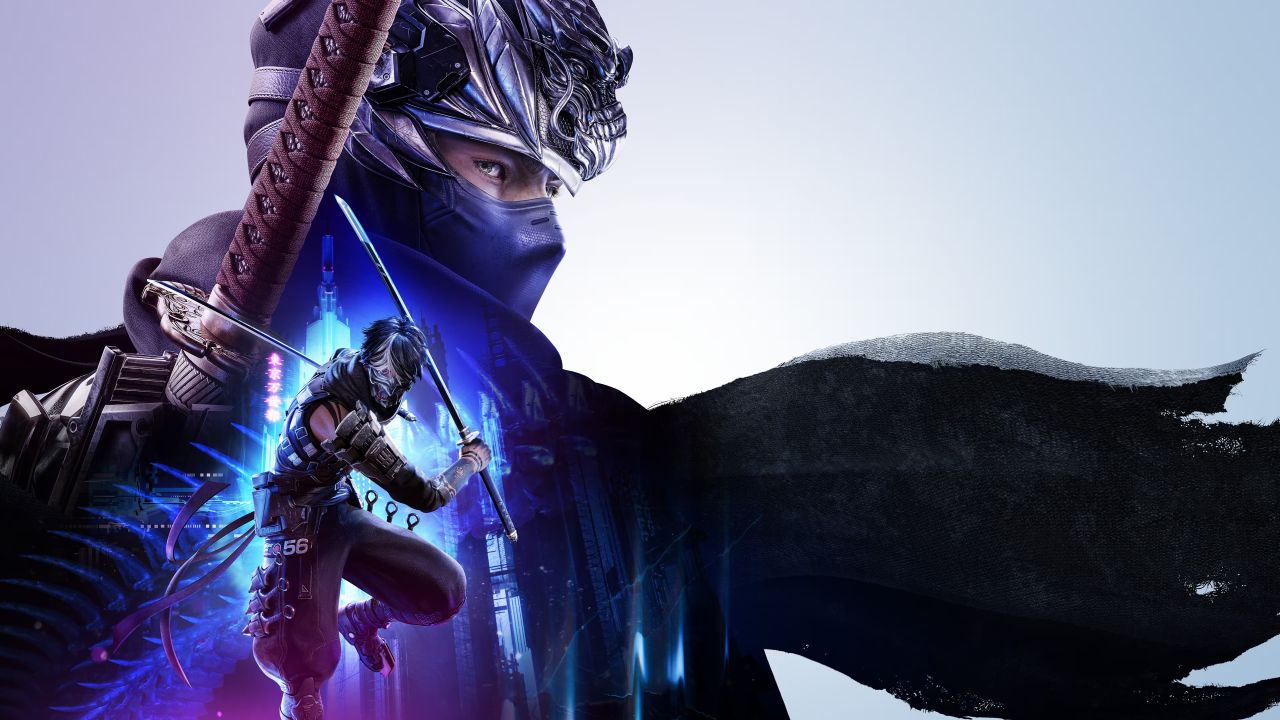
REVIEW – Team Ninja brings back action that literally demands razor-sharp reflexes: Yakumo, the new young ninja hero, cuts through chaos in near-future “cyberpunk” Tokyo and beyond, where every smart or bad decision – and every mistimed button press – can cost you your life. Ninja Gaiden 4 isn’t quite as hellishly difficult as the old entries. Still, it also doesn’t try to please everyone: it sets a hard pace and consistently demands learning, observation, and discipline. The series’ legacy shows in the personality of the weapons, the enemy fighting styles, and the boss fights’ “learn-fail-improve” loop. The real question is how that heritage meshes with today’s accessibility expectations and technical standards. Thanks to Microsoft, I dove into Yakumo’s adventure – katana first – on a PS5 Pro.
A new hero, a new engine and visual identity, a new story – those are the headline features of Ninja Gaiden 4, which launched early this morning, five days after the death of Tomonobu Itagaki, the father of the legendary 2004 Xbox entry.
At the same time, this sequel doesn’t try to rewrite the ninja-action handbook or ditch Itagaki’s legacy; it streamlines it. Focus well and you’ll parse and execute combos faster, with clearer feedback on hits and dodges. The core loop is unchanged: with lightning-fast reflexes, you decide – in a split second – whether to attack or defend, which combo to commit to, and which move fits the moment. Even basic enemies are merciless, and mini-bosses and bosses will mince you if you don’t pay attention. Welcome back to Ninja Gaiden’s brutal, bloody world.

Two Razor-Sharp Ninjas Don’t Both Fit in One Tokyo?
Ninja Gaiden 4 picks up right after Ninja Gaiden 3 in a near-future, dark, depressive, cyberpunk-tinted Tokyo, where the legend of the Dark Dragon’s return plunges the city back into chaos. The story features two playable leads: the iconic Ryu Hayabusa is back, but the focus is on Yakumo, a young ninja of the Raven (Blood Raven) clan. The two start on opposite sides, but the scale and nature of the threat force them to team up. Chapters swap perspectives while the “old-school” Gaiden mythos (Dark Dragon, ancient seals, clan rivalries) gets stitched into a modern, neon-soaked Tokyo.
Within the story, Yakumo is the Raven clan’s young ace and a descendant of the Dark Dragon; his mission initially clashes with the Hayabusa clan’s interests. The key point: because of his past and bloodline, Yakumo is directly tied to the Dark Dragon myth – to the point that he even considers extreme steps like breaking the dragon’s ancient seal. The core character dynamic: Ryu is the disciplined “master,” Yakumo the whirlwind – talented, hot-headed, and a bit cocky. The early feud evolves into a partnership by the finale.
The plot doesn’t stop at Tokyo: the campaign moves on to more locations (clan shrines, industrial complexes, skyscraper summits, labs), with Ryu and Yakumo’s paths crossing here and there – sometimes Ryu is a mentor, sometimes a “rival.” Thematically, it brings back the series’ classic motifs in a modern frame: ancient demonic power (the Dark Dragon), clan loyalty vs. personal morals, the master-student dynamic, and an ethos of “fair yet unforgiving” fights that the devs explicitly stress: enemies play by the same rules you do.
Alongside the two master ninjas, a handful of side characters pop up – mostly over radio, more rarely in cutscenes. Seori is a mysterious, almost “goddess-like” figure with suspiciously deep knowledge; Umi, Yakumo’s clanmate, is constantly on comms and throws a dramatic fit every time you die; and Misaki is Yakumo’s pragmatic, sometimes chilly boss, who still flashes moments of panic when the kid face-plants.

Blade Ballet to a Metronome
In Ninja Gaiden 4, combat isn’t a clickstorm – it’s a series of surgical cuts metered to a beat. With lighter weapons (katana, daggers, short blades) you zip around like you’ve got a metronome in your spine: quick swaps, fine corrections, never missing a beat. Heavier steel brings weight and authority, but with a tiny margin of error: attack off-tempo and a hard counter slash yanks you back to reality – your ego and your hero both take the hit. You never have to guess whether a cut landed: a quick flash, a small camera nod, a painful SFX – unambiguous cues that it really hurt.
Bosses follow classic Gaiden doctrine, but in tighter direction. Act one: read their tells – when they swing, where the twist comes from, which move leaves them open. Act two: capitalize – find the gap in the armor and hook in your combo. Act three: you set the tempo – defense flips to offense, and you’re conducting the rhythm. No cheap gimmicks, but no free wins either; rush and the game smacks you down, and after a few heavy hits Umi will already be sobbing over your corpse.
Checkpoints are fair: you pay for mistakes, but not with half a day. Training mode’s there to drill strings, executions, and timing. Quality-of-life finally matters: snappier menus, clear weapon and ninpo switching – less fiddling, more eviscerating. On tougher mob swarms and bosses at Normal, if you bite the dust you get a pity potion; after multiple deaths, you’ll get more. The strongest tonic even revives you – so even the nastiest fights don’t feel impossible.

What’s New, Ninja?
The old Ninja Gaidens were great, but level design wasn’t always grand or imaginative. That’s what changes hard in this fourth entry. In futuristic Tokyo you’ll often be vaulting rooftop to rooftop at dizzying heights, sometimes Assassin’s Creed-style one-shotting an unsuspecting guard from above; elsewhere you’re slaloming along massive pipes high over the city, leaping between speeding trains, gliding into wind tunnels while boulders rain down from above. Those are just a few twists that spice up the hardcore Gaiden formula – and there are more in the bag.
Zones are also cleanly readable with clear danger points. Most of the time you’ll feel the way forward naturally; if you do get turned around, one button press gives you a gentle pointer to the next objective.

At Least as Pretty and Fast on PS5 Pro as Sony’s Own
Microsoft (Xbox PR) provided the game for testing on a PS5 Pro. Even though we’re talking about a Microsoft Games title, it runs flawlessly in its dedicated mode on PS5 Pro, whether on a 140 Hz Hisense TV or my 60 Hz Hisense projector. Everywhere you look it’s razor-sharp, gorgeous, and blazing fast. No hitching, no smeared textures – the kind of hiccups some engines (hi, Unreal 5) still struggle with.
This Ninja Is Still Sharp as Hell!
This Gaiden doesn’t flatter you: you step in, take two slaps, then learn to breathe on the beat. The blade is cold, the neon is hot, and every blown move leaves a tiny scar on your pride. Once your hands lock in, the fight becomes music – silences and blasts, short flashes and long finishes. It’s not for everyone, but those it grabs get carried like a petal on the wind: fast, ruthless, and somehow beautiful. Old school, new cadence – and in the end, the only thing that matters is whether you had the guts to dance it to the end.
– Gergely Herpai “BadSector” –
We received the Xbox Series X review code from Xbox PR.
Pros:
+ Precision Blade Work: Every Cut Is a Decision
+ Unforgettable, Neon-Drenched Tokyo and Spectacular Traversal Set Pieces
+ Rock-Solid on PS5 Pro; Quick Loads, Minimal Stutter
Cons:
– Campaign Feels Short; Another 2-3 Hours Wouldn’t Hurt
– Puzzles Are Simple; Rarely Slow You Down
– “Helper” Healing Items Lower the Stakes on Normal
Developer: Team Ninja / PlatinumGames
Publisher: Xbox Game Studios Publishing
Genre: Action, Hack ’n’ Slash (Third-Person)
Release Date: October 21, 2025
Platforms: PS5, Xbox Series X|S, PC
Ninja Gaiden 4
Gameplay - 9.4
Graphismes - 9.2
Story - 8.2
Music/audio - 8.6
Ambience - 9.5
9
AWESOME
Ninja Gaiden 4 hits where it counts: tight rhythm and encounters that are fair yet unforgiving. The levels are grander, the tech is stable, and the new-hero/old-master dynamic brings a breath of fresh air. It could be longer and bolder with its puzzles, but if you’re here for the “learn–fail–improve” loop, you’ll get hooked all over again.



![[TGA 2025] Tomb Raider: Legacy of Atlantis: Another Remake of the First Game! [VIDEO]](https://thegeek.games/wp-content/uploads/2025/12/theGeek-Tomb-Raider-Catalyst-Legacy-of-Atlantis-Remake-Crystal-Dynamics-302x180.jpg)







![[TGA 2025] Tomb Raider: Legacy of Atlantis: Another Remake of the First Game! [VIDEO]](https://thegeek.games/wp-content/uploads/2025/12/theGeek-Tomb-Raider-Catalyst-Legacy-of-Atlantis-Remake-Crystal-Dynamics-300x365.jpg)
Leave a Reply