
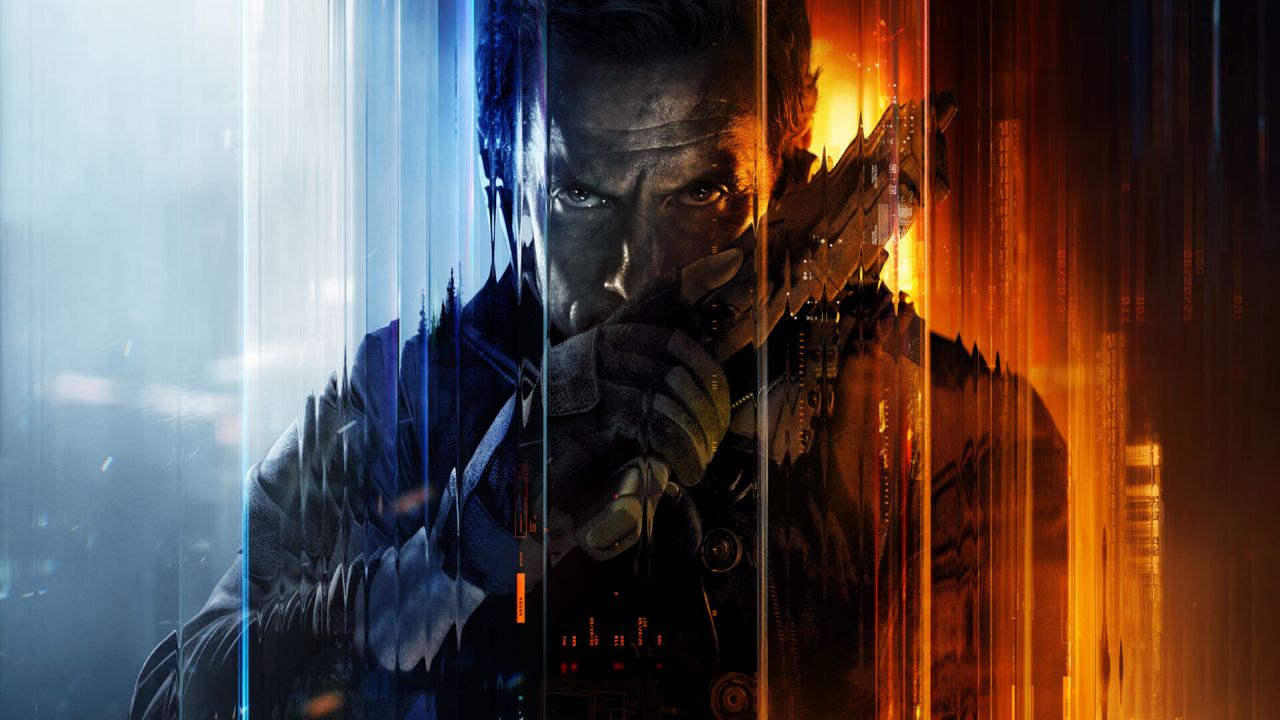
REVIEW – 2025 is stacked with heavy hitters, but the game most people have in their sights is easily Call of Duty Black Ops 7, and that is no accident. Its prestige showdown with Battlefield 6, the constant noise around Microsoft, and the aura of the Black Ops sub-brand have all combined to make this one of the most watched shooters of the year. The real question is whether this new episode, stuffed with zombies, hallucinations and an Endgame co-op mode, actually levels up from last year’s Black Ops 6, which many saw as the series back in top form, or if it is just a loud, flashy but uncertain change of direction.
On paper, Black Ops 7 checks basically every modern AAA FPS box. You get a full campaign that you can blast through solo or in four player co-op, a brutally content rich Zombies section on the side, and of course the classic competitive multiplayer that is still the main attraction for most players. For this review I only had proper hands on time with the multiplayer through the beta, but even there it was already clear that the movement, the new system built around full directional movement and the new wall hopping setup bring a far more agile, vertical style of gunplay than what we were used to a few years back.
The marketing machine cranked all of this up with a reveal at Summer Game Fest. The first trailer dropped at the biggest Xbox event of the year, starring Milo Ventimiglia as an older David Mason, one of the Black Ops saga’s cult figures. The bombastic preview promised the “most mind blowing” COD campaign ever, with futuristic 2035 backdrops, collapsing cityscapes, robots, cloaking tech that turns you invisible, ridiculous power jumps, and a technocratic puppet master pulling the strings in the background, the Guild. Early reviews described the experience as a hallucinogenic, dystopian roller coaster where psychological warfare matters at least as much as how many rounds are left in the mag.
Based on that setup, it was easy to assume the story would land somewhere between Advanced Warfare and a harder edged political thriller. Instead, the campaign happily slides into horror, hallucinations and trippy visions far more often than any previous entry, so at times it feels closer to a Resident Evil-style co-op survival horror than a classic war themed FPS. It is a fresh, cheeky move but also a direction that definitely will not sit in the lap of every old school Black Ops veteran.

When Black Ops Feels More Like Horror Than War
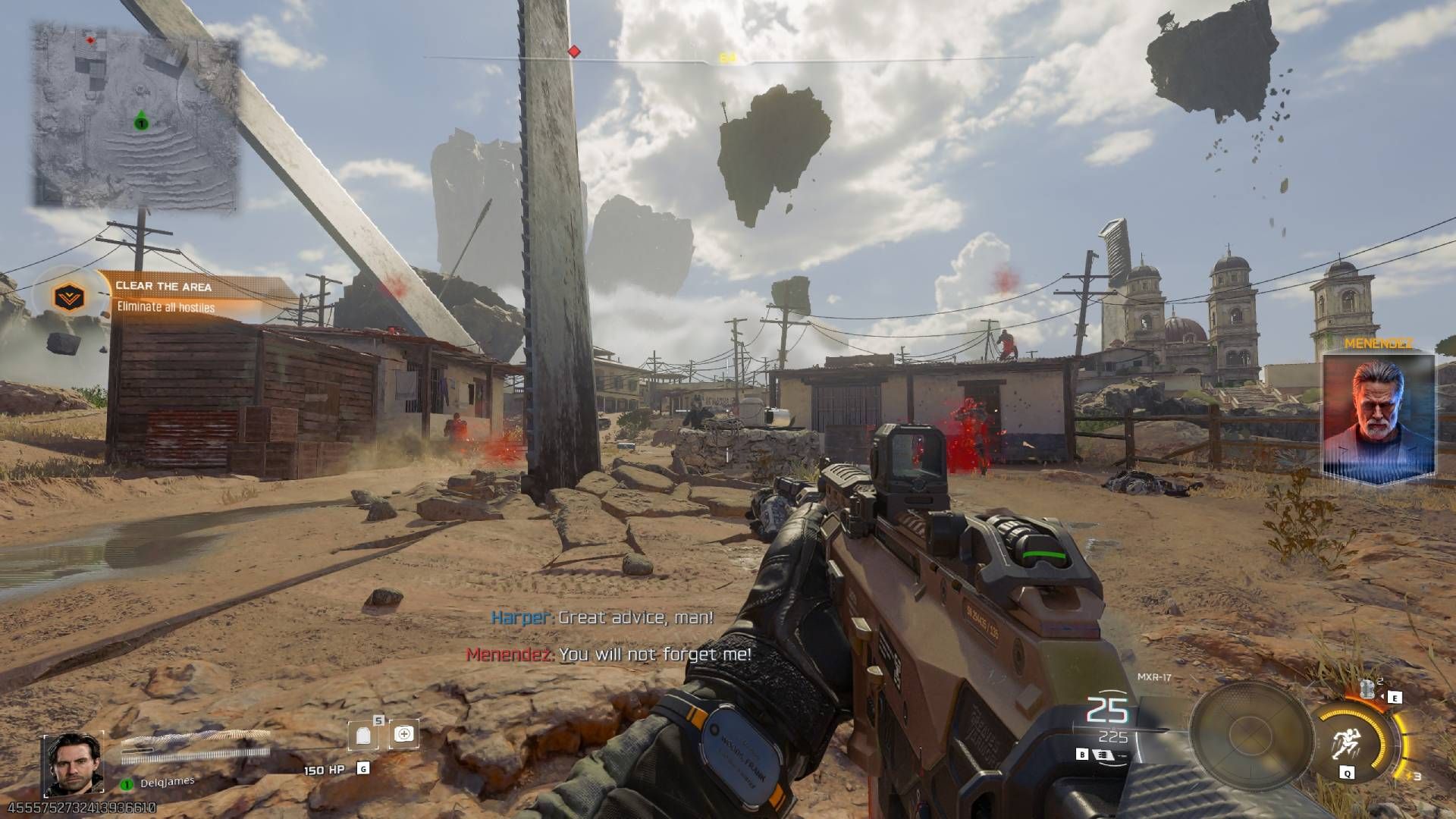
The story is set in 2035, directly after the canonical ending of Black Ops 2, and loosely ties into last year’s Black Ops 6. Four JSOC soldiers, David “Section” Mason, Eric Samuels, Leilani “50/50” Tupuola and the returning Mike Harper, head out on what looks like an impossible mission. They are tasked with finding out how the infamous Black Ops 2 villain Raul Menendez could have come back. After a few missions, though, it becomes obvious that this “resurrection” is just a cover story, and the real threat is the Guild, led by CEO Emma Kagan, who is developing a new chemical weapon built around pure fear.
The campaign is spread across twelve missions, including the Endgame mission that functions as the finale, and the opening makes it clear right away that this is not a classic spy thriller but a full on psychedelic nightmare. The Guild’s weapon literally twists reality. Corridors stretch out to impossible lengths, walls melt away, streets warp into grotesque stage sets, and soldiers turn into twisted, zombie like creatures. The whole thing has a strong “experimental” vibe, as if someone took the psychological threads that have always run through Black Ops and painted over them with a thick horror movie marker.
On paper, the four leads are a strong lineup. David Mason is now a seasoned veteran, Leilani is a “half soldier, half machine” augmented with cybernetic implants, Harper brings the loudmouth old warhorse energy, and Eric Samuels is the quiet observer who reads everything and everyone. In practice, though, this works more because of the voice acting than because of the gameplay, since none of them have truly unique, clearly felt special abilities in mechanical terms. Choosing a character is mostly a cosmetic decision. It is obvious Activision still has money for recognizable faces, but because there is so little real gameplay difference between them, they end up mattering less than they could.
The level design, fortunately, is a lot more creative than that. There are classic corridor shooter stretches where scripted moments and explosions dictate the pace, but plenty of missions are built around the side effects of that fear based super weapon warping space itself. In one mission you return to what looks like a familiar Black Ops 2 location that gradually shifts into a grotesque nightmare maze as zombie like monsters, elongated shadows and techno horrors close in on you. Elsewhere you are solving simple but atmospheric puzzles to crack open doors, smash plasma glass or hack systems, while mini bosses and full blown boss fights close out each arc.

Superpowers, Avalon And The Downsides Of Third Person
Mechanically, the campaign is still the same fast paced “instant headshot” Call of Duty everyone knows, only now there is even more fuel poured on that fire. The full directional, freerun and parkour style movement system that debuted in Black Ops 6 is back, this time with wall hops layered on top. It sounds minor on paper, but in practice it makes the whole gunplay loop much more dynamic. When you bounce off three or four walls to end up behind an enemy, or clear an entire line of cover with one smooth jump, you can feel how much the experience leans on movement instead of just weapon stats.
On top of that you get a set of extra abilities. Huge jumps that bridge ridiculous gaps, a cloak that turns you invisible, and a grappling hook that plays a starring role in the campaign. These tools shine the most when the level design is built around them. The Mediterranean flavored city of Avalon is a great example: it is a large, semi open space where you cruise around in cars, glide with a wingsuit, zip across lines and teleport with gadgets while ticking off side missions, intel pickups and smaller events. In those moments the game feels like a hybrid, part looter shooter, part co-op raid title, part modern extraction shooter.
You can play the entire campaign in first person or with an over the shoulder third person camera, and you can switch between the two at any time in the menu. On paper that sounds like a great idea, but in practice it is obvious that third person got a lot less love. Some animations break in odd ways, the camera occasionally snaps to weird angles, and on more than a few maps you can feel everything was built first for the first person view, with the external camera tacked on as a bonus bullet point. Whether you like it or not will come down to taste, but this is definitely not the feature that pushes Black Ops 7 to a new level.
Between the more linear, cinematic missions there are real high points. Disruption, for example, takes you back to the iconic boat from Black Ops 2 and then slingshots you into neon drenched Japan, where you fight your way through narrow hallways and across rooftops while Guild drones and nightmare visions pile on from all sides. In those sections, the series is in its best form again. The pace is tight, the set pieces hit hard, the score does its job, and for a while the campaign really feels like a big budget action movie, not just a stretched out Zombies tutorial.

Co-op, Live Service And That Missing Pause Button
The biggest problems show up where the co-op nature of the campaign collides with modern live service expectations. The Black Ops 7 campaign is one hundred percent online. You cannot truly pause it, there is no classic pause button, and you cannot simply drop out of a mission with one click. If your connection drops, the game crashes or real life pulls you away, there is a good chance you will have to restart the whole mission no matter whether you were halfway through or at the very end. For a 2025 AAA game this is a baffling compromise, and critics are absolutely right to call it one of the most annoying traits of the campaign.
Things get even worse if you play alone, because in that case your squad mates simply vanish from the field. They are still there in the dialogue, the story insists they are by your side, but you do not get any AI bots to fight next to you, so the whole thing looks like the main character is talking to imaginary friends the entire time. It does not break the balance, but it feels clumsy, and in a game that is supposedly built around co-op, it is strange to see solo players treated this casually.
The flip side is genuinely attractive, though. The campaign, Zombies and multiplayer all share one unified progression system. You earn XP, level up guns, unlock skins and camos in any mode, and everything keeps ticking together in the form of levels, seasonal ranks and mastery camos. Camo hunters can breathe a bit easier. The grind is still heavy, but the structure is much friendlier than it was in Black Ops 6. For example, the highest level mastery no longer demands an extra round of suffering on every single weapon.
If you focus only on the campaign, you are looking at around ten hours to hit the credits in solo play on a standard difficulty. With a tight co-op squad that can be shorter, but thanks to the puzzle like sections, side objectives and exploration there is plenty of room to spend double that time in the story. And then there is Endgame, which is essentially an open world extraction shooter layered over the Avalon map. Thirty two players roam the city’s different zones at the same time, picking up side missions, collecting intel and then trying to escape at extraction points while Guild soldiers, drones and zombie hordes try to tear them apart.
On paper it is a great idea, but in practice you can feel some repetition creep in. The mission structure is often very similar, go here, pick this up, kill them, hold this point, and while the Avalon map really is a clever remix of earlier Black Ops locations, over time the mode can feel more like a grind than a genuinely tense endgame experience. Even so, Endgame is a solid entry point for players who do not want to jump straight into the deep end of traditional multiplayer but still want to take advantage of the shared progression system.
Zombies, Nostalgia And A Tired Black Ops Formula
Alongside the campaign there is a full Zombies mode, which has been one of the main pillars of the Black Ops line for years. Black Ops 7 launches with three main branches. Standard, Survival and the returning Dead Ops Arcade 4. Survival takes place on a smaller map called Vandorn Farm, with round based gameplay and the option to extract, while Standard plays out on a much bigger map built around objectives and hidden tasks, such as Grey of the Damned, where classic round based zombie slaying is layered with side missions, power ups, easter eggs and vehicles.
Fans of Zombies will probably be rubbing their hands together. The offering is generous right at launch, and the size of the maps plus the objective systems make for a long term “just one more run” kind of experience. The developers have already teased that season by season there will be new maps, tweaked rule sets and extra modes, so anyone who buys or boots up the game purely for Zombies on Game Pass will most likely have stuff to do even a year from now.
Dead Ops Arcade 4, meanwhile, delivers the usual strange sense of humor the series is known for. It is a top down, goofy shooter stuffed with mini games, sudden shifts in style and self aware jokes. One section plays like a kiddie toy helicopter treasure hunt, another feels like you dropped into an old school arcade bullet hell. The twist this time is that you can play the entire mode in first person as well, which basically turns it into a retro flavored, DOOM like boomer shooter. It works surprisingly well, especially if you are getting bored of the traditional round based Zombies formula.
Bold Zombie Playground For A Franchise Running On Fumes
In the end, Black Ops 7 is a strange cocktail, mostly in a good way. It is at once one of the boldest and most psychedelic entries in the series, yet there is a constant sense that the franchise is starting to run out of steam. On the technical side it is rock solid, and on PC it even doubles as a showcase for AMD’s new FSR Redstone upscaling solution, bringing punchier ray tracing and a noticeably sharper image. The Metacritic average sits comfortably above 80, and most reviewers land on a solid seven out of ten for the campaign. That puts it ahead of last year’s Modern Warfare III, even if it never quite reaches the highs of Black Ops 6. If you live for zombies, Endgame-style late-game modes and futuristic movement systems that let you slingshot around the map in every direction, you’ll find a huge playground here with more than enough to keep you busy for months.
By contrast, if what you really want in 2025 is a more grounded, mud-and-steel military FPS, Battlefield 6 is the more obvious pick. Black Ops 7 very deliberately turns its back on battlefield realism and dives headfirst into zombies, esoteric weirdness, trippy story beats and a tightly interwoven live-service progression. It feels like a Call of Duty that is not afraid to experiment, but also one that regularly trips over its own ideas, while the old chronic problems – the missing pause button, the always-online requirement, cluttered menus and assorted technical hiccups – are still very much along for the ride.
Call of Duty: Black Ops 7 is available on PC, PlayStation 4, PlayStation 5, Xbox One and Xbox Series S and X, and it joined the Xbox Game Pass library on day one. For this review I played on PS5, where the game delivered a stable framerate, very fast loading times and impressive ray tracing effects, alongside a handful of minor but noticeable bugs. If you are up for this kind of futuristic, zombie-stuffed take on Black Ops, you will almost certainly find new objectives and reasons to come back for months – as long as you are ready to accept that this particular “war” has very little in common with what the older entries used to offer.
-Gergely Herpai “BadSector”-
We received the PS5 review code for the game from Activision.
Pros:
+ A uniquely atmospheric, horror leaning campaign that blends Resident Evil– and Left 4 Dead-style nightmares with the core Black Ops threads.
+ Fast paced gameplay built around full directional movement, wall hopping, a grappling hook and flashy special abilities.
+ A strongly interconnected ecosystem with shared progression across campaign, Zombies, multiplayer and Endgame, packed with content.
Cons:
– A one hundred percent online campaign with no real pause button, which can cause brutally frustrating setbacks if there are crashes or disconnects.
– The third person view and the Endgame grind feel less polished, with bugs and repetition dulling the experience.
– The story lets go of the classic war atmosphere, with a main villain who feels underwritten compared to the core Black Ops arc and a divisive direction that does not always feel like “real” Call of Duty.
Developer: Treyarch, Raven Software
Publisher: Activision
Genre: first person shooter, co-op action, online FPS
Release date: November 14, 2025
A Call of Duty Black Ops 7
Gameplay - 8.2
Graphics - 8.6
Story - 6.8
Music/Audio - 8.3
Ambience - 8
8
EXCELLENT
Call of Duty Black Ops 7 is a boldly horror focused Black Ops entry that trades traditional war for zombies, hallucinations and an Endgame co-op finale, while putting the old school battlefield feel firmly on the back burner. Its fast, full directional movement system, unified progression and generous Zombies offering can keep players who enjoy this kind of futuristic chaos busy for months. Anyone craving a more grounded military FPS, though, will probably see it as a strange, entertaining but imperfect detour in the series’ history.


![[TGA 2025] Tomb Raider: Legacy of Atlantis: Another Remake of the First Game! [VIDEO]](https://thegeek.games/wp-content/uploads/2025/12/theGeek-Tomb-Raider-Catalyst-Legacy-of-Atlantis-Remake-Crystal-Dynamics-302x180.jpg)









![[TGA 2025] Tomb Raider: Legacy of Atlantis: Another Remake of the First Game! [VIDEO]](https://thegeek.games/wp-content/uploads/2025/12/theGeek-Tomb-Raider-Catalyst-Legacy-of-Atlantis-Remake-Crystal-Dynamics-300x365.jpg)

Leave a Reply