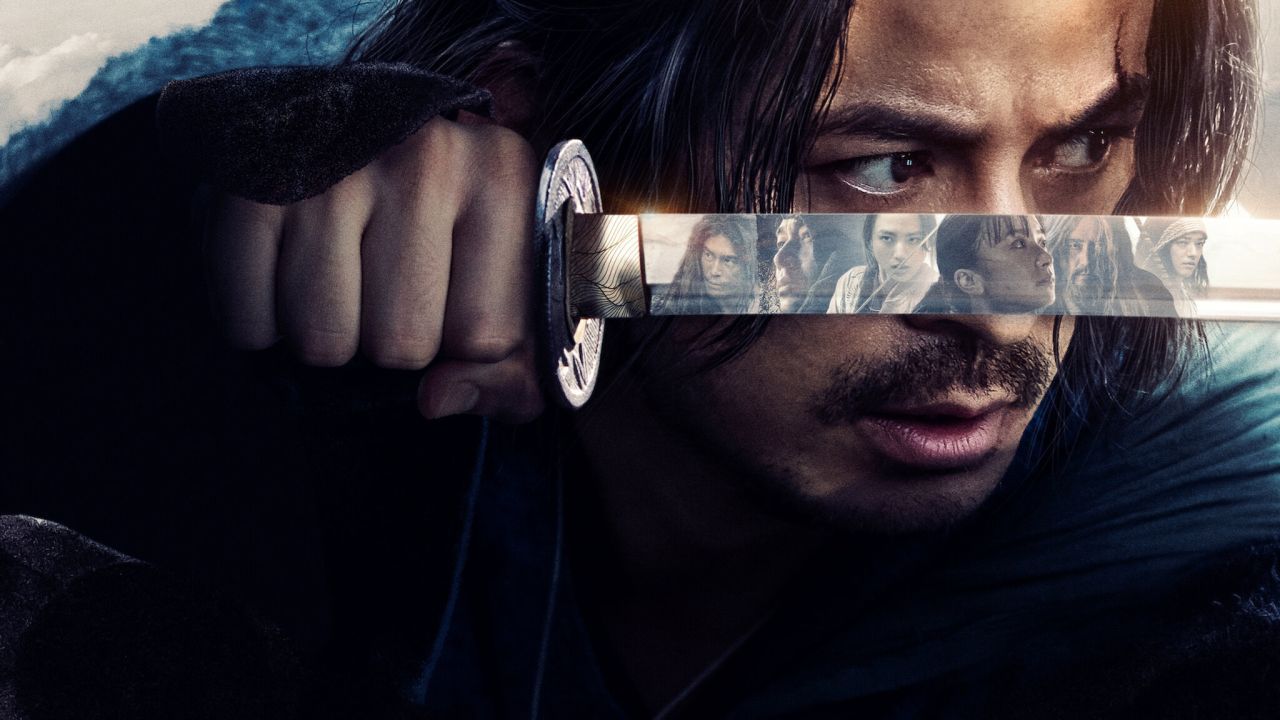
REVIEW – At first glance, Netflix’s new Japanese series Last Samurai Standing looks like someone simply reskinned Squid Game with katanas and topknots. Give it a few minutes, though, and it is obvious the show is reaching for something much bigger: the crumbling social order of the early Meiji era, the desperate scramble of dispossessed samurai to hang on to any kind of dignity, and a brutally vicious death game all collide on screen. Across just six episodes, the series piles up world-class stunt work and spectacular sword duels, while a grim slice of history and a tightly coiled mystery keep rumbling under the surface.
For me, Last Samurai Standing is easily one of the standout action shows of the year: every clash carries real weight, the duels are staged with such precision that you almost tense up on the couch, and the visuals somehow feel both authentic to the period and stylishly heightened. Junichi Okada deserves a special shoutout, because as lead actor, producer and action choreographer he puts in the kind of work that could comfortably carry a full-blown theatrical blockbuster. What really sold me, though, is that the series is not just about bloodshed and body count, it also drags the last, panicked convulsions of a dying social class uncomfortably close to the viewer.

More Than a Samurai-Flavored Squid Game Clone
It is almost impossible not to draw a line between Squid Game and Last Samurai Standing, since this story also revolves around an outsized death match where, in theory, only one person can walk away. Based on Shogo Imamura’s Ikusagami novels, the show throws nearly three hundred samurai into a long, murderous contest engineered by a shadowy, enormously wealthy elite, with a fortune glittering in the distance for whoever survives. It would be very easy to leave the description at that and market the series as a samurai-flavored Squid Game, but that would miss the mark for at least two reasons. First, Netflix had this action drama in development before Squid Game blew up worldwide, and second, the two productions look at a similar setup from very different angles and with very different priorities.
Squid Game became a global phenomenon because, on top of its tight script, strong performances and memorable visual design, it captured the suffocating vibe of modern, debt-choked capitalism with unnerving accuracy. The unapologetically action-driven Last Samurai Standing, on the other hand, drags us back to the aftermath of the Boshin War (1868–1869), a civil conflict that toppled the Tokugawa shogunate and turned once-respected samurai into broke, marginalized nobodies almost overnight. At the center of the story ticks a dark conspiracy that keeps the plot moving even when the swords are sheathed, making the show feel like a fully formed, self-sufficient series that holds up without any comparison games. Yes, these six episodes could easily support a longer, airier season, but the unique historical premise and the top-tier stunt work already push it straight into the front row of TV action.

A Bloody Pilgrimage Along the Tokaido Road
The premise is simple and brutal: 292 impoverished, declassed samurai receive an invitation to join a notorious contest called the Kodoku, in which they must pass through seven checkpoints along the Tokaido route on the way to Tokyo. Advancement comes down to one chilling rule, at once straightforward and horrifying: they need to collect tags from other participants, which means that every successful step forward is paid for with someone else’s downfall. It does not take long for the viewer to figure out what is the most effective way to acquire those tags, and the show has zero interest in handling either its characters or the audience’s stomach with kid gloves.
At the center of the story is Shujiro Saga (Junichi Okada), a legendary assassin who joins the contest to earn enough money to save his wife and child, both battling cholera. Along the way, he swears to protect the youngest participant, Futaba Katsuki (Yumia Fujisaki), and gradually finds himself leading a small, ragtag but surprisingly effective crew. His allies include his highly skilled sister-in-law Ironha Kinugasa (Kaya Kiyohara), the almost ghost-like ninja Kyojin Tsuge (Masahiro Higashide), and the deeply devout archer Kocha Kamul (Shota Sometani). Together, they not only have to stay alive inside the rules of the game, they also need to slowly untangle the strands of an alarmingly powerful conspiracy pulling strings from the shadows.
Series set in the age of the samurai are enjoying a real boom right now, and the huge success of the latest adaptation of Shōgun is clear proof of that, with its intricate characters, tragic romance and courtly intrigue eating up the charts. Last Samurai Standing responds to the forces of modernization ripping through Japan with a similar sensitivity, but from the opposite side of the social ladder: instead of dwelling on the dilemmas of the ruling class, it focuses on everyday samurai trying to survive in a world where rank earned with the sword suddenly counts for nothing. The secret cabal running the death game would already be an attention-grabbing hook on its own, but the show’s real trump card is the action it uses to fill this framework. The mystery pulsing at the heart of the plot gradually gives weight to a premise that might sound outlandish at first, until by the end it lands as a bleakly precise social snapshot.

Charismatic Lead and a Killer Supporting Cast
Junichi Okada does an excellent job portraying Shujiro Saga, a once highly respected warrior who now spends most of his time running from his own past, the man people used to whisper about as Kokushu the Manslayer. His performance is both restrained and emotionally loaded: we see a fighter torn apart by trauma, who still picks up his sword again to protect a vulnerable girl and his own family. Okada is not only the star but also one of the producers and the architect of the action scenes, and you can tell on screen that he understands down to the smallest beat what makes a good, muscle-memory-driven fight work.
Masahiro Higashide consistently brings a laid-back, playful yet serious energy to his warrior, injecting a very different style and tempo into the fights than the protagonist. Hideaki Ito is another strong, intimidating presence as Bukotsu Kanjiya, a bloodthirsty, remorseless brute for whom the death game feels more like a violent hobby than a grim survival strategy. The show is packed with side characters who can pull focus for the brief time they are on screen, while still feeling believable and cohesive whenever the group shares the frame. The ensemble as a whole manages to sneak in small, human moments even in the middle of the carnage, so the series both revels in genre conventions and knows exactly when to step outside them.
All in all, Last Samurai Standing works at once as character drama, wartime panorama and full-throttle action series. These people are not just interchangeable fighters on a bloody chessboard; their histories, sins and motives give real weight to every clash. When somebody goes down, it is not just another stylish kill added to the pile, it feels like a life being closed off, and the show wisely refuses to pretend otherwise.
World-Class Sword Fights and Adrenaline-Spiking Action
The biggest weapon in Last Samurai Standing’s arsenal is unquestionably the quality of its duels: the swordplay is on a level we have barely seen since Takashi Miike’s brilliant 13 Assassins. The series showcases some of the most impressive action choreography of the year, and many genre fans will have no problem placing it right alongside similarly outstanding work like The Furious. Distinct fighting styles, lightning-fast slashes and arrows that seem to bend mid-flight combine to create clashes that are hard to forget, with each confrontation bringing new little ideas and visual twists to the table.
The bar is set very high here: every showdown feels carefully engineered, while the sets, costumes and lighting all work together to underline both the raw brutality and the strange beauty of the era. Last Samurai Standing could easily have ended up as a self-indulgent, one-note action-fest built solely on its high concept, but the creators clearly aimed much higher than that. The turbulent historical backdrop makes the premise feel disturbingly plausible, giving the sense that a game like this could almost have happened in a time when an entire social class was being pushed toward the edge of the cliff.
The talented cast and rich, detailed production design add even more layers on top of the action, so the show ends up being far more than a simple survival contest. As both protagonist and action mastermind, Junichi Okada delivers on every front: his character is traumatized, complex and relentlessly determined, and his movements always sell the idea that every strike counts. The distinctive combat styles, heroic beats and occasional rug-pull twists manage to feel fresh even in an overcrowded genre.
Sure, there are side stories, backstories and bits of context that could easily justify a longer, more expansive season, but even so the series runs like a lean, brutally tight action machine. Last Samurai Standing raises the bar for samurai action on television to a level that very few live-action shows reach, and it is likely to stay a reference point for fans of the genre for a long time.
-Gergely Herpai “BadSector”-
Last Samurai Standing
Direction - 9.2
Actors - 8.8
Story - 9.4
Visuals/Music/Sounds/Action - 9.2
Ambience - 9.2
9.2
EXCELLENT
Last Samurai Standing is at once bloody, spectacular and surprisingly emotional, a journey into a moment in history when samurai either adapted to a new world or were crushed by it. The series blends the tension of a survival game with the weight of historical drama and the physical impact of top-tier action cinema, so every episode lands like a clean punch to the gut. For anyone who loves meticulously crafted sword fights, character-driven storytelling and darker, tragic-tinged action, this show is basically mandatory viewing.