
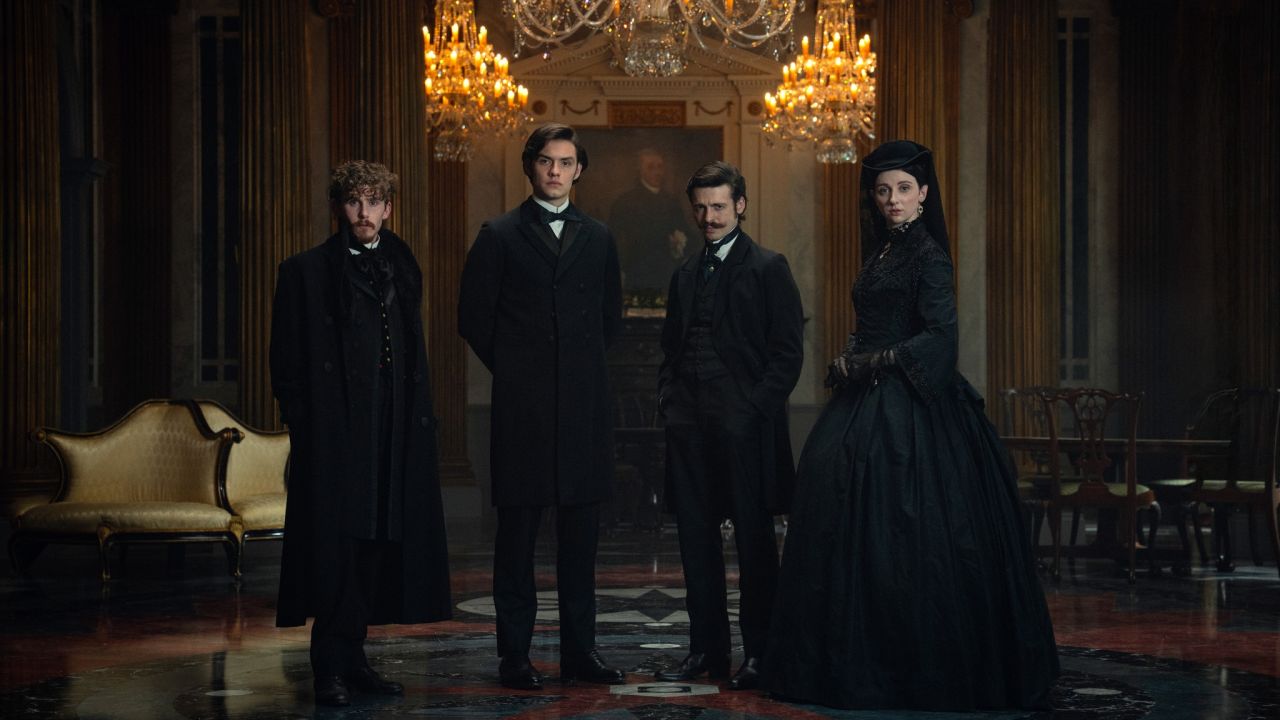
SERIES REVIEW – Since bringing Peaky Blinders to a close, Steven Knight has not put his glass down, instead returning again and again to the murkier corners of history, this time turning to Dublin for another bruised, Irish-set family saga. House of Guinness goes down a bit like an Irish stout – at first you recognize the familiar notes of crime, city streets, and sharp tailoring, but what lingers is the taste of money, power, and the bitterness of inherited privilege. For anyone left wandering with an empty pint after Peaky Blinders, Knight has found a new city and a new clan for another round of music-fueled, messy, and intensely human drama.
Ever since the era-defining Peaky Blinders wrapped in 2022, Knight has not exactly been idle. The writer and showrunner has bounced between projects that could hardly look more different on paper: the birth of the British SAS in Rogue Heroes, the 1980s Birmingham music scene in This Town, brutal Victorian bare-knuckle brawls in A Thousand Blows, and modern spy games in The Veil. They all bear his fingerprints – the strong sense of visual identity, the love of damaged families, the slightly mythic tone – yet none quite rediscovered that smoky, slow-building crime family saga feeling that defined the story of the Shelbys. At least, not until now.

Irish Foam And Peaky Style Family Fights
In many respects, House of Guinness feels like Knight circling back to familiar territory. Once again, we follow a wounded, vain, and constantly competing family whose members fight for power, influence, and control over how their legacy will be remembered, while Dublin itself is filmed as a living, breathing character. The scripts anchor the characters’ struggles in the social, economic, and political realities of the period, so viewers get a mix of family melodrama, power play and an unexpectedly robust slice of historical portraiture.
The violence has not disappeared from the table, and the soundtrack is as cheekily anachronistic as it was in Peaky Blinders, as if someone decided to pour modern guitars and drums over nineteenth-century Dublin. The coats, dresses, and hats could easily sustain their own exhibition; there are so many carefully composed looks parading across the screen. Socially, the Guinness siblings inhabit a world that is light years away from the betting shops and slums ruled by the Shelbys; they start from castles, an enormous brewer,y and obscene wealth, not a rundown bookies’ office. Morally, though, they can be every bit as sharp-toothed and ruthless,but they are just wrapped in a more expensive frame that hides the bite from polite society.
The series is not a simple copy so much as a spiritual cousin. It builds on real historical figures and a still globally famous brand, and blends ruthless capitalist gambits, parliamentary and backroom maneuvering, highly visible philanthropy, constant internal rivalry, ill-judged love affairs and scandals chewed up by the press. It is no surprise that many early comparisons pointed straight to HBO’s Succession; the parallels are obvious without ever feeling forced.
No one here is quite as dark or inwardly shredded as Tommy Shelby, but every Guinness carries some mix of secrets, shame, and carefully suppressed longing. One of the show’s central questions is whether these people can ever exist as anything other than products of their name, fortune and birth, or whether they are doomed to live inside the label that the world has stuck on them.
A Will That Hits Harder Than A Pint To The Skull
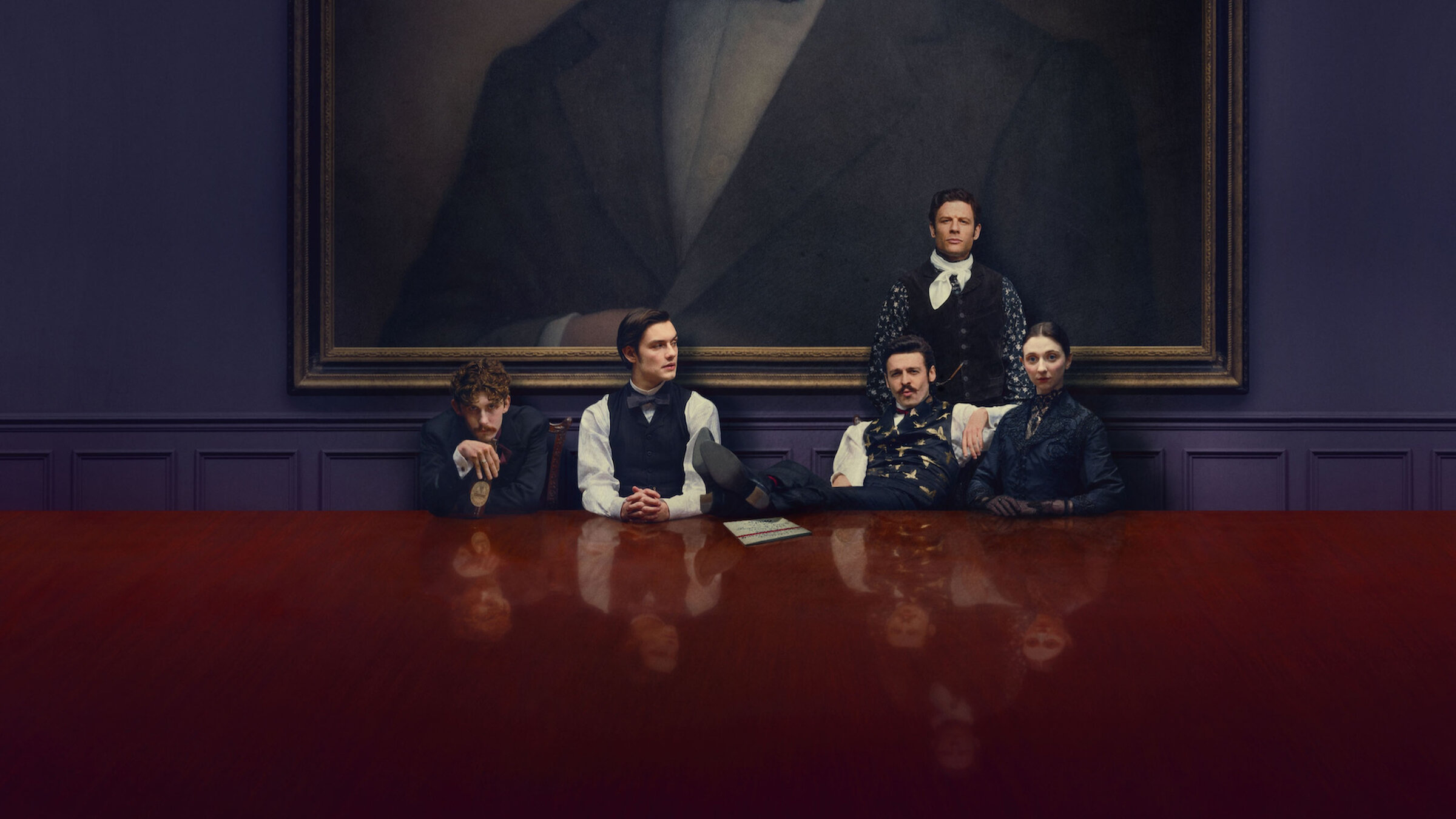
The story takes place primarily in Dublin and wears its Irish identity openly. Things begin in 1868, with the death of Benjamin Lee Guinness, grandson of brewery founder Arthur Guinness. He is the man who turned the family business into a genuine empire and expanded the St. James’s Gate brewery into one of the largest in the world. He leaves behind a fortune so large it almost feels abstract, and the first, brutally practical question the family faces is how to divide it between his four children: Arthur (Anthony Boyle), the heir in theory, clearly bored by both Dublin and the business; Edward (Louis Partridge), the idealist and overachiever dreaming of pushing the Guinness empire even further; Benjamin (Finn O’Shea), a walking disaster who seems to be permanently half drunk; and Anne (Emily Fairn), the sister who quietly holds everything together while the men consistently push her to the edges of the room.
When the will is read, Benjamin Lee Guinness’s true intentions snap into focus. Arthur and Edward are effectively chained together at the helm of the brewery – they must run it jointly, and if either tries to walk away, he forfeits his entire inheritance. Benjamin, whom the father considers unfit to handle serious money, is restricted to a tightly supervised monthly allowance. Anne, treated as though she is already her husband’s property, is left with virtually no ready cash and is only allowed access to certain family estates if Arthur gives his approval. It is a neat legal way of announcing that the patriarch trusts his sons’ judgment only up to a point, and his daughter’s not at all.
It is hardly surprising that all four siblings greet the news with fury, hurt and humiliation. From there, the series traces how each of them is forced to adjust to a dead father’s wishes and to the realization that this inheritance is not just a shower of money and social status, but an arrangement that comes with very real burdens and cages built to last.
Nation And Family Booze
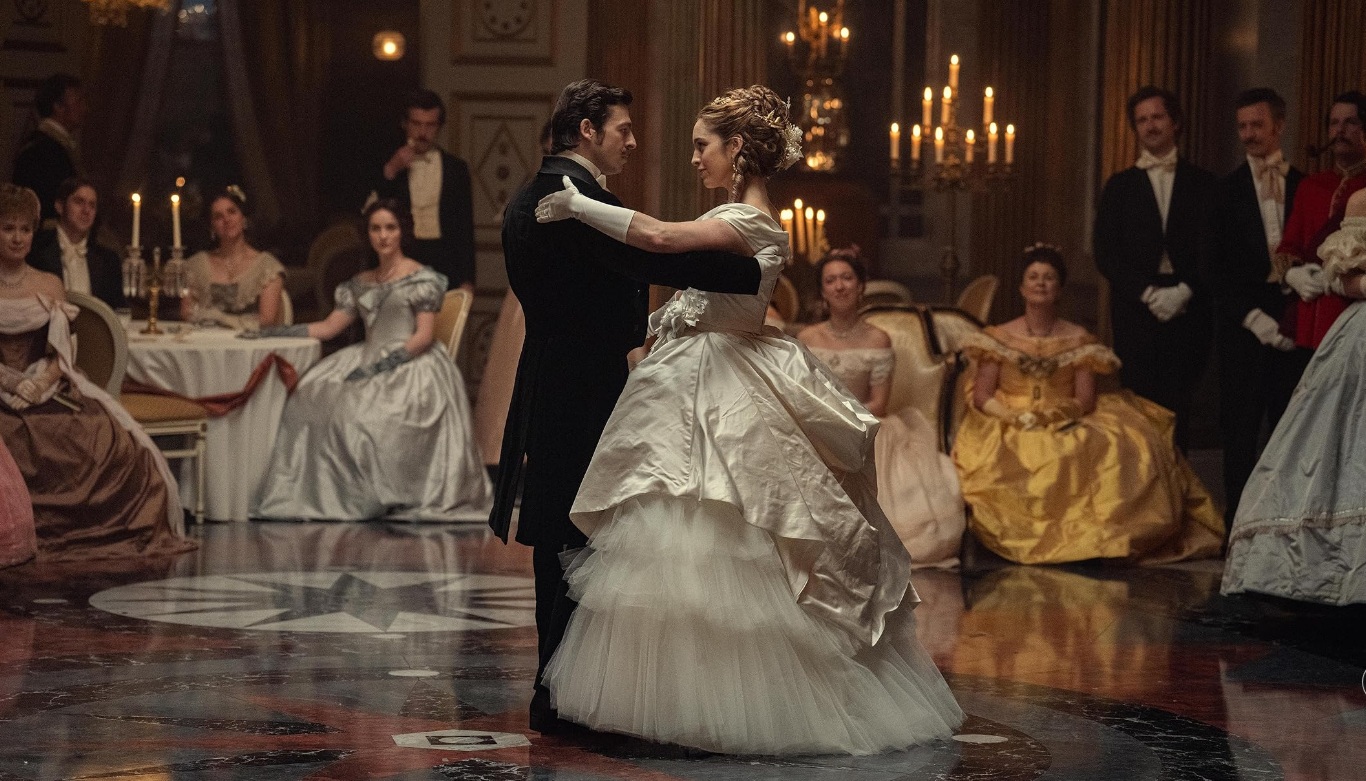
House of Guinness plays at once like a big coat drama with smoke in the air and like a collection of small, sharply observed human moments. While Edward schemes to get Guinness pouring from as many taps in America as possible, Arthur tries to slide into his late father’s seat in Parliament, and Anne cautiously but determinedly sets out to repair the family name through carefully chosen acts of charity. Nineteenth-century Ireland supplies no shortage of external pressure: a loud temperance movement attacking the very industry that made the Guinness fortune; rising tension between a prosperous Protestant elite and an impoverished Catholic majority; and an increasingly bold nationalist movement, embodied by the Fenians, looking for any chance to loosen England’s grip.
Yet the show is at its sharpest when it focuses on the poisons sloshing around inside the family itself. These siblings love and hate one another in the same breath, constantly recalculating who still fits inside this empire and who has become pure dead weight. Public expectations, media scrutiny, political exposure, and religious divides all act as amplifiers for their private grudges. Ironically, Benjamin may be the most honest of them all: he does not pretend to be more or better than he is, and he wears his self-destructive tendencies in plain sight, while the others smooth their own cracks beneath carefully ironed faces.
The cast, frankly, is a home run. Anthony Boyle looks built for period drama, wearing tailcoats and top hats as if he had grown up in them, and his Arthur walks a fine line between smug, pleasure-seeking aristocrat and slow-burning burn tragic figure. The eldest son’s homosexuality is an open secret within the family, and when Arthur eventually marries, both he and his wife know exactly what kind of arrangement they are agreeing to and on what terms the marriage will function.
Boyle and Louis Partridge have excellent, elastic chemistry as brothers. Across the eight episodes made available for review, Arthur and Edward spend their time yelling at each other, pleading, blackmailing, bargaining, and, at other moments, operating in perfect lockstep like a ride or die duo straight out of “Goodbye Earl” in formalwear. That constantly shifting dynamic is one of the show’s strongest pillars. Meanwhile, even if the family persistently underestimates Anne, Emily Fairn quietly walks off with almost every scene she is in: she is clear-headed, capable, and utterly determined to leave a mark on a world that keeps trying to pretend she is not there. Benjamin, by contrast, remains oddly underused; both the character and Finn O’Shea as an actor feel hemmed in by the limited space the story grants him.

Top Hats, Flags, And A Sky-High Blood Alcohol Level
Surrounding the central quartet is a very strong supporting ensemble. James Norton looks like he is having the time of his life as Rafferty, the family’s promoted enforcer – part foreman, part all-purpose fixer, the man you send when something needs to be “sorted out,” preferably with his fists. Danielle Galligan, familiar to many from Shadow and Bone, is a delight as Olivia, Arthur’s wife, a sardonic, ambitious, and surprisingly modern woman who enters this unconventional marriage on her own very detailed terms.
Niamh McCormack, as Irish republican leader Ellen Cochrane, gives the independence struggle a human face and real emotional weight, while Jack Gleeson appears as the family’s man in the American market, playing a wonderfully slimy operator whose charm always feels one drink away from turning into a threat. Michael McElhatton, as the family’s perpetually exhausted butler, steals several smaller scenes with quiet looks and gestures that say more than pages of dialogue about what it means to serve a household where everyone wants everything at once.
The second half of the season does wobble a little. A few time jumps and compressed storylines scatter the focus, and some secondary threads knit themselves into the main fabric more loosely than others. Even so, House of Guinness is so sure of what it wants to be that it rides out most of those bumps. The series keeps the family at its center at all times, circling the same idea from different angles: the wild, impossible, and sometimes downright foolish decisions people make when their desires, ambitions, and fears crash into what their family name is supposed to stand for.
By the time the final credits roll, it is easy to catch yourself wanting to come back for another round with this clan, which is both toxic and oddly endearing. If Peaky Blinders was Knight’s smoky, razor-edged whisky, then House of Guinness is his stout – smoother, foamier, still bitter enough to leave a mark, slow going at first sip but dangerously moreish once it catches you.
-Gergely Herpai “BadSector”-
House of
Direction - 8.5
Actors - 8.6
Story - 8.7
Visuals/Music/Sounds - 9.2
Ambience - 8.4
8.7
House of Guinness
House of Guinness is a lush Irish family saga that stirs politics, business and private drama into the same glass, never forgetting the tension bubbling under the surface. Viewers who missed the strong personalities, swirling coats and morally gray antiheroes of Peaky Blinders may well find their next obsession here. It is not flawless and the pacing sometimes thins out, but it remains the kind of series that makes you happily order another round while you wait for the next season.





Leave a Reply