
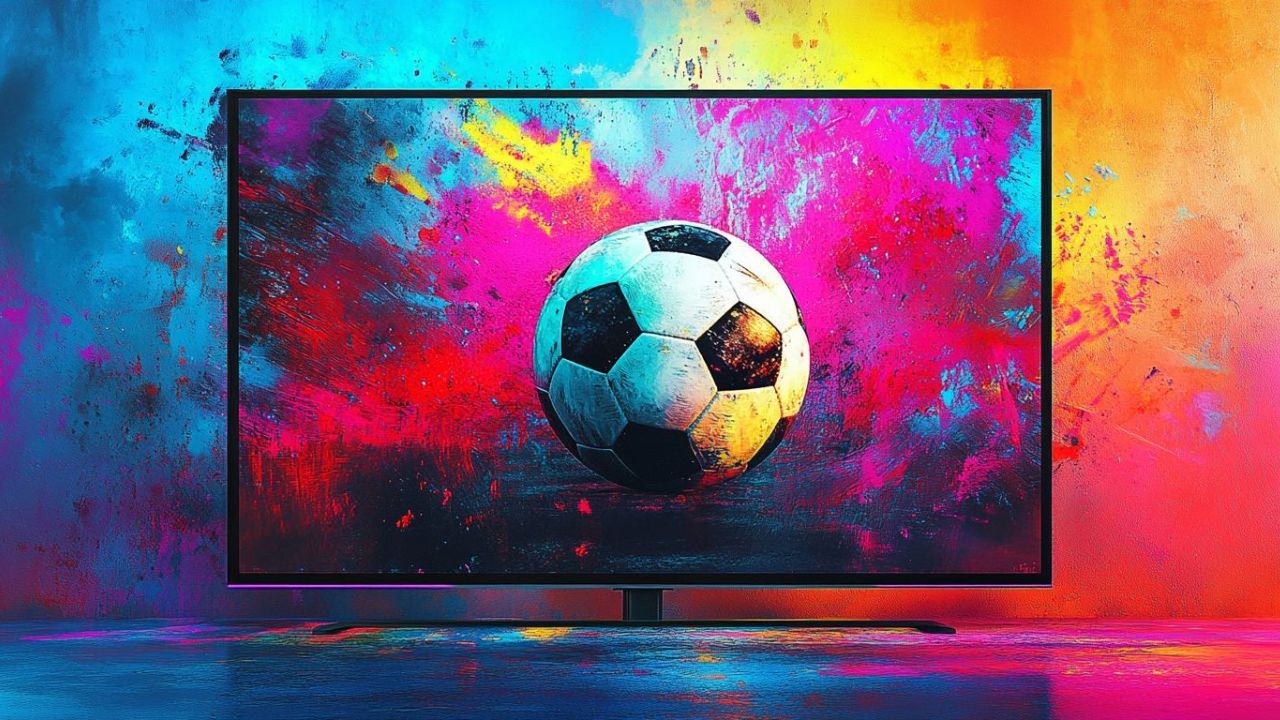
TECH REVIEW – The TCL C9K isn’t just another big screen taking up wall space. It’s a Mini LED brute force machine designed to challenge far more expensive sets with its blistering brightness, disciplined contrast handling, gamer-ready performance, and surprisingly capable sound. It’s not flawless, but it pushes Mini LED tech to a level where many rivals start running out of headroom.
The C9K may sit in TCL’s premium QD-Mini LED lineup, but it doesn’t attempt to reinvent TV aesthetics. It follows the design language of the C8K while upgrading to a ZeroBorder frame that nearly erases the bezels, letting the picture flow almost all the way to the edges. Thanks to the Micro-OD optical architecture, TCL manages to pack a full direct-lit Mini LED system into a chassis that stays impressively slim, a noteworthy engineering achievement.
Viewed from the side, the rear isn’t ultra-thin, yet TCL softens the bulk with a gently angled profile and textured surfaces, giving the set a more polished presence. The center stand keeps everything steady, though the materials don’t look as premium as the panel itself—an area where manufacturers often cut costs. Up front, the speakers are discreetly integrated, while the back hosts a full set of ports: HDMI 2.1, LAN, USB, optical audio—everything needed for a modern setup.
The bundled silver remote is clean, lightweight, and comfortable. It has few buttons and a logical layout, including dedicated shortcuts for Netflix, Prime Video, YouTube, and TCL TV. The soft keys keep navigation quiet and responsive. It doesn’t feel luxurious, but its simplicity works in its favor.

A Mini LED Cannon: Brutal Brightness With Surgical Control
The star of the C9K is its QD-Mini LED panel, combining quantum-dot color with thousands of tightly controlled backlight zones. Independent measurements confirm short-burst peaks around 6000 nits, with sustained brightness still far above average—enough to make HDR highlights genuinely explosive. With so many zones, blooming is kept in check, and the native contrast ratio is unusually strong for a non-OLED TV.
In real use, this means deep blacks, searing highlights, and vivid color without slipping into artificial showroom saturation. Standard TV channels or SDR YouTube videos won’t reveal the set’s full capabilities, but launch a Dolby Vision IQ movie or an HDR10+ game and the difference becomes immediate. The quantum-dot layer covers nearly the full DCI-P3 gamut with solid Rec.2020 performance, placing the C9K alongside pricier QLED competitors.
HDR support is complete: HDR10, HLG, HDR10+, and Dolby Vision IQ with Precision Detail. The CrystGlow Wide HVA panel widens viewing angles and helps tame reflections; extreme side angles still show some washout, but in a typical living room the image remains strong across most seating positions.
For film lovers, Filmmaker Mode is a welcome inclusion. It disables unnecessary processing and, even with factory settings, delivers a surprisingly accurate presentation of the creator’s intent. With minor adjustments to gamma and shadow detail, the C9K can approach reference-level accuracy—rare in this price class.

Built For Streaming And Scoreboards: Motion And Gaming
Under the hood, the C9K uses the MediaTek Pentonic 700 chipset paired with TCL’s AIPQ Pro processor. Together, they upscale lower-resolution content cleanly, maintain sharp edges, and apply noise reduction with a light touch. HDR gradients look smooth, free from obvious banding.
For sports and action scenes, TCL includes a 240 Hz Dynamic Boost setting that noticeably smooths motion, though it can introduce a mild soap-opera effect and reduce fine detail. Fortunately, baseline motion handling is already competent, so viewers who prefer a cinematic look can simply disable interpolation.
Gamers get plenty to appreciate. The TV supports 4K 144 Hz with VRR for fluid, tear-free gameplay across current-gen consoles and PCs. Drop the resolution to 1080p and a 288 Hz mode becomes available, offering extremely smooth motion for competitive titles—assuming the hardware can drive it. Input lag hovers around 15 ms in Game Mode, though aggressive local dimming can increase this. SDR gaming looks excellent immediately; HDR Game Mode may benefit from a bit of manual adjustment to hit ideal tone-mapping levels.
Google TV powers the smart experience, bringing a massive library of apps, fast navigation, and curated recommendations based on viewing habits. All major streaming platforms—Netflix, Prime Video, Disney+, YouTube—are present, and side-loading additional apps is possible.

Smart Features And B&O Audio: A Living Room That Sounds Alive
Wireless casting is seamless thanks to built-in Chromecast, AirPlay 2, and Google Cast. The ribbon-style quick menu pops up at the bottom of the screen, making picture and sound adjustments accessible without interrupting playback.
Audio comes with Bang & Olufsen branding, signaling TCL’s intent to deliver more than standard TV sound. Although the system is marketed as 6.2.2-channel with 90 watts of output, in practice it behaves more like a strong 2.1.2 configuration enhanced with virtual surround effects. Dolby Atmos and DTS:X expand the soundstage convincingly, especially in movies and shows with height-based effects.
Music mode delivers energy and clarity, while movie mode keeps dialogue intelligible even in chaotic scenes. Bass response is solid, though pushing the volume too high can cause cabinet vibration and slight boxiness. The Beosonic tuning interface lets users shift the tonal balance between warm, bright, relaxed, and energetic profiles with a single graphical control. As built-in TV audio goes, it’s impressive, though a good soundbar will still elevate the experience.

Mini LED Ambitions Without The OLED Price Tag
The C9K shows that TCL intends to compete seriously in the higher tiers of the market. Its extreme brightness, strong HDR performance, gamer-centric specs, and B&O-tuned audio add up to a feature-rich, well-rounded 4K TV. The compromises—an unremarkable stand, limited viewing angle performance, no USB recording, and a Google TV interface that runs slower than standalone streamers—are noticeable but not deal-breaking.
Overall, the C9K is a very compelling Mini LED option. OLED still wins in perfect blacks and zero blooming, but the C9K’s performance and price make the decision far less one-sided than before. For bright living rooms, gaming setups, and users who want strong HDR performance without paying OLED premiums, the TCL C9K absolutely earns a place near the top of the list. A firm and fully deserved 8/10—more evolution than revolution, but a damn good one.
– Gergely Herpai “BadSector”
Pro:
+ Massive HDR brightness with a very high number of dimming zones
+ Strong gaming features (4K 144 Hz, 288 Hz FHD, VRR, low input lag)
+ Vibrant QD-Mini LED picture with Dolby Vision IQ and HDR10+ support
Con:
– Uninspiring center stand design
– Viewing angles and blooming control still behind OLED
– No USB recording; Google TV is slower than dedicated streaming boxes
TCL C9K
Design/Software - 7.6
Display - 8.4
Gaming - 8.6
Movies - 8.2
Price/value - 7.6
8.1
EXCELLENT
The TCL C9K delivers explosive HDR brightness, dense local dimming, and impressive gaming performance, aiming directly at high-end competitors. Its picture quality holds up in both movies and games, and the Google TV platform plus B&O-tuned audio make it a well-rounded living-room centerpiece. Despite a few limitations, its performance-to-price ratio makes it one of the strongest Mini LED choices on the market today.










![[TGA 2025] Tomb Raider: Legacy of Atlantis: Another Remake of the First Game! [VIDEO]](https://thegeek.games/wp-content/uploads/2025/12/theGeek-Tomb-Raider-Catalyst-Legacy-of-Atlantis-Remake-Crystal-Dynamics-300x365.jpg)
Leave a Reply