
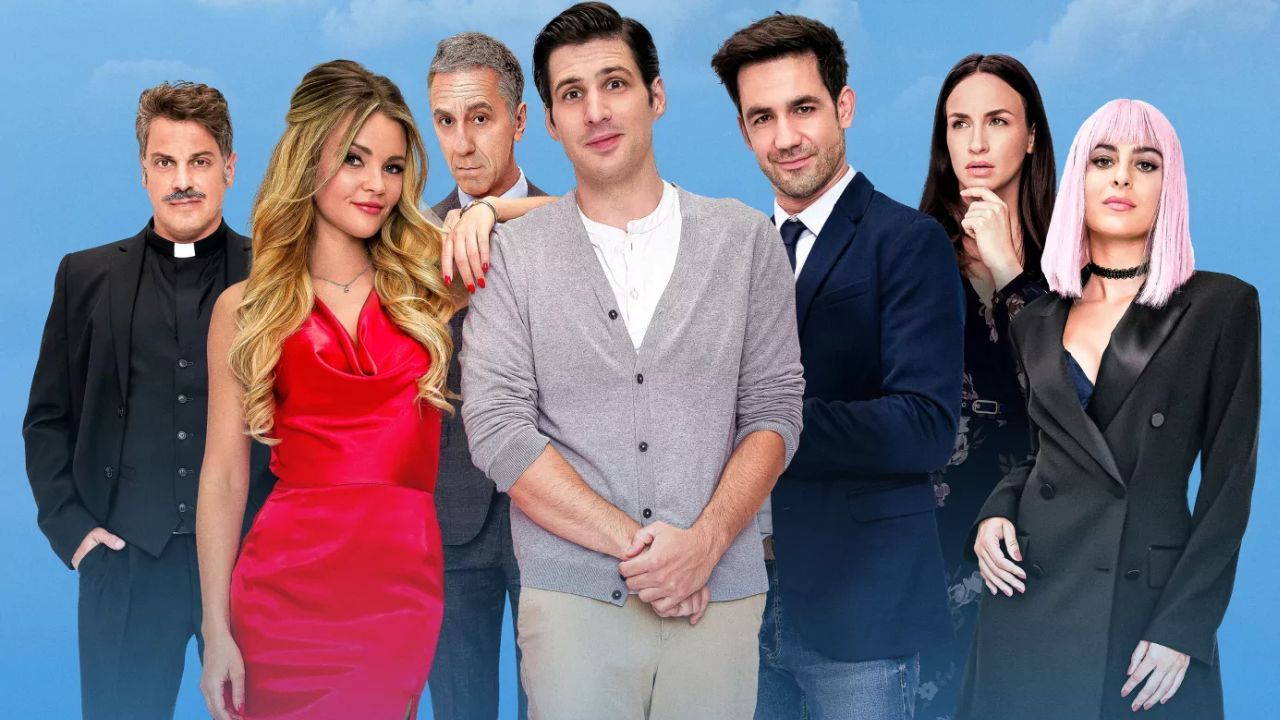
MOVIE REVIEW – On paper, Bachelor Party ticks every box you would expect from a 2025 Hungarian crowd-pleasing comedy: a popular stage play turned into a movie, a star-studded cast, lakeside locations at Lake Balaton, a hyped debut director and marketing that promises a chain of “surreal” adventures. What actually makes it to the screen, though, is a strangely sterile, tone-deaf barrage of gags in which two general-practitioner buddies behave as if they were trapped in a string of badly written sketch-show episodes. We are repeatedly promised “the” unforgettable bachelor party, but by the time the credits roll, the only thing that really sticks is how rarely the film manages to land a genuine laugh. The biggest drama here is not the test of friendship, but how spectacularly the film fails to generate real humor.
First, it is worth being clear about where this whole thing comes from: Bachelor Party is not a Hungarian remake of Tom Hanks’s 1984 film Bachelor Party (released in France as Le Palace en délire), and it is not a sequel or spin-off to the 2023 film Legénybúcsú Extra, even if the title will inevitably make many viewers think of those. Vajk Szente adapted his own stage play, which has been running successfully since 2019, for the big screen – a farcical, over-cranked piece that has already proved itself in Budapest’s Játékszín and on provincial stages. The movie version is an independent production, shot over roughly three weeks – 23 shooting days – with a 50-person crew and a cast that includes Márk Ember, Tibor Fehér, Rebeka Kárpáti, Franciska Törőcsik, András Csonka, Sándor Nagy, Imre Csuja, Ádám Varga and, of course, marketing headliner György Korda. The problem is simple: what a stage can absorb, the camera ruthlessly magnifies. The kind of theatrical exaggeration that plays as broad farce under stage lights often becomes hollow mugging on screen, and the tightly wound stage chaos turns into a frantic list of gags.
The basic setup looks familiar and even promising on paper: Alex (Márk Ember) and Simon (Tibor Fehér) are general practitioners who have been inseparable for twenty-one years, sharing a joint practice, a joint business and, ostensibly, a joint life story as they head into their late thirties and early forties. Simon is about to get married, and Alex is sweating bullets trying to put together “the best bachelor party in the world” for his friend. According to the screenplay, the party quickly outgrows its starting point at the Balaton shoreline, pushing the duo from one over-cranked “surreal” situation to the next: a luxury golf resort, shady poker games, priests and nuns, a supposedly dead woman who has been misunderstood, cops, SWAT teams, hotel chaos. On paper it could easily have been a tight, fast-paced, no-nonsense buddy comedy; in practice, Bachelor Party abandons any remaining connection to reality in the first half hour and then simply stumbles from scene to scene, as if someone had tried to chop up an over-written stage act into film scenes.
Alien Heroes, Doctors In Name Only
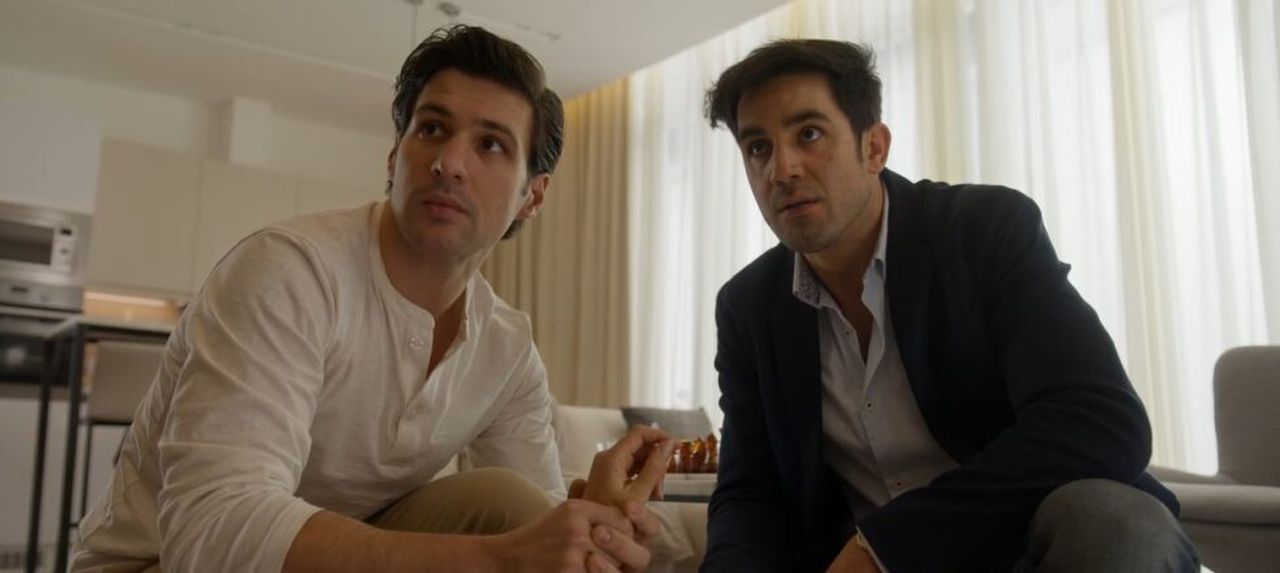
The biggest issue with Bachelor Party is that its protagonists are not really people, they are situational-comedy dispensers. Alex and Simon are nominally responsible, adult family doctors dealing with people’s lives, yet on screen they behave as if they were running two badly scripted YouTube prank channels. Fehér’s character casually gambles away the entire capital of their joint medical business, as if he had just lost a few gems in a free-to-play mobile game, and Alex – in Márk Ember’s performance – responds with an “inhumanly” weak, utterly unconvincing reaction. The scene that should shake the ground under their friendship, livelihood and entire life instead hits with about as much weight as a failed joke in the middle of a late-night talk show.
On paper, the chemistry between the two leads is built on twenty-one years of shared history, but on screen they feel more like guests from two different shows who have accidentally ended up on the same set. There is energy in Márk Ember’s performance, just in all the wrong places: the character’s constant overreactions, panicky gestures and hysterical freak-outs do not make him funny, just exhausting. Tibor Fehér, meanwhile, is simply not strong enough as a comic actor to carry this kind of weight; he is usually either a beat behind the rhythm of a scene or a notch too far over the top, as if he were constantly waiting for the “now laugh” cue.
The disconnect from real life is not limited to character behavior – it runs through the entire narrative structure. The film stacks up one “you didn’t see that coming” twist after another, none of which has anything to do with how real people behave, even in extreme situations. The problem is not that the story leaves reality behind – that is perfectly fine in a comedy – but that it never establishes even the most basic emotional foothold. You never get that fundamental feeling of “this could almost happen to us,” the one that makes a bachelor party spiraling into chaos genuinely funny. Here you mostly feel that someone is desperately trying to be hilarious without the faintest idea of what real life looks like outside the screenwriting software – especially when you realize that, strictly speaking, there is hardly any actual “bachelor party” in the film at all.
Wasted Supporting Cast And Misfired Humor
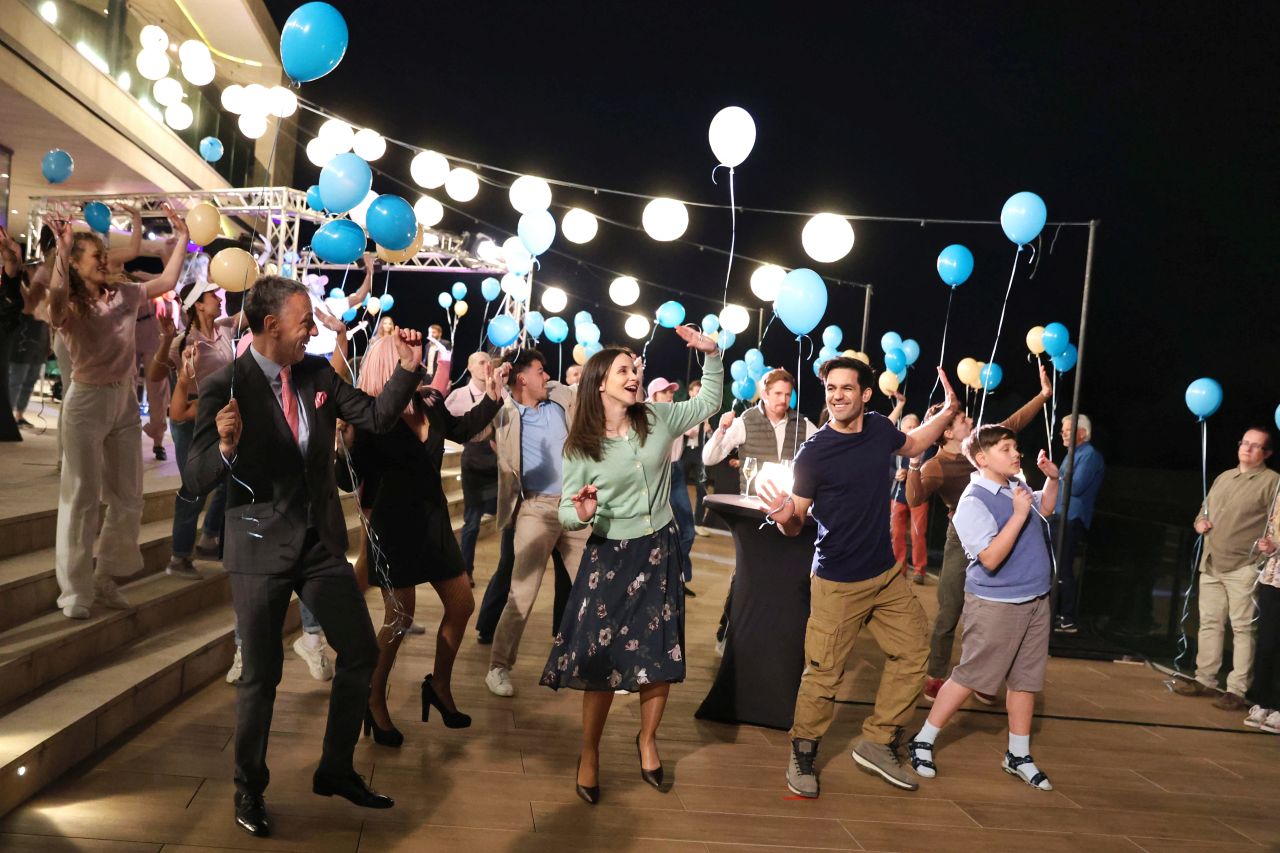
One of Bachelor Party’s biggest tragedies is that while the leads are flailing around, the supporting cast includes several genuinely talented comics who could easily have carried the movie if they had been given the space. As the hotel manager, András Csonka nails that slightly neurotic, over-caffeinated, petty middle-manager type in a way that makes you want to see more of him. For brief moments you can see how well his natural comic timing works when the director just lets him play – and then the script yanks him back into the background, as if it were terrified that a supporting actor might be more interesting than the two leads.
The same goes for Sándor Nagy’s priest: the character clearly has potential, and the actor has more than enough experience to deliver memorable scenes on autopilot, but the film seems intent on holding him back. As a hotel employee, Ádám Varga brings exactly the sort of tight, well-timed comic energy that a movie like this should be built around, yet he too is never given enough room to really cut loose. The audience gets a handful of genuinely funny moments that feel as if they had been spliced in from a different, better film, only to be dragged back into the leads’ labored chaos a few seconds later.
Rebeka Kárpáti is a category of her own. She is clearly one of the marquee names – prominently featured on posters and in trailers – and she undeniably looks great on screen, but the role she has been given is a textbook example of how a “beautiful woman” character becomes set dressing rather than a human being. In the first half, the film flirts with the idea that there might be some depth and an actual arc to her character; by the second half the whole thing collapses, and in the final stretch she is simply no longer believable. Not because Kárpáti is incapable of more, but because no one cared to make the role anything more than a supposedly “juicy” but ultimately hollow cliché.
Franciska Törőcsik’s name also looks good on the credits, especially for viewers who enjoyed her in the historical series Rise of the Raven, but here she gets a blink-and-you-miss-it, utterly forgettable bit part that any fresh graduate from drama school could have played at the same level. Her comic chops never even get a chance to show, not because they are not there but because the script gives her nothing of substance to work with. As a card-addicted gambler, György Korda is, on paper, one of the film’s big jokes; in reality he delivers a decent but weightless cameo, where the publicity around his appearance turns out to be funnier than the scene itself.
Overall, the humor sits among the stalest traditions of Hungarian film comedies. Half the jokes are weak, playground-level puns telegraphed long before the punchline, while the other half feel so forced it is as if they had been improvised on set and left in under a “ah, it’ll do” philosophy. At the press screening, critics hardly laughed, and that is not because they are a jaded bunch; it is a symptom of a film that struggles to produce even a few moments of truly carefree laughter. It is not that no one will ever chuckle at a line or two, but that this amount of time, money and talent should have resulted in far more than such a stubbornly mediocre collection of gags.
Why This Will Never Be A New Glass Tiger
When you place Bachelor Party in the context of Hungarian comedy history, the aftertaste becomes especially bitter. There is The Witness, which managed to be a razor-sharp piece of political satire and a still-quotable, timeless comedy at the same time. There is Glass Tiger, which built a whole world out of a minimal toolkit – a handful of pitch-perfect characters, some rundown trailers and a guy named Tonó – that audiences could genuinely claim as their own. Bachelor Party, by contrast, exists in a polished, brochure-scented universe that only vaguely resembles real life, where everyone looks a little too good, every location is a little too carefully designed, and every conflict is just a little too free of real stakes.
On the technical side, things are not disastrous. Cinematographer Tamás Babos delivers the competent, mid-tier mainstream look that is now expected of Hungarian crowd-pleasers: Lake Balaton and the golf resort look decent, the hotel interiors are lit nicely enough. The music and sound design are also perfectly professional, though there is nothing in either that you will remember even a few days later. The real issue is not the package but what is inside it: all of this has been built around a script with no spine, no thematic weight and no interest in saying anything meaningful about friendship, responsibility or what it means to grow up in a situation like this.
In the end, Bachelor Party is one of those Hungarian comedies that clearly wants to do nothing but entertain, yet somehow forgets that entertainment has a quality baseline. The story is so detached from everyday reality that it becomes flatly “alien,” the leads’ reactions are comically (but sadly not amusingly) weak, the gags are either tired dad jokes or the kind that makes you exhale sharply rather than laugh, and the supporting cast is chronically underused. The result is a production that lacks soul, courage and self-awareness – and, crucially, real humor. This will not be the next Glass Tiger, and it does not even really function as a decent, one-and-done light watch; it feels more like a long, badly derailed stag night where everyone wanted to go home ten minutes ago, but someone keeps ordering one last round.
-Herpai Gergely “BadSector”-
Bachelor Party
Direction - 3.5
Actors - 3.6
Story/Jokes - 2.8
Visuals/Music/Sounds - 5.6
Ambience - 3.2
3.7
BAD
Bachelor Party is a middling screen adaptation of a successful stage play that utterly fails to transfer the energy of theatrical farce to the cinema screen. Its alien story, weak jokes and implausible character reactions leave viewers with almost nothing to hold onto, while genuinely talented comic actors are relegated to short, underwritten supporting turns. The result is a tired and often weightless Hungarian comedy that you can sit through once out of goodwill, but will probably want to forget by the next morning.








Leave a Reply