
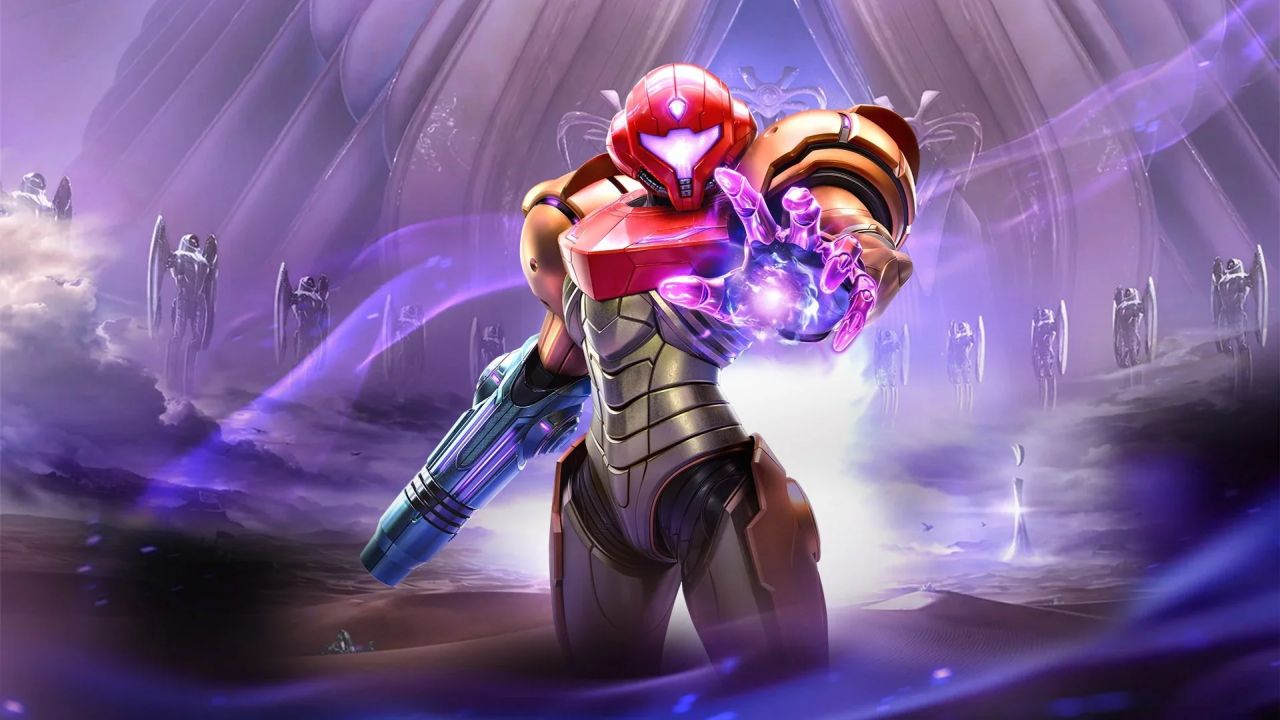
REVIEW – On December 4, Metroid Prime 4 finally arrives on Nintendo Switch 1 and 2, promising a new intergalactic adventure for Samus Aran on the planet Viewros. One of gaming’s most notorious “Arlésiennes” has remained little more than a promise for years, but now we can finally see what Retro Studios’ long-delayed project truly delivers. The big question: was the eight-plus-year wait worth it, or is this merely a half-baked comeback that resembles a middling Halo episode more than a triumphant new Metroid?
Metroid Prime 4 travelled a long and rocky road before reaching players. It was first announced at E3 2017 with a tiny teaser, and at the time Bandai Namco was in the developer’s seat. What followed were repeated delays, behind-the-scenes restructurings, and creative overhauls, until the project finally returned to Retro Studios, the creators of the original Prime trilogy. More than eight years have passed since that first announcement, and now the much-discussed game is finally here in its completed form. Was it worth all the trouble? Time to dig into the details.
Samus Stuck Inside a Poorly Written Military Sci-Fi
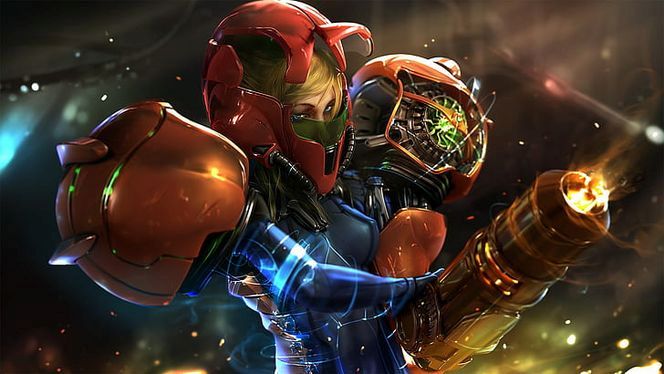
The story opens with a flashy battle: the Galactic Federation and a hostile faction clash while attempting to transport a mysterious artifact. Samus is called in to secure this immensely powerful relic, but a massive confrontation on a military base quickly spirals out of control. The terrifying Sylux appears out of nowhere, overturns the balance of power in seconds, and tears the battlefield apart.
The artifact ultimately absorbs Samus and transports her to Viewros, a planet once home to an advanced civilization now lying in ruins. As a bounty hunter, Samus essentially becomes the world’s black box, trying to piece together what happened while exploring environments filled with forgotten technology and decaying structures. Along the way she encounters several stranded Federation soldiers — and this is precisely where Metroid Prime 4 runs into its first major issues.
The game desperately wants to become something it has never been: a heavily story-driven, high-stakes narrative carried by cardboard archetypes. Retro Studios clearly wishes we’d care about the Federation and the frontline troops, but the attempt falls flat and quickly becomes irritating. More than once it feels like watching a weaker Halo episode: lots of chatter, lots of military bravado, and very few memorable characters.
Worse yet, the plot ultimately leads nowhere meaningful, and the presence of the military cast results in several logical inconsistencies we can’t discuss without spoiling. If Metroid, to you, means Samus alone on a hostile alien world, uncovering its mysteries in isolation, then here’s the bad news: Metroid Prime 4 simply doesn’t offer that. Instead it leans heavily into the franchise’s military-themed, war-tinted side — a direction that never suited the series particularly well and still doesn’t.
And yes, NPCs constantly “backseat” your adventure, commenting on events, issuing directions, and talking your ear off. Over time this becomes downright aggravating, though it’s only fair to note that in a wide-open desert hub it can occasionally help to be reminded that you left something behind in the previous zone.
Scattering the Metroidvania Formula Across the Desert
It’s worth recalling where the Prime series began. The first game was a technical marvel on the GameCube: Retro Studios managed to translate the metroidvania formula — with all its intricate level-design demands — into a fully 3D environment. The next two entries refined that blueprint before we arrived at this new installment, which tries to push things a little further.
Let’s not drag out the suspense: that infamous motorcycle from the recent trailers, the one that caused a minor uproar online, turns out to be one of the most successful and original gameplay additions. It allows Samus to traverse the desert zone of Viewros with remarkable freedom, and the vehicle controls surprisingly well. Riding across the dunes genuinely feels good.
The problem lies in the “why.” Say goodbye to the single, cohesive map where every region fits seamlessly into a unified whole. Instead we now get five separate zones connected by a massive desert. No sugar-coating it: this heavily damages the sense of exploration, especially since several of these regions are simply uninteresting from a level-design perspective. The desert offers a handful of dedicated segments, but most are over in five minutes, and there are too few to make a lasting impression.
Thankfully, Metroid Prime 4 still manages to shine at times. Some sectors are excellently structured, with clever verticality, well-designed connections, and smartly crafted puzzles that genuinely make you think. In these moments, the classic Prime magic resurfaces — every new ability feels like it meaningfully opens up the world again.
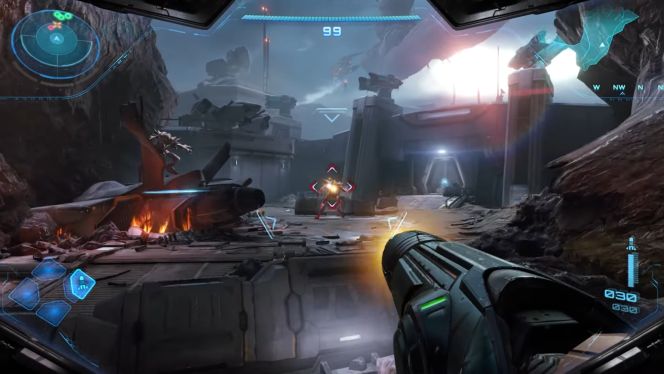
Yet the game places far too much emphasis on combat for its genre, and these encounters haven’t aged particularly well. The lock-on + free-aim hybrid was innovative back in the day, but now it’s merely functional. The psychic abilities, teased as a major new feature, produce one creative highlight early on — the guided shot during a time-freeze — but offer surprisingly little innovation afterward. Samus’s familiar toolkit returns, which isn’t inherently bad, but it’s clear the fourth entry doesn’t take enough risks in this department.
Boss fights do help compensate; several are genuinely epic. Still, the prevailing feeling throughout the campaign is one of unfulfilled potential — a huge promise that never fully materializes.
A Switch 2 Showcase With a Few Ugly Bandages
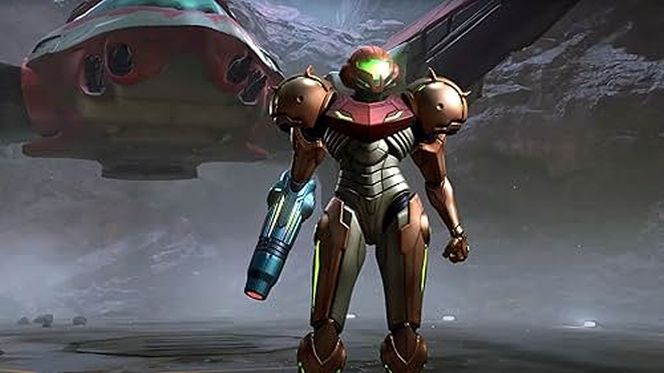
Tested exclusively on Nintendo Switch 2, Metroid Prime 4 practically functions as a technical demo for Nintendo’s latest hardware, despite being a cross-gen title. That doesn’t mean everything is flawless: a few blurry, smeared-looking textures and weak hit effects remind you what platform it’s built for, but beyond that the game can look spectacular.
Artistically, every sector of Viewros appears to have received meticulous attention, with strong emphasis on lighting and atmospheric effects. Outside the desert, environments are mostly enclosed, which naturally helps the engine deliver clean, detailed scenes at a stable frame rate. Quality Mode targets 4K60 fps — which we strongly recommend — while Performance Mode hits 1080p120 fps, an impressive feat for players who prioritize responsiveness.
The fact that the game achieves this level of performance without fully exploiting the Switch 2’s capabilities is remarkable in itself. The console clearly has significant headroom. However, the art direction remains inconsistent: some zones are stunning, while others feel uninspired. The same applies to the enemy roster — the bestiary simply doesn’t offer enough variety to stay engaging over the long term.
A Slightly Painful, Modest Return
After so many years of anticipation, it’s hard not to view Metroid Prime 4 as a mild disappointment. The heart of the game still beats strongly, and certain sections — especially the better-designed levels — successfully recapture the old Prime energy. But it’s equally impossible to ignore the scars of a development cycle that was clearly long, turbulent, and troubled.
The game looks stunning on Nintendo Switch 2 and functions solidly overall, yet it fails to make the kind of bold, definitive mark one would hope for from such a legendary franchise’s long-awaited return.
-Gergely Herpai “BadSector”-
Pros:
+ Impressive Switch 2 performance and strong technical foundation
+ The motorbike is fun to control, and several zones feature excellent level design
+ Occasional flashes of classic Metroid atmosphere, especially in strong sectors and boss fights
Cons:
– Forced military-sci-fi storyline with weak writing and generic characters
– Fragmented world structure, too many empty desert stretches, and excessive combat at the expense of exploration
– New abilities and enemy variety feel limited, offering too few fresh ideas
Metroid Prime 4
Gameplay - 7.2
Graphics - 8.8
Story - 5.8
Music/Audio - 7.8
Ambience - 7
7.3
GOOD
Metroid Prime 4 finally brings Samus Aran back into the spotlight, but after years of escalating expectations it feels more like a restrained, uneven sequel than a groundbreaking milestone. The strong technical performance, several well-designed areas, and memorable boss fights show that Retro Studios still understands the core of the series. However, the fragmented structure, militarized narrative direction, and lack of fresh ideas prevent this entry from delivering the explosive return fans were hoping for.











![Altera: Even Penguin Soldiers Could Be Out to Get Us! [VIDEO]](https://thegeek.games/wp-content/uploads/2026/03/theGeek-Altera-300x365.jpg)
![Lizard State: If There’s No Sam Fisher, Indie Devs Fill the Gap! [VIDEO]](https://thegeek.games/wp-content/uploads/2026/03/theGeek-Lizard-State-300x365.jpg)
Leave a Reply