
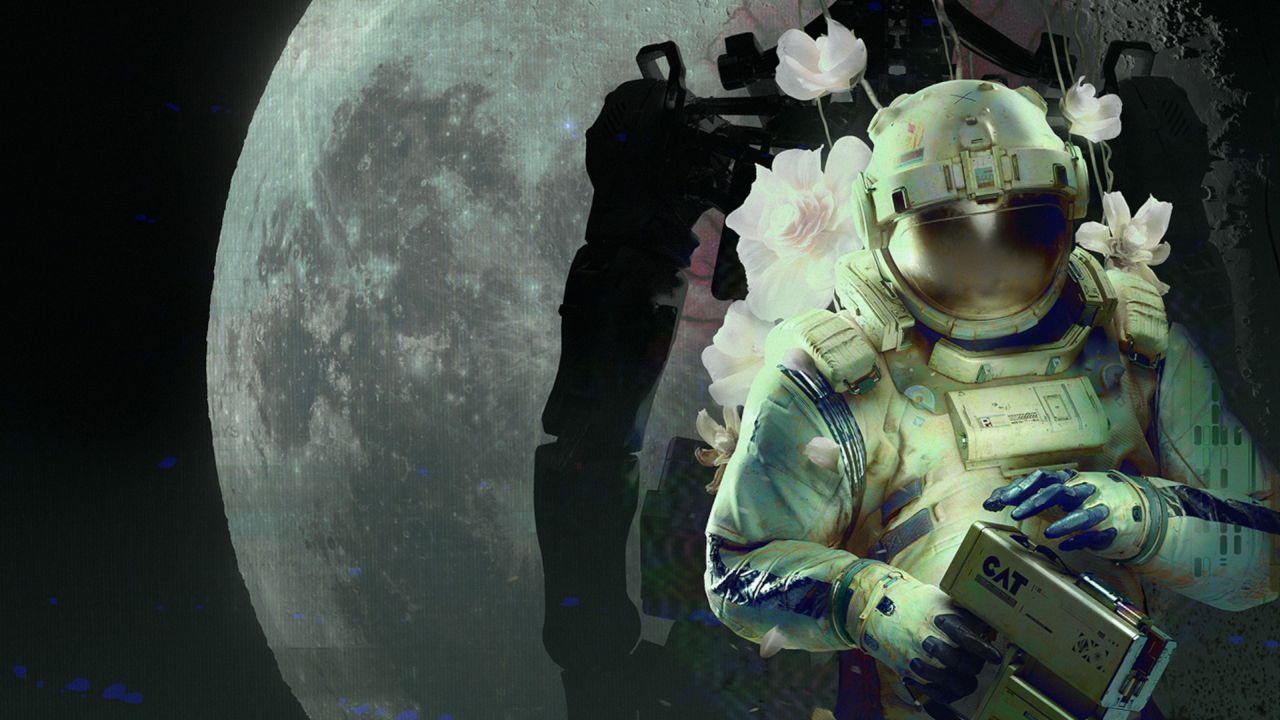
REVIEW – After thirteen years of legend-building, ROUTINE is finally no longer an “someday” urban myth, but a very playable, very oppressive sci-fi survival-horror. The first hour feels like stepping into a 1980s space catalog, except the catalog locks the door behind you and throws away the key. By the time you’re getting used to the fact that even opening a door is its own little performance here, you’re already running, because some metal-bodied something has decided you’re today’s software bug.
It’s a strange, almost surreal feeling to boot up ROUTINE with that specific little devil sitting on your shoulder whispering, “I was waiting for this back in 2012.” The game was the promise of a different era, when we still believed a talented indie team could build something in a few years, ship it, and then everyone would move on to the next big crush. Instead, an entire console generation passed, then another, and ROUTINE slowly slid onto the shelf where myths live: either it shows up one day, or it stays “one day” forever.
And now it’s actually here. The biggest surprise is not that it exists, but how clearly it knows what it wants from you: it wants being there to feel uncomfortable. Not just “scary,” but physically uneasy, tight, tense, the kind of game where you start measuring your own movements because every little thing talks back. Yes, the idea of a long development cycle is inherently alarming, just think of Duke Nukem Forever or Final Fantasy XV, but ROUTINE, thankfully, isn’t interested in making excuses. It’s interested in crawling onto your nerves from the very first minutes.
The core recipe is familiar on paper. You see the world from the inside, you move slowly, you fumble through the environment, you puzzle things out, and every now and then a “robotic” sort of problem shows up, something you don’t defeat so much as avoid. But ROUTINE isn’t trying to reinvent the wheel. It’s trying to make even the simplest actions feel close-up and tangible, like work you do with your hands. In a lot of horror games, the protagonist is basically a floating camera with two hands. Here, you constantly feel like you have a body, weight, spatial awareness, and every movement has a cost. This “full-body awareness” isn’t flashy marketing copy, it really is one of the game’s main weapons.
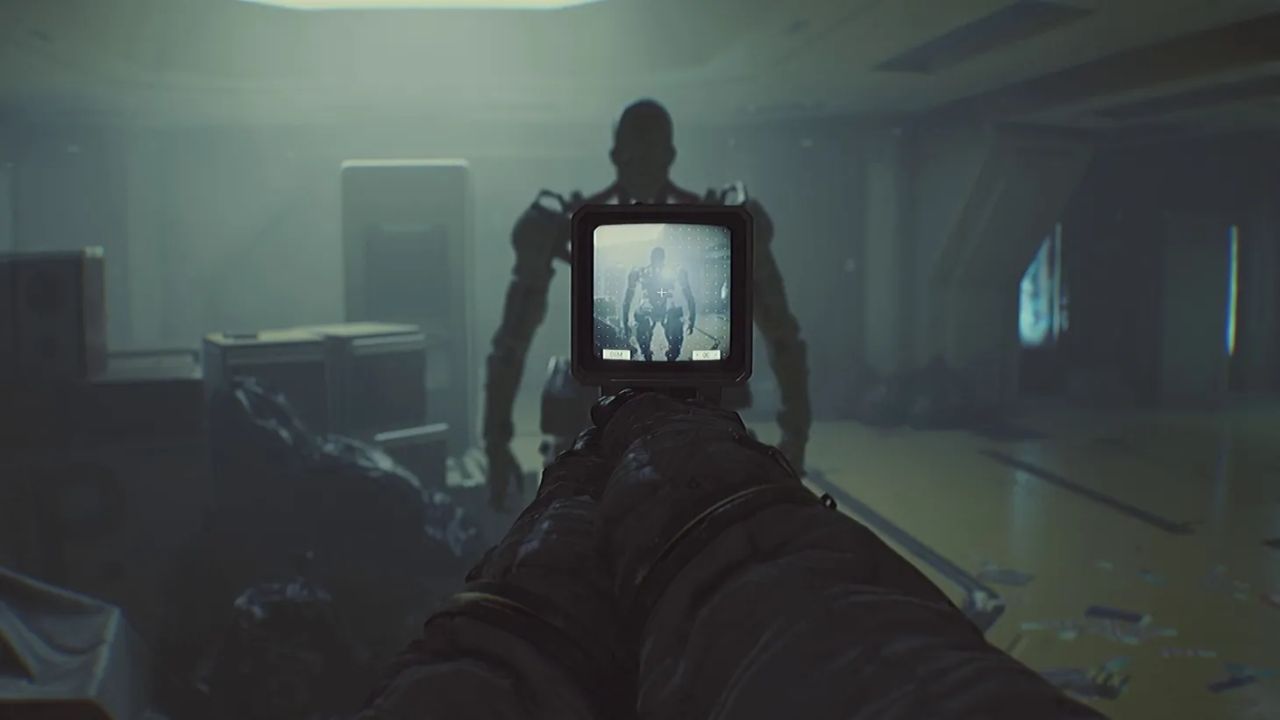
It’s not the missing HUD that hurts, it’s the lack of a crutch
In terms of controls, ROUTINE deliberately doesn’t want to be complicated, it just wants to be brutally consistent. Movement is standard, but the two real keys are crouching and leaning. Leaning here isn’t some “peek around the corner” button you forget after two minutes, it’s fine-tuning your body. You lean sideways, sure, but you can also play with it forward and back: rising onto your toes, reaching into a tight gap, or flattening yourself completely to pull something out of a nook that looked impossible.
If that sounds like a gimmick, the game quickly shows you it’s actually part of navigation. There’s no friendly little icon, no “put the key here” prompt, and no interface that thinks for you. The environment speaks, and you learn to listen to it, otherwise you hit a wall, or worse, you end up on the wrong side of the door. And it’s not like this just “for realism,” it’s like this because it keeps ROUTINE constantly tense. You’re always a little uncertain, and in horror, that’s worth gold.
And since we’re talking about interface: one of ROUTINE’s best decisions is that it refuses to give you “gamey” handholds. There’s no permanent on-screen bar (HUD), no flashing health, no ammo readout, no mini-map, nothing. You don’t even open a door with a button prompt popping up. A lot of the time you have to go to terminals and use systems, and handling them feels distinctly “real”: you navigate with an actual mouse cursor, clicking, digging through menus, while anything can happen behind your back at any moment, something that makes you flinch. The game doesn’t tell you you’re afraid, you realize you’ve got nothing to hold onto.
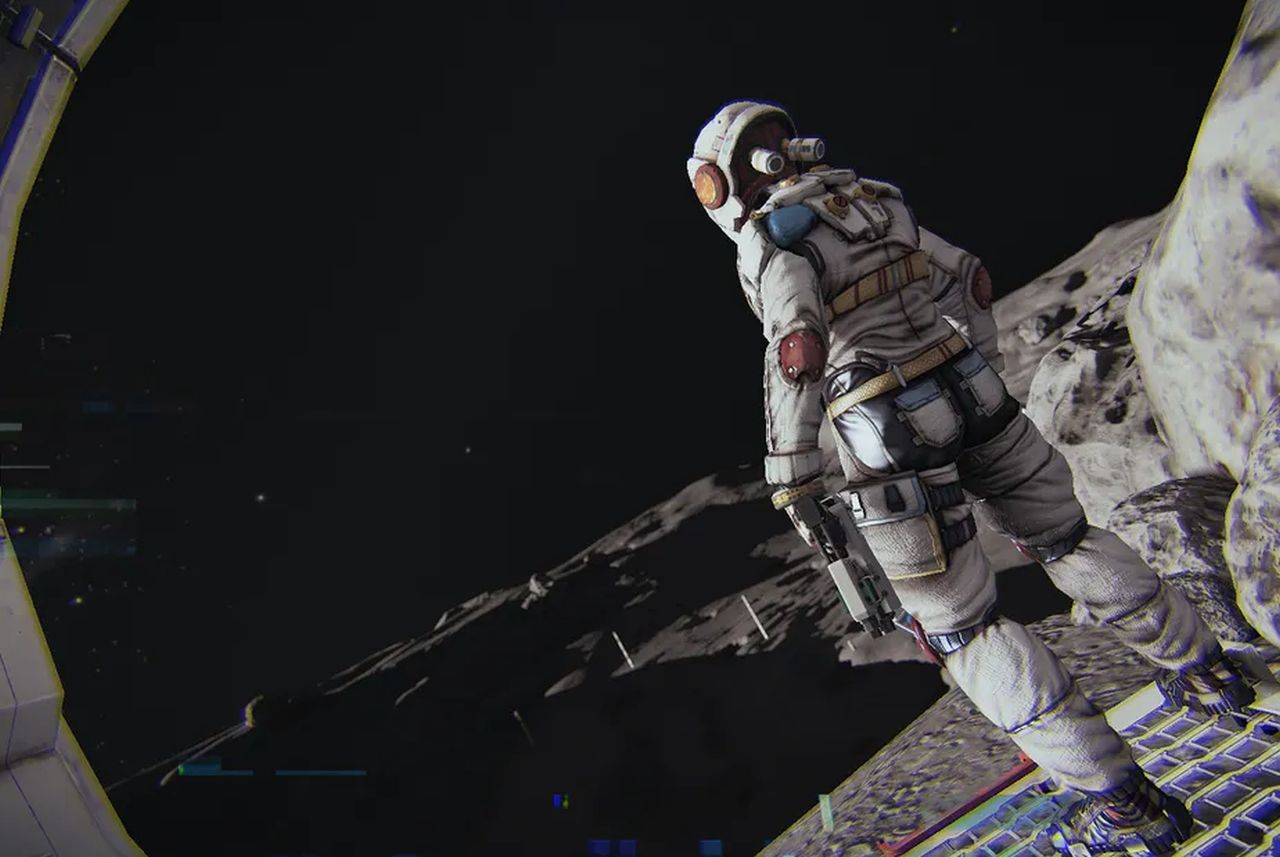
1980s on the Moon, dirty, crackling, gorgeous
Visually, ROUTINE is often stunning. It’s not shiny, glossy sci-fi, it’s a retro-futurist, analog vibe where technology is big, heavy, clunky, and the memory of cathode-ray tube monitors hangs everywhere. The moon base isn’t a sterile set, it feels like a lived-in, used space: kiosks, thick buttons, curved screens, scuffed panels, scattered belongings, tiny details that add up to the sense that everyday routines truly worked here once. The contrast is especially strong: in the entry zones everything is still “just” suspiciously empty, but deeper in it becomes increasingly obvious that something got loose here.
In the residential blocks, ripped-apart doors, wrecked spaces, blood marks signal this wasn’t a simple power outage, then you get an abandoned mall where you receive the classic horror duel of light and darkness. The echo of your own footsteps becomes your best friend and your worst enemy at the same time: it gives you a reference point, and it also tells the world exactly where you are.
Sound is just as strong. ROUTINE doesn’t drown you in a constant “now you should be scared” score, it wants you to believe you’re actually there. A floor panel grinding, a door slamming somewhere far off, the irritating clatter of a smaller robot, and then, suddenly, heavier, deeper steps that make you feel this is no longer set dressing, it’s danger. Silence here isn’t empty, it’s tense, and when something does speak up, it has weight.
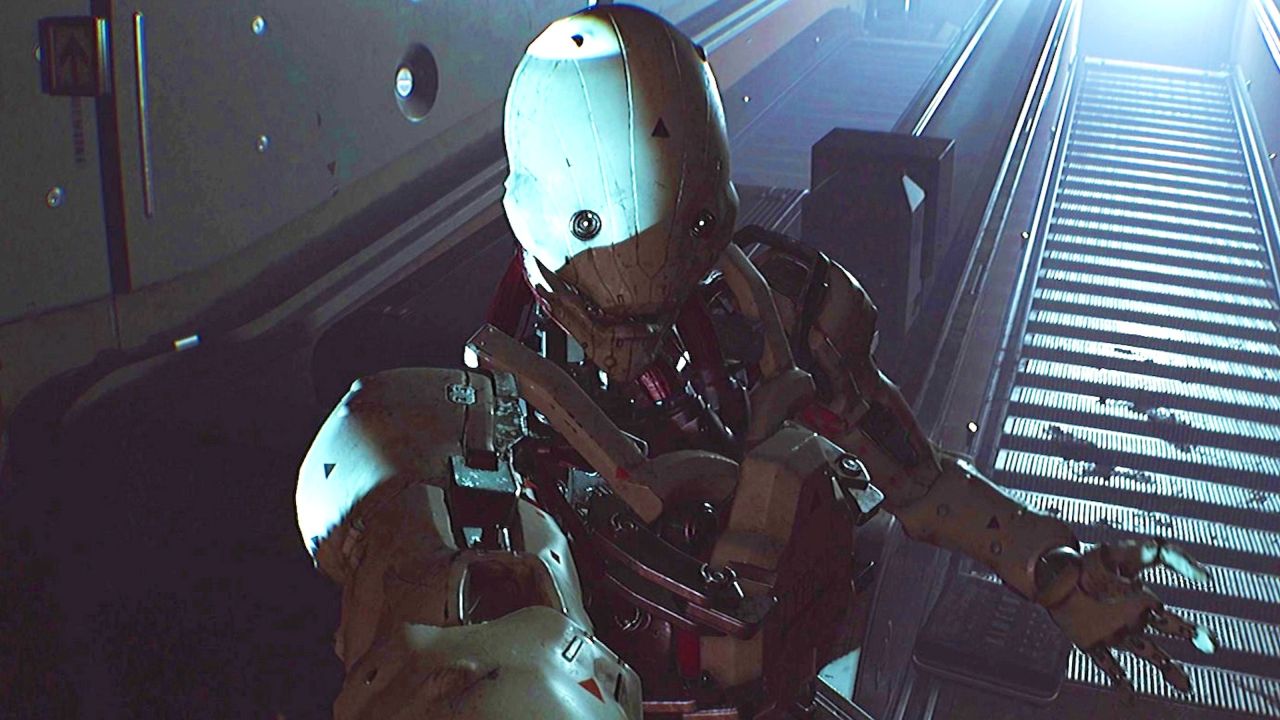
The story doesn’t push itself, it hides, then slams the door on you
The story isn’t complicated, it’s just deliberately not served “ready-made.” There are no big cutscenes, nothing spoon-feeds you what happened, and nobody tells you who you’re supposed to root for. You wake up in the moon base’s isolation chamber, quarantine ends, the routine motions kick in: stretch, put on the helmet, get your ID, then step out to take in the place. Except what you find is a crumbling, abandoned complex that behaves like it specifically doesn’t want you here.
Pieces of the story are scattered across recordings, notes, forms, books, and environmental hints, and the game forces you to assemble the picture yourself. For a while, the main goal is clear: the security system has gone off the rails, the robots don’t negotiate, and you have to shut down whatever is driving them. But ROUTINE’s real strength lives in the side threads. The most interesting fragments can be missed entirely because there’s no big neon sign pointing at them, but if you follow the scent, the questions come: what triggered the turn, when did defense become the enemy, why are you here at all, and if you are here, how do you get out.
The answers aren’t always straightforward, and that’s both a blessing and a curse. A blessing because uncertainty suits horror. A curse because if you’re not the type to loot every drawer and read every scrap of paper, part of the world stays suggestion rather than certainty. Helping with that is the C.A.T., the Cosmonaut Assistance Tool, your multi-purpose gadget that’s door-opener, diagnostic device, signal-cleaner, power source, and, when needed, an emergency weapon. The C.A.T. can fix a faulty system, clean up a distorted voice message, and breathe life into an electrical panel so something opens that previously only stared back at you with quiet mockery.
And yes, it can deliver an electric shock too, which sounds great on paper, but in practice it’s more of a “don’t die immediately” button. It doesn’t kill the robots, at best it staggers them, and the charge is scarce: baseline battery capacity is strict, and you’re not running around with ten spares in your pocket. You can find upgrades that make the C.A.T. hit harder and stun longer, but the game sends a very clear message: combat isn’t the solution here, at best it’s panic management.
Verdict: a distinctive horror game that doesn’t try to be nice to everyone
ROUTINE’s biggest trick is how it makes you vulnerable without necessarily being “hard.” It’s more linear than it seems at first, and while there’s no map and no route markers, the levels often guide you logically, you just have to pay attention to the signs. It’s at its strongest when it gives you time to breathe, puzzle things out, read a note, then twists the knife exactly when you’re starting to believe, “okay, calm now.”
More critical voices do have a point when they say the enemies are too tough, and that running and hiding can become repetitive over time, especially for players who prefer more active survival. The robots are persistent, and the game barely tolerates mistakes: one hit can be survived, the second is usually the end of the line. Still, if you like survival-horror where atmosphere isn’t decoration but the engine, ROUTINE can cling to you fast. It’s not perfect, sometimes it stings, sometimes it annoys, but it builds the feeling of presence so consistently that you rarely think, “come on, that’s just the game.” It’s more like, “the place is doing this to me,” and that difference is everything.
-Herpai Gergely „BadSector”-
Pros:
+ Visual direction and overall look, the retro-futurist moon base feels alive the whole way through
+ Extremely strong immersion via the lack of a HUD, full-body awareness, and “real-feeling” terminal interaction
+ Exploration and environmental storytelling keep pulling you in even when there isn’t a chase
Cons:
– Running and hiding can get repetitive over time, the robots too often force the same loop
– The C.A.T.’s “weapon” side is mostly an emergency solution, combat is practically not an option
– Some of the most interesting story crumbs can be missed entirely if you don’t search the base methodically
Publisher: Raw Fury
Developer: Lunar Software
Genre: sci-fi survival-horror
Release: December 4, 2025
Routine
Gameplay - 7.8
Graphics - 9
Histoire - 7.4
Musique/Audio - 8.8
Ambiance - 9.2
8.4
EXCELLENT
ROUTINE arrives after thirteen years in a way that makes not only its legend interesting, but the game itself, too. The retro-futurist moon base, HUD-free, tactile interactions, and full-body awareness pull you in at a level few horror games can match. The repetitive escapes and near-total lack of combat can be divisive, but anyone who comes for atmosphere has a very good chance of getting plenty of it.









![Altera: Even Penguin Soldiers Could Be Out to Get Us! [VIDEO]](https://thegeek.games/wp-content/uploads/2026/03/theGeek-Altera-302x180.jpg)
![Lizard State: If There’s No Sam Fisher, Indie Devs Fill the Gap! [VIDEO]](https://thegeek.games/wp-content/uploads/2026/03/theGeek-Lizard-State-302x180.jpg)




Leave a Reply