
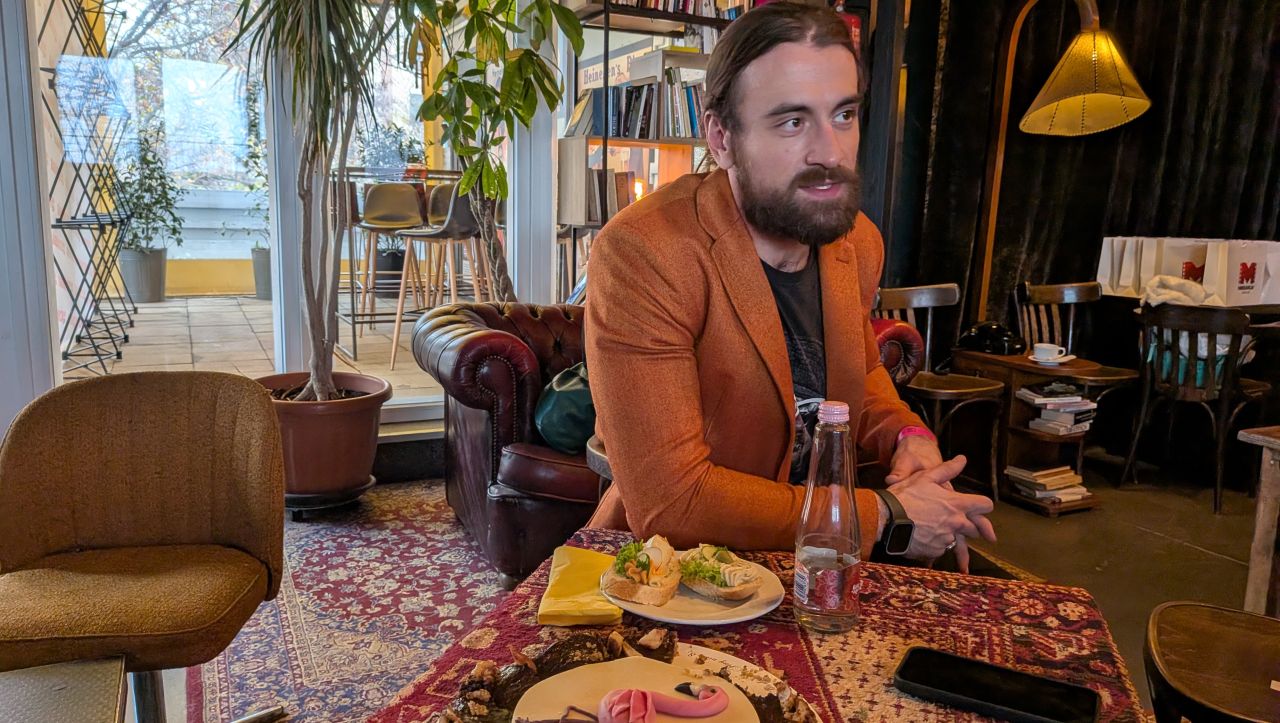
MOVIE INTERVIEW – Kádár L. Gellért, who burst onto the scene as János Hunyadi in the historical series Hunyadi, Rise of the Raven, now returns to the big screen in a completely different environment: we will see him in an important role in the romantic comedy One More Wish, which arrives in cinemas early next year. In the interview, we talk about extreme physical transformations, the “beautified” realism of Hunyadi, the Hungarian rom-com boom, and also how much an actor can (or cannot) consciously choose a genre.
Kádár L. Gellért arrived in the Hungarian film and series world from the Transylvanian theatre scene, and the wider public got to know him as the title character of Hunyadi. Now he appears in the romantic comedy One More Wish, set to hit cinemas early next year, where after the historical epic he can work in a much lighter, but for him professionally just as exciting environment. We talked with him about transformation, the Hunyadi experience, and rom-coms.
theGeek: Let’s start with the physical side a bit. In Hunyadi, you played a very “physique-driven”, powerful role, and you mentioned Christian Bale, who for some roles drastically lost weight, and at other times gained a lot. If someone asked you for a Hollywood-style extreme transformation – major weight loss, major weight gain – would you take it on?
Kádár L. Gellért: I usually say that first I read the script and see why this big weight loss or weight gain is necessary. If it’s something self-serving, if it’s just a visual trick, that doesn’t interest me. But if I see the thread, I understand why that character is in that state, and it connects organically to the story, then I say yes, that’s a challenge. But just so someone can come up to me and say, “Listen, Gellért, you’ve got five days in this film, lose some weight for it,” I’ll say no. I’m not going to wreck my body for five days. If I’m working a hundred days on that project, and I know why the change is happening, that’s a different situation. I also know extreme transformations aren’t good for the body, and later you’ll have to pay the bill for it. But I’m not going into something like that for nothing – I always like to look at it from the outside first, and understand what the stake is.

tG: If it were two Christian Bale-level extremes coming one after the other – in one you have to slim down to skin and bones, and in the other you play a very overweight politician – would you do it?
K.L.G.: One after the other, probably not. If we look at our biology, these are horribly extreme states. I would take on the weight loss more easily than the weight gain, because to be honest I don’t really think I could get obese. And these days there are also tons of technical tools available: for example when they “fatten someone up” with costume and prosthetics without the actor actually destroying their body. Weight loss, however, also brings psychological states and reactions with it that can be very useful for shaping a role – if it’s smartly designed why all this is happening.
tG: About Hunyadi, I read opinions saying you became the “Hungarian Jason Momoa” because of your physique. In period depictions, though, Hunyadi is more of a lean, slender figure. Do you think this more “heroic”, muscular approach was a conscious directorial decision, and how close is it to reality?
K.L.G.: Honestly, if we could go back to the Middle Ages – if only we could go back for one day – I think we’d be very surprised what a warrior or a commander looked like back then. Can you imagine someone fighting through battles their whole life and at the same time their nose isn’t broken, five of their teeth aren’t knocked out, they don’t have scars on their face? For me that’s unimaginable. If we had shown it the way it probably looked, a lot of viewers would have said, “This is disgusting, I don’t want to watch it.” And reality often really is. The same goes for how bloody battle scenes are: in my opinion the scenes in the series don’t even come close to what reality might have been. If you show that, it’s not just too much for kids, it triggers that reaction in adults too of “turn it off, this is too much.” It’s always a matter of decision: how much reality you show, and how much you “cosmetically adjust” for the sake of watchability.

tG: If it had been up to you, would you have gone in an even more realistic, raw direction? Say toward something like what Excalibur was in its time, or a darker historical film today?
K.L.G.: If I had made the series, I’m sure I would have had my own version of which direction to go, but every director feels that way. It could have been done a thousand different ways, with a million kinds of solutions. The producer and the directors chose one out of that million, and they made that one. You can think about, “what if Hunyadi had a tooth knocked out, his nose broken,” and indeed maybe some scenes would have been even more exciting. But it could also be the exact opposite: many people turn away from it because it’s already too raw. After the fact these are more theoretical questions – you can explain them, but you can’t undo them.
tG: If you could choose whether in the future you’d rather play in more realistic, tougher historical or action films, or in lighter, more “easygoing” rom-coms and comedies, which way would you lean?
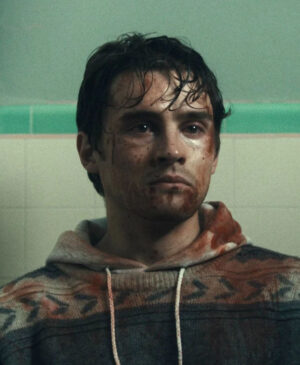
K.L.G.: Honestly? An actor isn’t in a position – especially not here or in Transylvania – to pick and choose by genre. An opportunity comes, I look at it: what does it hold for me as an actor? What can I show from it that I haven’t shown yet? If the character on the outside isn’t a “muscular hero”, but say a mutilated, wounded person, there’s a lot of potential in that too. I don’t want to get to the point where, as a luxury actor, I say, “I won’t do this, because it doesn’t fit my brand.” You can say no to a topic if it goes against your values, but basically I’m an actor, I’m waiting for opportunities. If they tell me to play a woman, that’s a huge challenge and an interesting task. If they tell me to be the “pretty boy”, and it’s written for me, there can be work in that too. That’s this profession: you look at what you can bring out of it.
tG: After Hunyadi, from the outside it might look logical that you’d go toward more big, costume historical lead roles. Compared to that, One More Wish is a romantic comedy. What led to you taking on a project with such a different tone?
K.L.G.: One More Wish is completely different from Hunyadi, but that’s exactly why it’s interesting: you have to show different kinds of colors. There will be people who only see, “look, there’s Hunyadi,” and they’ll hear it in my voice too, but there’s nothing I can do with that. The process I go through can’t be taken away from me anyway.
tG: If you look at your own career after Hunyadi, is there any conscious direction you’ve marked out for yourself, or does it stay as “anything can come that’s good”?
K.L.G.: “Anything can come that’s good” is what’s closest to me. My goal is to stand on as many legs as possible: there was a medieval action-historical series, now there’s a romantic comedy. The experience from the action scenes stays in me, it becomes part of me, and that knowledge will be useful in other projects too. I don’t really see a Hungarian actor today who could credibly say, “from now on I only play in romantic comedies,” and toss everything else back. If tomorrow an American project comes that isn’t a rom-com, but say a darker crime story, and it gives them a big character in it, they won’t say, “sorry, I’m only a rom-com actor.” I’m the type who examines the opportunity, and then decides: is it worth it or not.
tG: To close: what do you hope One More Wish will do to viewers, and what does it add to your own career after Hunyadi?
K.L.G.: I hope that those who sit down for it will have a good time, laugh, switch off – that’s what the genre requires. But at the same time there’s also my hope that viewers will think about how they handle their “wishes”, their own decisions. For me this film is another step: I can show that I don’t only exist on screen in armor, with a sword in my hand, but also in a contemporary, more emotional, lighter story. If from this new requests come, even ones with a very different nature, then I’ll say it was worth it. And if along the way viewers also get something from it that goes beyond “we had some good laughs,” then even more so.
Interview by: -Gergely Herpai “BadSector”- and -Anikó-,
photos: Dóra Sallák, Gergely Herpai and Anikó Angyal
The producer of the film Még egy kívánság is Megafilm Service






Leave a Reply