
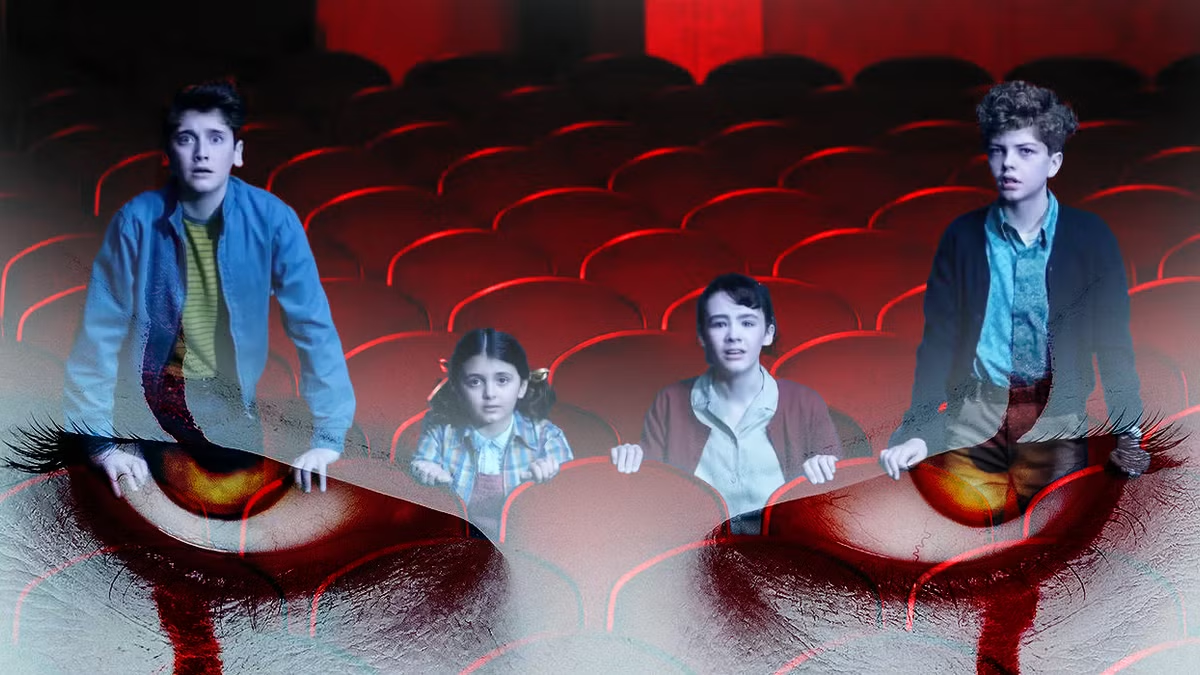
SERIES REVIEW – HBO’s return to the world of It isn’t built around jump scares or nostalgia. Instead, It: Welcome to Derry approaches horror as something inherited, learned, and quietly sustained over generations. Developed by Andy and Barbara Muschietti with Jason Fuchs, the series treats Pennywise less as a spectacle and more as a symptom.
Set years before the events of the recent films, It: Welcome to Derry resists the temptation to explain its mythology outright. The show isn’t interested in tidy origins or definitive answers. What it explores instead is environment: the social habits, historical wounds, and shared silences that allow something monstrous to take root. Horror here grows gradually, fed by indifference rather than shock.
The opening moments establish this philosophy with unsettling restraint. In the dead of winter, a young boy tries to escape Derry after being rejected everywhere else, from a movie theater to his own home. When help finally arrives, it feels almost merciful—until it becomes clear that kindness in this town often carries a hidden cost. The scene doesn’t rely on spectacle; its power comes from inevitability.

Derry as a system, not a setting
When Air Force Major Leroy Hanlon is transferred to Derry months later, the town reveals itself from another angle. Officially, it’s just another military posting. In practice, it’s a place structured around exclusion and quiet hierarchy. Restricted zones overlap suspiciously with Indigenous land, while access and authority seem unevenly distributed, even among those in uniform.
Hanlon’s growing unease, shared with fellow serviceman Pauly Russo, exposes a pattern rather than a conspiracy. Derry doesn’t erupt with open hostility; it normalizes it. Power is exercised casually, prejudice is routine, and no one seems especially interested in asking why things function the way they do. The horror emerges from this steady acceptance of imbalance.

When children start asking the wrong questions
Across town, the story shifts to Derry High School, where Lilly returns after time spent in the Juniper Hill psychiatric facility. Her attempt to reenter everyday life is met with suspicion rather than sympathy. Ronnie, already marginalized, carries the added burden of a father accused of a disappearance no one seems eager to truly investigate.
What draws these children together isn’t bravery or curiosity, but frustration. Adults offer rumors instead of answers, warnings instead of help. As the group begins piecing together fragments of the past, the tone shifts from mystery to dread. The series underscores a familiar truth in King’s work: children notice patterns long before they understand their consequences.

Fear shaped by memory and neglect
The performances from the younger cast anchor the series emotionally. Their fear feels unpolished and immediate, rooted in confusion as much as terror. Lilly’s arc is particularly affecting, shaped by loss and an urgent need to protect others from repeating her experience. The show treats trauma as something persistent, not easily escaped or resolved.
Set against Cold War tension, the series quietly mirrors modern anxieties. Images of civil unrest flicker in the background, while Black and Indigenous residents remain largely unseen by those in power. Rather than leaning on familiar narrative shortcuts, the show rejects the idea that marginalized characters exist to repair broken systems. Survival, not redemption, becomes the focus.
Pennywise as consequence, not cause
Although childhood innocence remains a central concern, It: Welcome to Derry widens its scope considerably. Abuse, institutional power, historical erasure, and militarization all feed into the town’s moral decay. Within this framework, Pennywise feels less like an invading force and more like a reflection—something shaped by what Derry refuses to confront.
By the end of the season, the series proves itself more interested in discomfort than explanation. It expands the It universe by interrogating the human behaviors beneath the myth. The most unsettling takeaway is not the presence of a monster, but the realization that it thrives because the town makes room for it.
-Herpai Gergely “BadSector”-
It: Welcome to Derry
Direction - 9.2
Actors - 9.1
Story - 9.2
Visuals / Horror / Sound Design - 9.4
Ambience - 9.2
9.2
AWESOME
It: Welcome to Derry is a deliberate, unsettling series that avoids easy answers and louder scares. By focusing on systems rather than spectacles, it redefines what a prequel can achieve. Few horror shows are this patient—or this quietly damning.












Leave a Reply