
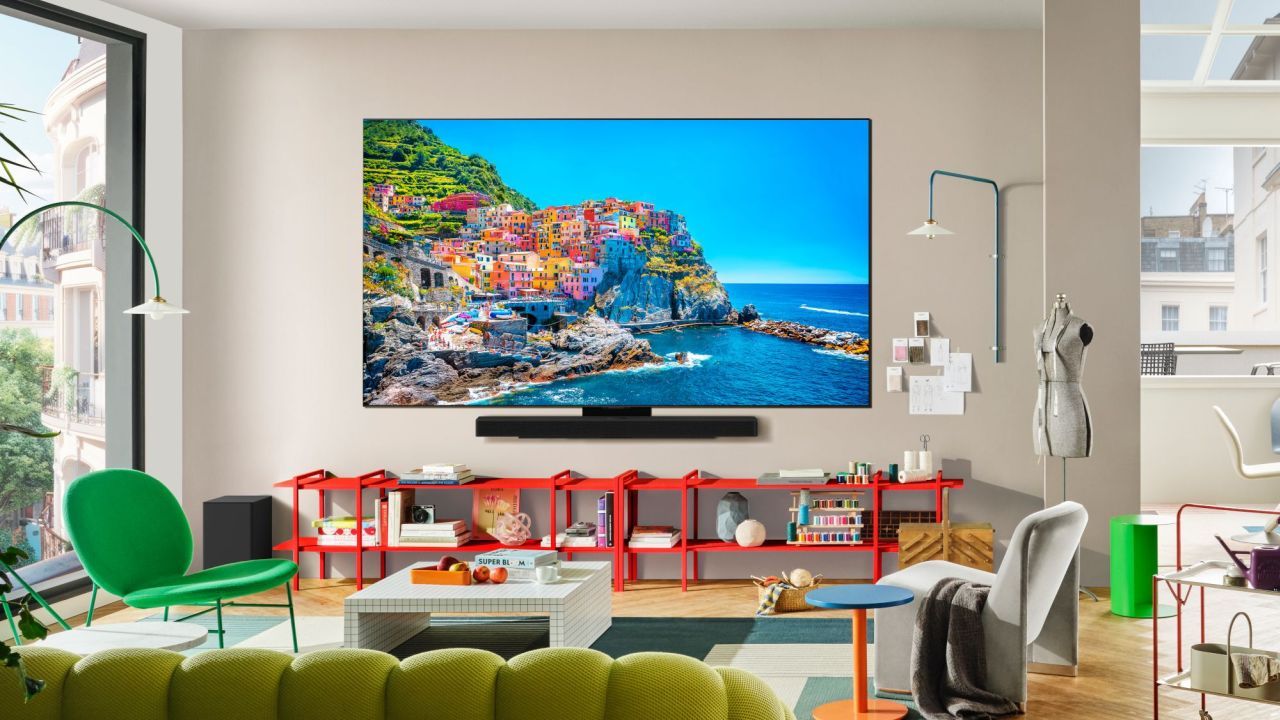
TECH REVIEW – LG’s C-series is the Swiss Army knife of the OLED world: always within reach, always dependable. The C5 doesn’t start a revolution; instead, it smartly polishes a proven formula while trying to gain an edge through AI-powered features. The real question is how hard this measured evolution actually hits in 2025.
The LG C5 launched in March 2025. It is the mid-range series in LG’s 2025 OLED TV lineup, positioned above the LG B5 and below the flagship LG G5 and LG M5 ranges. The TV is available in screen sizes ranging from 42 to 83 inches.
The LG C5 uses the same OLED Evo (EX) panel as its predecessor, the LG C4. The TV is powered by LG’s upgraded Alpha a9 Gen 8 AI processor, which introduces new artificial intelligence capabilities (covered in detail later), along with a Brightness Booster feature that is not supported on the smaller 42- and 48-inch models. The C5 supports Dolby Vision high dynamic range, but HDR10+ is not included. On the audio side, Dolby Atmos is supported, while DTS has been removed, which is disappointing.
In terms of sound, the C5 offers the same 2.2-channel, 40-watt, Dolby Atmos-compatible built-in speaker system as the previous C4. Available sound modes include Standard, Cinema, and AI Sound Pro, as well as a new AI Sound Wizard (which we will discuss later).
LG TVs are generally well equipped for gaming, and the C5 is no exception. While there is no real upgrade compared to its predecessor, it still delivers a full suite of gaming features, including 4K at 144 Hz, VRR (AMD FreeSync and Nvidia G-Sync), HGiG, Dolby Vision Gaming, and ALLM. The Game Optimizer mode is also present, allowing settings to be customized, including a boost mode designed to reduce input lag.

Brightness, Colors, And Detail
The LG C5’s peak HDR brightness (measured on a 10 percent white window) reached 1180 nits in Filmmaker Mode and 1198 nits in Standard Mode. These results represent an improvement over the LG C4, which achieved 1065 and 925 nits in Filmmaker and Standard modes, respectively. Full-screen HDR brightness (measured on a 100 percent white pattern) landed between 195 and 200 nits, which is a slight step back compared to the C4.
The LG C5 is also impressive when it comes to upscaling lower-resolution sources. Watching a HD stream of Fight Club on Disney Plus, the image received a noticeable boost in brightness and sharpness, making it feel almost like a 4K presentation. With standard-definition content (480p and below), the C5 was also able to clean up textures, although these understandably remained somewhat soft.
Colors look excellent on the LG C5. Watching a Dolby Vision stream of Elemental on Disney Plus, hues appeared vivid and dynamic, especially in scenes where Ember demonstrates her glassmaking skills amid shimmering minerals. Another Dolby Vision stream, Star Wars: The Last Jedi, delivered an abundance of red tones during the throne room fight scene, all rendered with striking clarity and intensity.
When measuring HDR color gamut coverage, the C5 reached 99.4 percent of the UHDA-P3 color space and 75.1 percent of the BT.2020 color space. Both results are considered excellent and help explain the C5’s strong color performance.
Shadow detail and contrast are also excellent on the C5. In the opening crime scene sequence of The Batman on 4K Blu-ray, clothing details remained visible even in the darkest frames, while black levels stayed deep. In the same scene, bright lamps and torches created a precise balance between light and dark tones. Aerial shots of Gotham showcased punchy highlights from streetlights and neon signs, while buildings retained their dark, brooding character.
In the black-and-white scenes of Oppenheimer, shadows and highlights appeared refined and authentic, with a wide range of grayscale tones in between. For these scenes, I enabled the Dynamic Tone Mapping feature (which is disabled by default in Filmmaker Mode), resulting in brighter, more pronounced white highlights without upsetting the balance between gray and black tones.
Textures and fine details looked lifelike across nearly all content. Facial features and skin tones appeared accurate, particularly in close-ups from films like The Batman and Top Gun: Maverick. Object and clothing textures were also realistic, adding a genuine sense of depth to the image.
Motion handling was generally very good. The intense flight sequences and long pans in Top Gun: Maverick played smoothly with minimal blur. That said, there were moments—such as a rocky landscape pan in No Time To Die—where the C5 struggled slightly, but enabling Cinematic Movement in the TruMotion settings helped alleviate the issue.
For sports broadcasts, the Standard picture mode with TruMotion set to Natural proved to be the best option overall. Fast direction changes during a soccer match appeared sharp and clear. Users seeking an even smoother look can manually adjust de-blur and de-judder values, although my experience suggests keeping them low, around 3.
One of the LG C5’s weaker points is reflection handling. During testing with overhead lighting turned on, screen glare was noticeably more pronounced than on the best mini-LED TVs and premium OLED models such as the LG G4 or Samsung S95D, reducing perceived black depth and shadow detail in darker scenes.

LG C5 With AI Voice Search On Screen
The LG C5 runs the latest version of LG’s smart TV platform, webOS 25. It introduces a range of AI-driven features, including AI Search, which finds content based on user questions and preferences; AI Concierge, which recommends shows based on viewing history; and AI Art, where users can create AI-generated artwork. Creating artwork requires credits, which can be purchased, but users receive 100 credits to start.
Alongside the AI Picture Wizard—which helps create a personalized picture mode through visual prompts—LG has introduced the AI Sound Wizard, which works on similar principles for audio. The Quick Cards feature on the home screen (introduced in webOS 24 and designed to organize apps by categories such as Sports and Games) has also been further simplified.

The New AI Sound Wizard Delivers Mixed Results
The LG C5’s built-in 2.2-channel, 40-watt speaker system supports Dolby Atmos formats, but DTS is once again missing. The AI Sound Pro mode upmixes audio to 11.1.2 channels, which is an improvement over the C4’s 9.1.2-channel solution.
My default TV audio mode is usually Movie or Cinema. Using this mode during the Batmobile chase in The Batman, screeching tires and surrounding traffic sounds tracked the on-screen action accurately. Bass presence was there, and the Batmobile’s engine delivered a satisfying rumble, but the overall presentation remained restrained compared to the best-sounding TVs, such as the Sony Bravia 8. Dolby Atmos height effects were also limited, and the soundstage could have been wider.
Interestingly, AI Sound Pro ended up being the most engaging option. Activating it during the same Batman scene improved the audio across the board: the soundstage became wider and deeper, bass felt tighter, even if still somewhat restrained. The overall tone became brighter, which won’t appeal to everyone, but the experience was more immersive. That said, the C5 would clearly benefit from pairing with a good Dolby Atmos soundbar.
One of webOS 25’s new AI features is the AI Sound Wizard, effectively the audio counterpart to the AI Picture Wizard. It creates personalized sound profiles by having users listen to various audio samples. I tested three profiles—Balanced, Natural, and Rich / Rich and Vivid—but all sounded slightly flat to my ears, so I continued to favor AI Sound Pro and Movie modes. Even so, the level of customization on offer is still worth acknowledging.

Sleek, Premium Design
The LG C5’s design delivers exactly what you would expect from a mid-range OLED TV. Its slim bezel gives it an elegant look, while the thin profile and near-borderless screen keep the focus on the image. Connectivity—including four HDMI 2.1 ports—is easily accessible from the side, which isn’t always the case with competing models.
The C5 doesn’t reach the design heights of flagship OLEDs like the Samsung S95D or Philips OLED909, but it features a solid aluminum stand and a new AI Magic Remote in select regions, including the United States. This updated remote has a cleaner, matte finish, fewer buttons, and new AI Home Hub and Accessibility buttons. In the United Kingdom, users receive a slightly refreshed but otherwise familiar version of the older Magic Remote, complete with numbered buttons.

Extensive AI Features
The C5 runs LG’s webOS smart TV platform. The latest version, webOS 25, primarily focuses on adding a wide range of AI features, including AI Search, AI Concierge, AI Art, and the AI Sound Wizard. Improvements have also been made to the AI Chatbot introduced with webOS 24.
When I asked the Chatbot how to improve picture brightness or sound quality, it provided useful advice. It struggled more with complex questions, but it is still clearly a helpful tool for certain users.
LG has pushed personalization further with the Voice ID feature, which is particularly useful for families. The C5 supports multiple user profiles, ensuring that recommendations and settings are tailored to each person. With Voice ID enabled, webOS automatically recognizes who is speaking and adjusts the system accordingly.

LG C5 With Game Quick Card On Screen
Quick Cards, such as the Game card shown here, remain an excellent way to organize apps by category. The Sports Quick Card allows users to select favorite teams and access live and upcoming matches, results, and related content from YouTube and other streaming services. The overall home screen layout closely resembles webOS 24, and while the large banner at the top remains distracting, the interface is otherwise user-friendly.
LG continues to excel with its Quick Menu, where settings can be adjusted quickly without leaving the content currently playing. A wide range of picture and sound options are available for users who enjoy fine-tuning, while the menu system remains accessible for more casual viewers.
The LG C5 proves to be an excellent TV for gaming, backed by fast response times and strong performance in titles such as Battlefield V.

Full Suite Of Gaming Features
The LG C5 is an excellent gaming TV. Its complete feature set includes 4K at 144 Hz, VRR (AMD FreeSync Premium and Nvidia G-Sync), HGiG, Dolby Vision Gaming, and ALLM, all supported across four HDMI 2.1 ports. The Game Optimizer mode allows for fine-tuning of gaming settings, while the Game Quick Card in the main menu also includes cloud gaming services such as Amazon Luna and Nvidia GeForce Now.
Gaming performance on the C5 is outstanding. Playing Battlefield V on an Xbox Series X, intense combat scenes with fast movement and aiming ran smoothly, without tearing or blur. The C5’s image quality added an extra layer to the experience, delivering impressive visuals with vibrant colors, deep contrast, and refined detail.
Is It Worth It?
The value of LG’s C-series has always been tricky to assess. On one hand, it is a feature-rich TV that offers nearly everything needed for movies and gaming, along with an excellent smart platform. While exact pricing for the 2025 models has yet to be announced, the C5 is likely to deliver one of the best price-to-performance ratios among mid-range OLED TVs from Samsung, Sony, and Panasonic.
On the other hand, while the C5 brings a modest brightness boost and new AI features, it remains very similar to its predecessor, the LG C4. Even so, the C5 is undeniably an excellent TV that justifies its price. Discounts are expected in the coming months, but as long as the C4 remains available, it may still be the better choice. Once it is gone, however, the C5 stands as a worthy successor.
-Herpai Gergely “BadSector”-
Pros:
+ Brilliant picture quality
+ Full suite of gaming features
+ Excellent webOS smart TV platform
Cons:
– Audio could be better
– No HDR10+ support
– Only a modest upgrade over the LG C4
LG C5 OLED TV
Design - 8.8
Display - 9.4
For Gamers - 9.5
For Movies - 9.2
Price/value - 8.7
9.1
EXCELLENT
The LG C5 continues to deliver the versatility and strong overall performance we expect from LG’s mid-range OLED series. It offers outstanding picture quality, excellent gaming performance, and an intuitive smart TV platform expanded with new AI features. While it represents only a modest step forward compared to the LG C4 and its audio could be stronger, it is hard to deny just how good the C5 really is.











Leave a Reply