
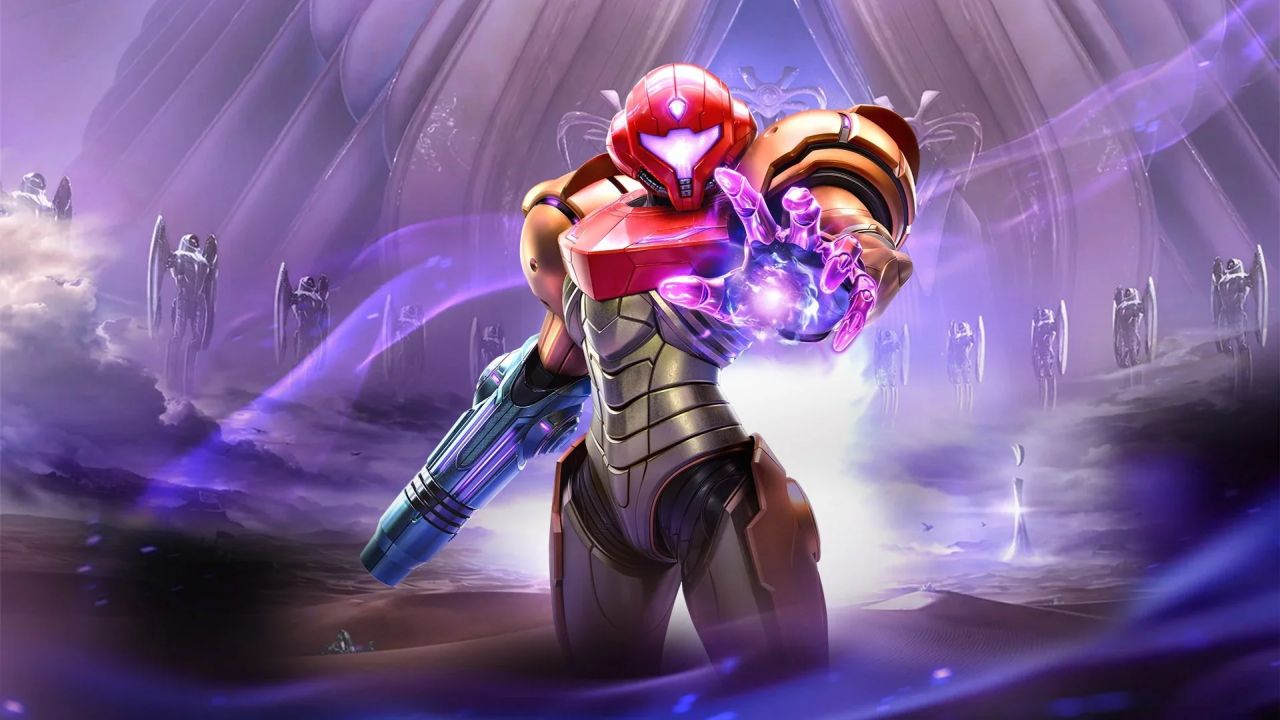
The latest entry in the Metroid Prime series did undergo a reboot, which was understandable, but according to the developers, a second reset was completely out of the question.
In a new interview with Famitsu, the development team behind Metroid Prime 4: Beyond, Retro Studios, spoke openly for the first time about the game’s unusually long development cycle. According to an anonymous developer, the original concept stemmed from an early idea to incorporate elements commonly associated with open-world games into the series. As development progressed, however, doubts emerged regarding that direction, while further delays were deemed unrealistic.
Metroid Prime 4 was originally announced at E3 2017, with Bandai Namco reportedly handling early development. Two years later, Nintendo revealed that the project had been handed back to the developers of the previous entries, effectively rebooting development from scratch. The interview indicates that Nintendo had already finalized the game’s story and its psychic-ability-based gameplay before transferring development to Retro Studios.
“At the start of the project, perhaps influenced by The Legend of Zelda: Breath of the Wild, we saw many online comments saying, ‘We want to play an open-world Metroid.’ However, the core element of Metroid—expanding explorable areas by unlocking abilities—is fundamentally incompatible with the open-world idea of being able to go anywhere from the beginning,” the developer explained.
As a result, the team opted to design a limited but freely explorable central area that would act as a hub connecting other regions. They believed that satisfying movement within this space would ease the tension of exploration and help control the overall pacing of the game.
Ultimately, development took far longer than anticipated, and the team realized that players’ perceptions of open-world games had evolved. Since development had already been restarted once when Retro Studios took over, rebooting the project again was never considered. The developers therefore chose to push forward with their original vision, deliberately ignoring the increasing speed trends seen in modern shooters and action games, as those would have conflicted with the pacing of an adventure game.
While experimenting with a prototype, the idea of directly controlling the Charge Beam emerged. After implementing and testing the feature, the team felt it added a new layer to gameplay. This led to the question of what enabled Samus to perform such actions, which in turn resulted in tying the mechanic to psychic abilities. Later, Retro Studios was asked to expand on these ideas with additional concepts.
At the very least, the game finally saw release, even if roughly eight and a half years passed between its announcement and launch.

![Altera: Even Penguin Soldiers Could Be Out to Get Us! [VIDEO]](https://thegeek.games/wp-content/uploads/2026/03/theGeek-Altera-302x180.jpg)
![Lizard State: If There’s No Sam Fisher, Indie Devs Fill the Gap! [VIDEO]](https://thegeek.games/wp-content/uploads/2026/03/theGeek-Lizard-State-302x180.jpg)







![Altera: Even Penguin Soldiers Could Be Out to Get Us! [VIDEO]](https://thegeek.games/wp-content/uploads/2026/03/theGeek-Altera-300x365.jpg)
![Lizard State: If There’s No Sam Fisher, Indie Devs Fill the Gap! [VIDEO]](https://thegeek.games/wp-content/uploads/2026/03/theGeek-Lizard-State-300x365.jpg)


Leave a Reply