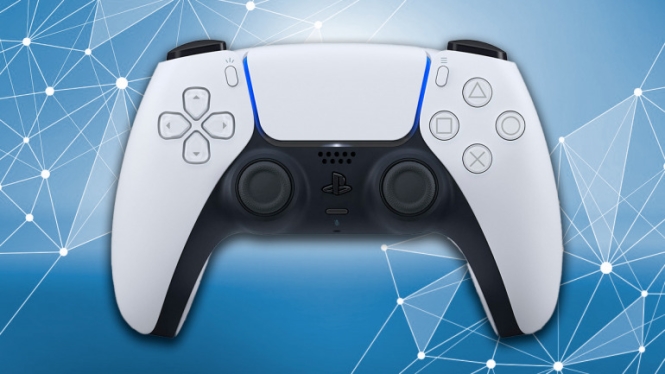
By expanding the touchpad concept, Sony could end up with a radically customizable DualSense-style controller – and it naturally raises the question of whether this is an early hint of PlayStation 6 thinking.
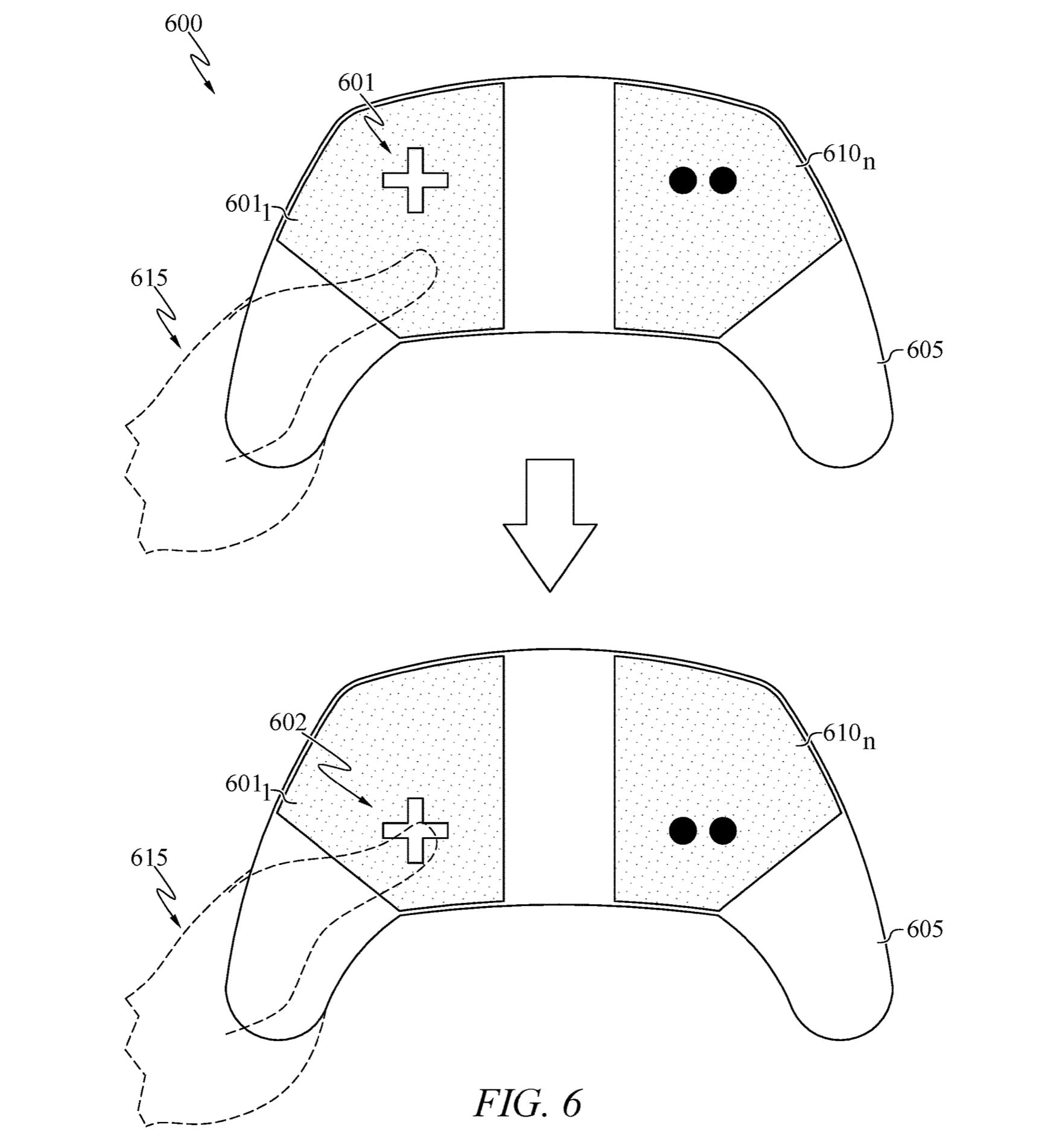
Sony has been granted a U.S. patent for a touchscreen-based controller design that would let players decide where the buttons should sit. The filing dates back to February 2023, but it was only published last week, and it’s described as a controller design and method. Based on the patent text and the accompanying diagrams, much of the controller’s top surface would be dominated by a large touch display in the area normally reserved for traditional buttons.
The goal is straightforward: let players rearrange the D-pad, analog sticks, and face buttons to match personal preference, accessibility needs, or whatever layout feels best for a specific game. The concept also appears to allow resizing certain controls, or removing them altogether. In theory, a simple platformer could be reduced to one oversized jump button. Or, if a game only relies on the D-pad or the left stick, one control could be eliminated while the other becomes larger and easier to use.
“Often, conventional controllers adhere to a similar control interface, with a directional pad on one side and buttons on the other. One drawback of existing designs may be the fixed configuration. For example, the layout may be too small or too large for a user. Similarly, a fixed layout may be uncomfortable for a user. Manufacturers typically do not change the layout or size of controllers to reduce costs. As a result, controllers may include button configurations that do not accommodate all players’ hand sizes. There is a desire for game controllers that allow for different configurations and accommodate hand sizes without the need for customization or manufacturing of different sizes. Another drawback of conventional controllers is the fixed nature of the input controls. For instance, a controller may only have enough space for a directional pad and a joystick, with each element located in a different spot. Due to the size of the physical control elements, game controls may be limited. Additionally, the inclusion of controls can increase the size of the controller. There is a need and desire to improve and modify game controllers,” the patent reads.
One obvious cautionary example is the Turbo Touch 360, a third-party controller from the 1990s made for 8-bit and 16-bit systems. It swapped the D-pad for a touchscreen to reduce thumb strain, but it also led to accidental inputs when players simply rested their thumbs on the surface.
Sony notes that the touchscreen would include pressure and heat sensing to read the state of the input area. It’s not clear whether that means basic on/off sensing or a more nuanced range of sensitivities. If it’s the latter, the system could potentially tell the difference between a thumb at rest and an intentional press.
As always, a patent doesn’t automatically mean a consumer product is guaranteed to follow.
Forrás: VGC