
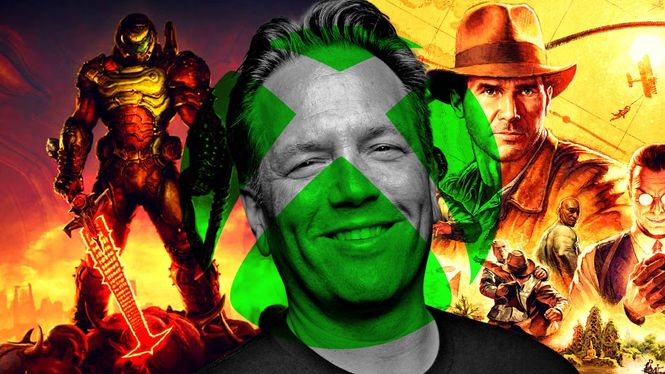
Phil Spencer poured roughly $80 billion into building a monumental cathedral around Xbox. The Steve Ballmer era already showed what happens at Microsoft when the sunk cost fallacy starts driving decisions. Phil Spencer was to Xbox roughly what Ballmer was to Windows. Asha Sharma may now end up playing the role that Satya Nadella once played for Microsoft as a whole.
Yesterday’s news that Phil Spencer is leaving the top job at Xbox surprised plenty of people, but the headline itself had been visible on the horizon for months. Microsoft‘s business lens has shifted dramatically in recent years, and the latest moves across the industry made it increasingly obvious that the pressure was building over a branding and gaming strategy that no longer looked much like the one the now-former Xbox boss had originally set out to build.
Spencer’s vision was, at its core, a romantic one. He wanted to raise a vast Xbox cathedral, with the brand as the foundation, the studios as the stonework, and the game catalog as stained glass casting the most dramatic light possible over the hymns and sermons echoing inside. Those hymns and sermons, powered more by faith than by results, kept asking us to believe in a future where Game Pass would become the savior.
Microsoft does not need the same Xbox anymore, it needs a different one
The problem is that the nearly $80 billion Phil Spencer spent shaping that franchise cathedral – buying giants like Bethesda and Activision Blizzard, absorbing roughly a dozen other studios, and pouring huge money into pushing the Game Pass idea – secured the building itself, but not the congregation. And it definitely did not guarantee profitability. Put simply, the person who designs a cathedral is rarely the one best equipped to count the offerings.
Now that Microsoft is pivoting toward AI and services as its core strengths, asking the architect to dismantle that cathedral is a bad plan. It is an even worse plan if the work is done with a wrecking ball instead of a careful chisel and a steady hand.
If Phil Spencer now reads as a hero-turned-villain for a large part of the community, it is precisely because that kind of pivot carries a psychological cost. You cannot spend years hugging studio heads and creatives on camera, then coldly cut them loose in a corporate move and expect no emotional blowback.
If you want to tear down a cathedral and replace it with a shopping mall, you need an executioner. You need someone who is not tied to the emotional bonds and visible passion people associated with Phil Spencer, so his increasingly worn image does not end up damaging a brand that is already having a rough time. Asha Sharma fits that role, and she arrives not wrapped in the gamer mystique of T-shirts from forgotten franchises, but with the resource-optimization logic that competition in the AI era has made practically mandatory.
Spencer saw legacy, while Sharma will see metrics. She is the person who will sit through major debates and negotiations over whether a symbol as central as Halo should appear on PS5. What Phil might have treated as the equivalent of placing a saint’s statue inside a Buddhist temple, the new CEO will sign off on without blinking. The sunk cost fallacy that weighed so heavily on Spencer is not weighing on her.
Microsoft’s sunk cost trap
The sunk cost fallacy describes our tendency to cling to projects out of emotional attachment, or simply because we feel we have already invested too much time and effort to walk away, instead of rationally focusing on what best serves the future. From the perspective of Microsoft‘s leadership, Phil Spencer eventually came to embody that irrational pattern.
You do not have to look far for a precedent to understand this move at Xbox. Microsoft has already lived through something very similar. Just look at the Steve Ballmer era, when he took over after Bill Gates and became for Windows roughly what Phil Spencer later became for Xbox.
When Microsoft entered a downward stretch, Ballmer had to step aside to make room for Satya Nadella. Nadella was not brought in to polish old glories, but because he had already shown with hard numbers that the cloud could be the company’s future. That change in vision was central to Microsoft‘s flagship shifting from Windows to the Azure cloud.
No exclusivity dogma. If Microsoft Office could make money on an Apple iPad, then the old tribal feuds Ballmer fought as if Steve Jobs had personally run over his dog stopped mattering. And if entire divisions had to be cut because they were no longer profitable enough, it hardly mattered whether they had been there since day one or how strongly they embodied the Microsoft spirit.
From that point on, assuming Asha Sharma is arriving to sell plastic consoles and kiss a green logo is hardly the most logical reading. Believing Sharma will be salvation where Phil Spencer was the problem is like staying on your knees with your eyes closed, still praying inside the ruins of that cathedral. Waiting for a miracle while we ourselves are trapped in the sunk cost fallacy is anything but a rational response.
Source: 3djuegos













Leave a Reply