
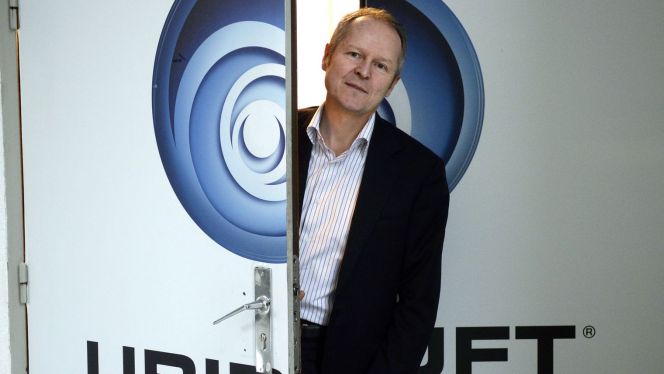
Ubisoft‘s CEO has finally shown a measure of self-criticism. During the pandemic, the company convinced itself of an inflated outlook and fell into the same trap as many others. Yves Guillemot now admits they overestimated post-pandemic demand when they launched “too many projects” at the same time.
Video game companies make a lot of mistakes, and many of their decisions pass without much public notice. What happened during the pandemic, however, was a major miscalculation committed by most of the industry. They misled themselves and overestimated post-pandemic demand. Ubisoft was one of them, and it is now paying for poor management that did not just begin in 2019, but was worsened by years of accumulated bad decisions.
The CEO of Ubisoft finally turns some criticism inward
So far in 2026, Ubisoft has canceled the remake of Prince of Persia: The Sands of Time, shut down its Stockholm and Halifax studios, launched a controversial voluntary departure program for up to 200 employees at its Paris headquarters, forced a return to on-site work, seen 1,200 workers strike across several countries, and in the last few hours also confirmed the dismissal of 40 employees at Ubisoft Toronto (the studio handling the Splinter Cell remake and one that also contributed to Watch Dogs: Legion, Far Cry 6, and Star Wars Outlaws). After carrying out a full “reset” plan involving numerous cuts, 6 game cancellations, and 7 delays for titles in development, Yves Guillemot has now explained in an interview with Variety why all of this is happening at once, and to his credit he did so with at least some honesty and self-criticism. “Following the post-COVID period, the industry expanded rapidly, anticipating sustained demand that ultimately didn’t fully materialize.”
“For us, this resulted in an excess of projects and greater complexity.” Put plainly, when lockdowns drove video game consumption sharply upward, Ubisoft bet that demand would remain high for years, which led to large-scale hiring, too many simultaneous projects, and studio expansion at a pace that was really only sustainable during a pandemic with players stuck at home, and that window closed quickly, so the company is now paying for the gap between what it gambled on and what it actually found in 2023 as players returned to normal life.
Although Assassin’s Creed Shadows has sold well, the issue is that Ubisoft‘s massive investment only works if sales substantially exceed what the company has achieved in recent years, and the reality is that it has posted more misses than hits. Even with the commercial strength of Rainbow Six Siege, the company has poured millions of dollars into AAA games and live-service projects that did not generate enough revenue.
One of the clearest examples is the commercial underperformance of Star Wars Outlaws, which failed to meet the company’s expectations. On top of that, there is the case of XDefiant, a Call of Duty-style shooter that shut down only months after launch. It showed promise, but its flaws eventually sank it. Another live-service title seemingly headed for failure was Skull and Bones, which is still receiving content updates even though sales have not kept pace since release, especially considering the game endured more than five delays.
We also cannot leave out Avatar: Frontiers of Pandora, an open-world shooter that, despite Ubisoft‘s silence, does not appear to have met the company’s expectations either. At least in recent weeks, it has seen a boost in sales and player numbers thanks to the third-person update, the Avatar 3 movie, and continued expansion support. Even so, Guillemot has also hinted at what comes next after this major restructuring.
“Our priority today is to build a more focused and agile company, with robust teams that balance veteran experience with young talent, ensuring we are well-equipped to produce games of the highest quality.” The problem is that “more focused and agile” is exactly what every company says when it is downsizing and moving through a crisis, or trying to emerge from one. In any case, Ubisoft‘s CEO has confirmed that the company is developing two Far Cry games and multiple Assassin’s Creed titles, including both single-player and multiplayer experiences.
Source: 3djuegos












Leave a Reply