
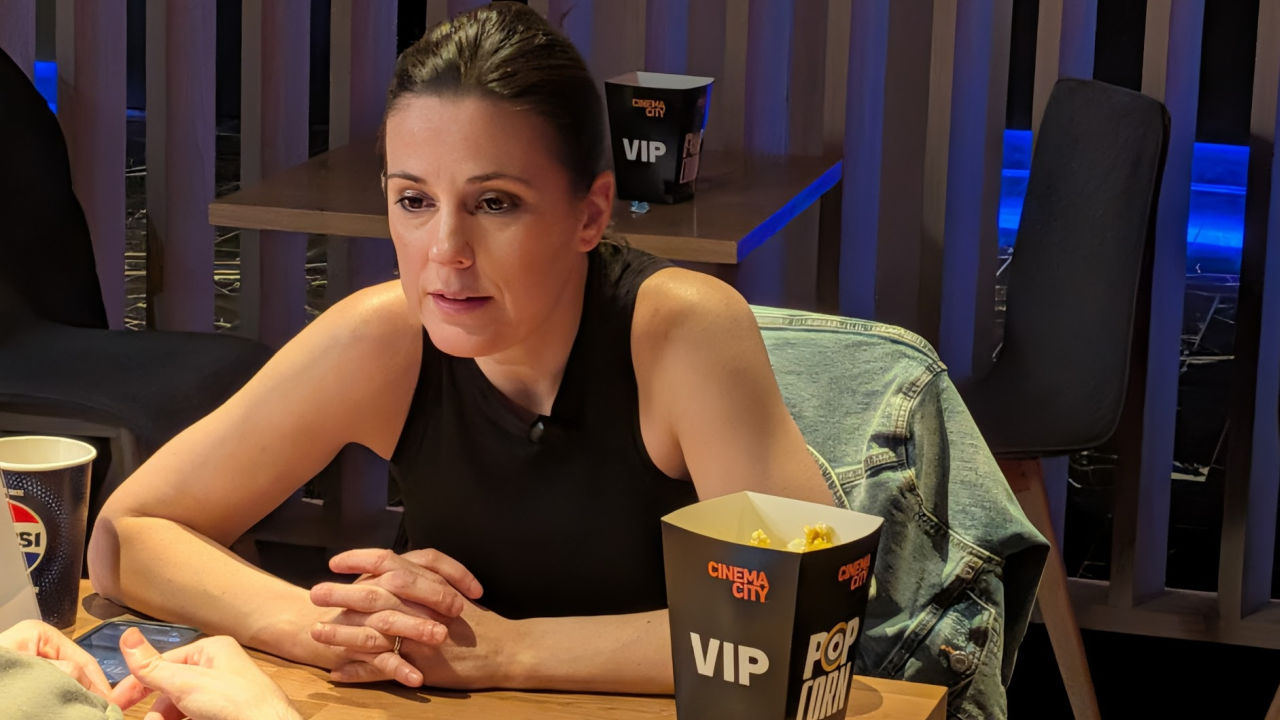
MOVIE INTERVIEW – We spoke with the lead actress of Feels Like Home about her character’s transformation, the physically demanding scenes, the prospects of Hungarian crime films, and the kind of female investigator role she would love to play.
Speaking to theGeek about Feels Like Home, Rozi Lovas said the film works both as a dense social allegory and as a tense genre piece, but for her as an actor the key was capturing the protagonist’s human shift through the tiniest changes in behavior. Portraying physical and emotional vulnerability was demanding, yet she says she was able to work in a safe, attentive, sensitive environment.
The conversation also touched on why Hungarian crime and thriller projects should have more room to grow, and what kind of role she would jump at if the right script came along. Rozi Lovas also explained how she built the character’s arc from vulnerability toward an increasingly forceful presence – and why it’s a mistake to moralize from the outside about decisions made under extreme pressure.

theGeek: My first question is: this story feels very current politically, but it’s also a thriller, with something Orwellian in it – even a surreal layer. How did you experience your character and the story itself?
Rozi Lovas: Yes, all of that is in there. It’s a very dense piece of material, a highly layered story that speaks to many things. But first and foremost, my job was to show this woman’s transformation through her human micro-movements. I was in very safe directing hands, and the story was built and told very consciously from beginning to end. It’s an exciting genre film that also raises a lot of social questions, but throughout I tried to keep the focus on the human element and on vulnerability – especially in the phase before the transformation.
tG.: How hard was it physically? As viewers, we almost felt the pain ourselves.
L.R.: It was painful, yes. But I felt safe the entire time, because the whole environment – the crew, my colleagues, the atmosphere – was very sensitive and attentive. That’s what made it possible to go right to the edge in terms of acting while still being completely safe. I think it’s always exciting when an actor is pushed this hard, and I actually enjoyed it.

tG.: Your character goes through a very strong arc, moving from a helpless situation to a strong, dominant figure. How close did this character feel to you?
L.R.: I’m in every part of her, too – that’s why I could work with her. But it’s an extreme situation: the character is under threat the whole time, and in a sense it’s that threat that forces her into a role-play. In many moments I would probably react in a similar way, but what mattered to me was that the viewer shouldn’t judge her from the outside, or get stuck on what they would do differently. The point is to understand what she does here, and why, in this specific situation. The journey she takes is what matters.
tG.: How do you feel about the thriller genre? Would you take on something like this again?
L.R.: I really love thrillers and crime stories. Horror, not so much – especially when it’s too bloody, or when it leans on cheap, gratuitous scares. That’s not my world. But crime in its different forms, and thrillers too, are very close to me.

tG.: How much of a future do you think crime films have in Hungary? From time to time, promising attempts appear, but they often fade again, and lighter genres take the lead.
L.R.: I’d love for them to, and I do think there’s a future there – there are talented people, strong professionals, there’s interest, and there could be real intent as well. But the Hungarian film ecosystem is very specific, whether we’re talking streaming, television, or theatrical distribution, because the market is small. A film that isn’t made with state funding today is heavily dependent on whether it can recoup its production costs. That pushes many projects toward directions that are more reliably able to draw audiences.
tG.: So you feel the financing system strongly determines which genres can actually get made?
L.R.: Absolutely. If the financing system were smarter, more structured, and more diverse, people could think more freely in terms of genres, make more genre films, experiment – and those projects could also be supported. I think the field could be built up far better that way. Right now it’s often either a film moves toward an easier, more marketable genre, or it remains a niche project made with little money and a lot of favors. And yet there would be talent, intent, and curiosity for more.

tG.: Do you have a dream role you’ve been thinking about for a long time?
L.R.: I don’t really have a single “dream role”, neither in theatre nor in film. But I’d very gladly play a strong investigator role.
tG.: What kind of investigator?
L.R.: A very smart, witty, brave female investigator who puts herself in the path of every danger. I’d really enjoy a character like that.
tG.: More of a classic, brainy investigator, or more of an action-oriented figure?
L.R.: The smart, character-driven line is closer to me, but of course it also depends on the world the story lives in – and on the role’s humor, rhythm, and stakes.

tG.: Do you think Hungarian films – including genre pieces like this – work better in cinemas, or do they have a better shot on streaming platforms?
L.R.: It’s hard to say with certainty – I don’t track audience data in that way. But it’s clear there are very strong Hungarian box-office successes, and that shows Hungarian viewers like Hungarian films, Hungarian actors, and Hungarian stories. From that angle, I look at this with confidence.
Interview by: -Gergely Herpai “BadSector”-















Leave a Reply