
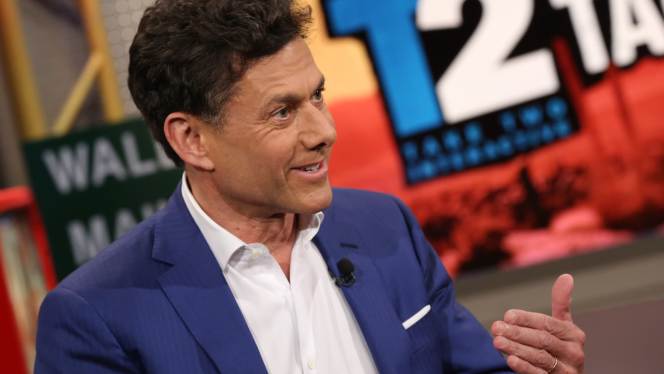
The AI panic machine has now fully reached the games industry, and after Google’s Project Genie demo, some market reactions made it sound as if anyone would soon be able to conjure up the next Grand Theft Auto from a single prompt. Take-Two CEO Strauss Zelnick says that notion is not just exaggerated – it is laughable. AI may help create assets, build storyboards, or test alternatives more quickly, but it will not generate a genuine hit, a blockbuster, or a cultural phenomenon at the push of a button.
Speaking to The Game Business, Zelnick argued that the industry has already spent decades using increasingly advanced tools to make games, and the outcome has remained broadly the same. Thousands of titles are released every year, but the biggest hits still tend to come from major entertainment companies, and only occasionally from indie studios with real talent, strong foundations, and usually meaningful financial backing. In other words, a new toolbox does not automatically democratize brilliance.
That is why he rejects the idea that fresh AI tools will suddenly allow anyone to press a button, generate a global smash, and reach millions of players overnight. To make the point, he compared it to music generation. Right now, you can prompt software into producing something that sounds like a professionally recorded song, but that does not mean it has substance, staying power, or replay value. It may work as a novelty or a joke gift, but that is a very long way from creating something people genuinely care about.
AI may speed up workflows, but it will not replace creative leadership
Zelnick is not arguing that AI is useless. Quite the opposite. He says it can be valuable for storyboarding, identifying plot beats, exploring different options, and accelerating parts of the production pipeline. Systems built on huge searchable datasets and natural-language interfaces can already be more efficient than older search methods for certain tasks. But efficiency is not the same as authorship, and assistance is not the same as vision. None of that solves the far harder problem of making something distinctive enough to break through in a crowded market.
He also believes AI-generated experiences will likely spread fastest in UGC-driven ecosystems such as Roblox, where users are already building content for one another. Even there, however, he sees a creator economy existing alongside professional entertainment rather than replacing it. That is the key distinction. Faster asset production does not mean the end of studios like Rockstar, and it certainly does not mean blockbuster design has been reduced to prompt engineering. Investors may have panicked after Project Genie, but Zelnick’s position is that they fundamentally misunderstood the difference between speeding up production and creating a hit. A game on the scale of GTA still depends on human judgment, taste, risk-taking, and creativity.
Source: 3DJuegos, The Game Business













Leave a Reply