

REVIEW – Homura Hime shows its hand almost immediately: the whole thing is steeped in NieR: Automata, with the ghost of old-school PlatinumGames action games hovering over it the entire time. That would not be a problem by itself, because when the game finally gets out of second gear, it can be flashy, brisk, and honestly very enjoyable. The issue is that it spends too long merely hinting at that stronger version of itself. Combat is often too comfortable, parrying takes too much of the workload off the player, and the whole package lacks the kind of severity that could have turned it into a truly memorable action game. Homura Hime is not bad – it just spends too much of its running time handling the player with kid gloves.
You do not have to work very hard to see what Homura Hime is feeding on. The controls, the ranged companion, the aerial follow-ups, the overall tempo – all of it points so openly toward NieR: Automata that at times you almost start wondering when 2B is supposed to walk into frame. That alone is not a sin. What matters more is that Crimson Dusk is not trying to make a straight-faced copy, but to turn those familiar ideas into an action game that is easier to absorb and far more forgiving on a technical level.
The framework itself is refreshingly clear. You have light and heavy attacks that branch into combos, a dash, a parry, ranged support through Ann’s drone-like presence, and a set of special skills that can be mixed and matched with some freedom. The problem is not a lack of tools, because there is plenty to work with. The problem is that the game stays so lenient for so long that even when it wants to look intimidating, it never really puts the player on edge.
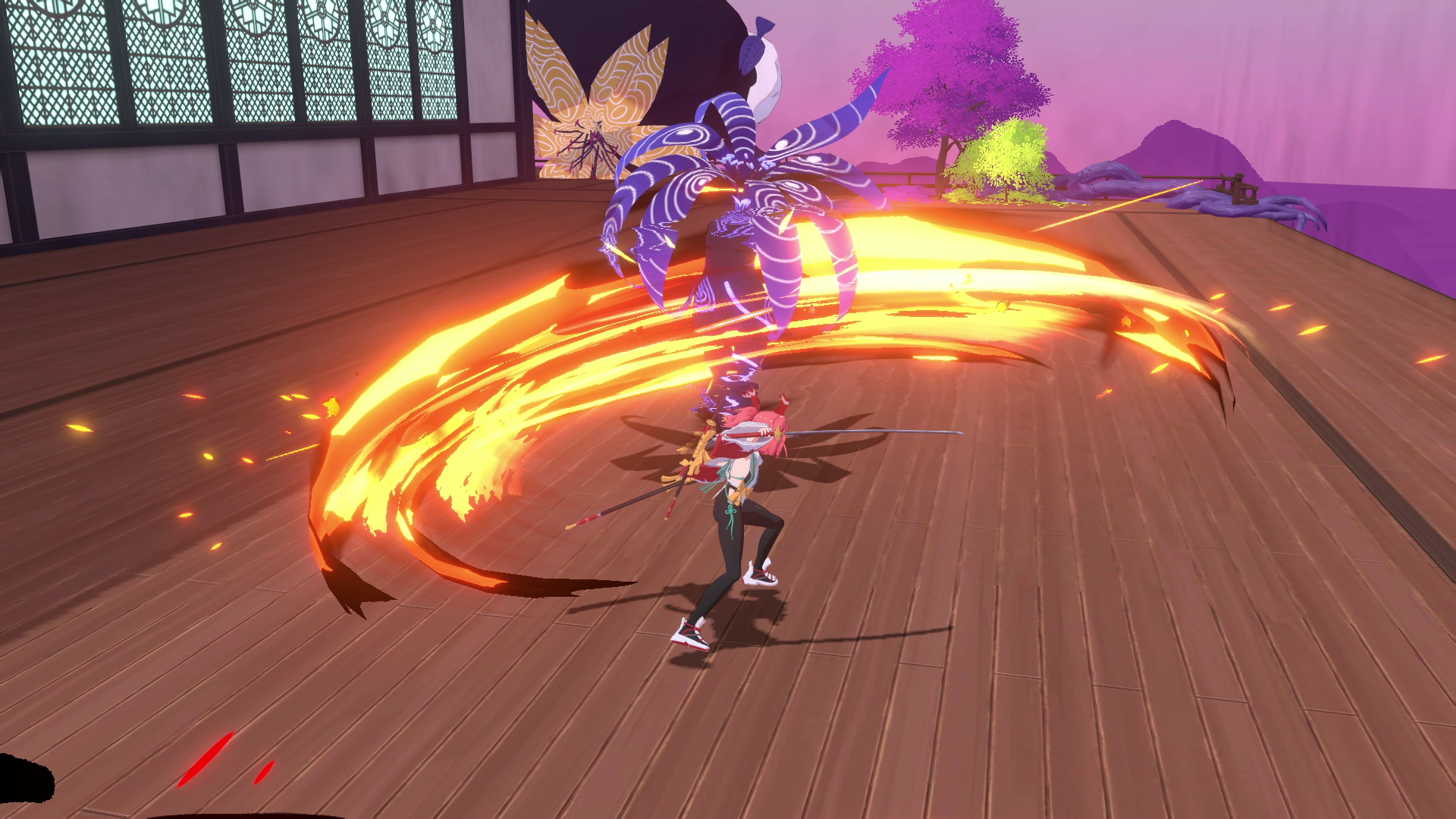
The Parry Button Puts In Half the Shift for You
The greatest strength of Homura Hime’s combat and one of its biggest shortcomings come from the exact same place. It feels good to move in, it feels good to attack in rhythm, it feels good to extend your strings with ranged shots, and the tempo built around parrying gives the whole thing a pulse of its own. The trouble is that parry is tuned so generously that, after a while, it stops feeling like a tense decision and turns into a comfortable habit. In many standard encounters, once you catch the basic rhythm, the game starts stepping obstacles aside for you all by itself.
That does not make the whole system fall apart, but it does make it feel a little too well-behaved. The older, better hack and slash games often taught players by knocking them on their backsides every now and then. Here, the game feels more like it smiles politely and asks whether everything is comfortable. That suits it at first. Later on, though, you start missing the kind of harshness that lets an action game really sink its hooks into you.
At the same time, the progression system does a respectable job of supporting the player. New combos, abilities, equipment pieces, stat boosts, and small tweakable enhancements keep unlocking, and there is enough depth here to make experimentation appealing. This is not some towering character-action beast, but it never tries to pretend otherwise. It knows how much weight it can carry, and for the most part it does not claim more than that.
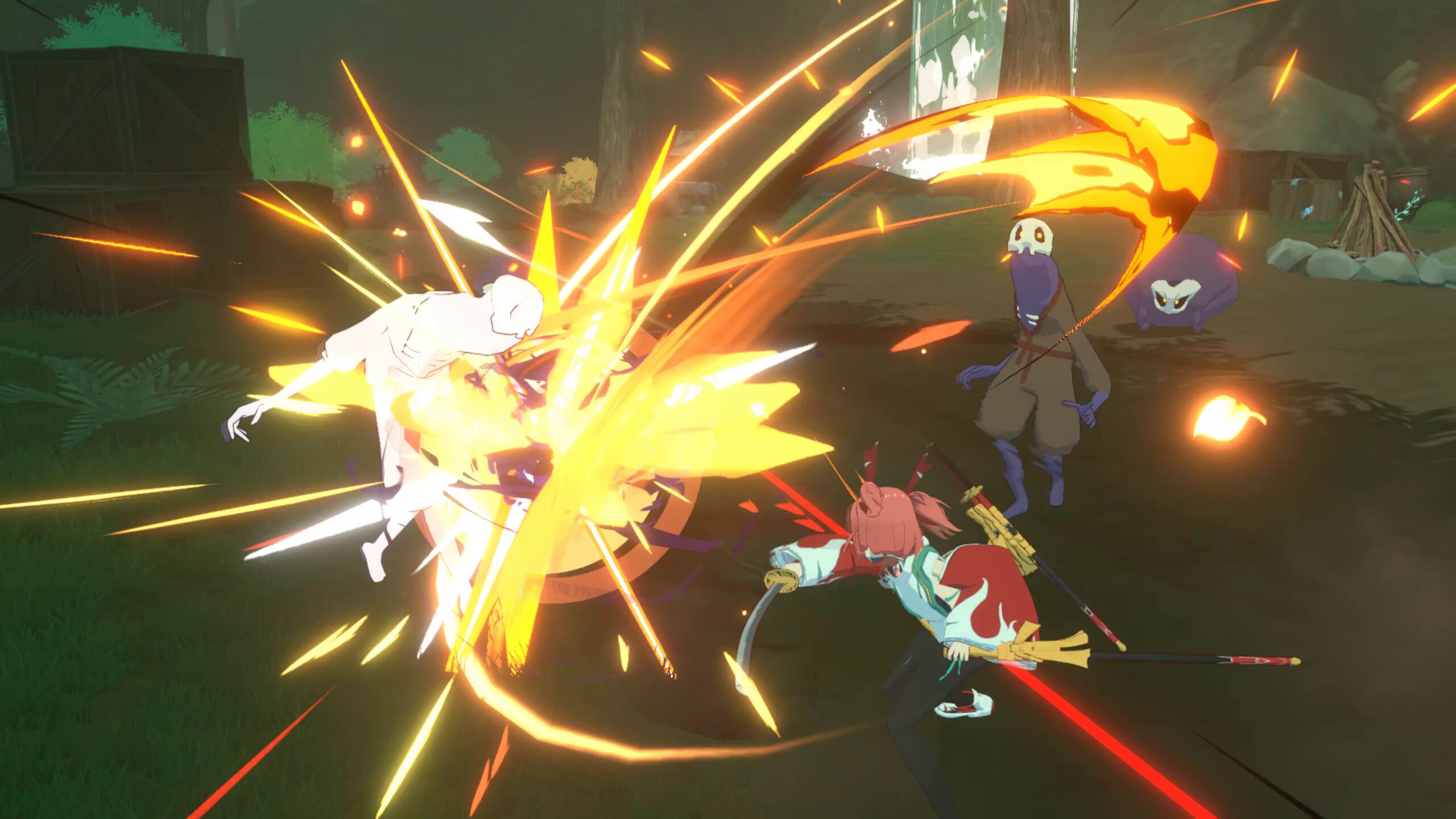
The Boss Fights Are Where It Finally Pushes Back
This is where Homura Hime truly starts to wake up. Boss encounters are where comfortable routine stops being enough, where positioning matters more, where reading incoming projectiles actually counts, where those color-coded attacks finally demand real attention, and where some of the tension the regular stages postpone for too long finally arrives. The game blends hack and slash fundamentals with bullet hell ideas in a smart way, and when those two halves start working at the same time, combat immediately becomes more exciting.
There is something especially fun about the way larger encounters sometimes pull you into their own little self-contained situations, where simply attacking is no longer enough and sharper reactions suddenly matter more. It is in those moments that you can see Crimson Dusk had a genuine idea for how to stir some projectile chaos into familiar swordplay. The shame is that the game does not hold onto that face more consistently across the rest of the campaign.
Because the sense of pacing between stages is shakier. The structure is split into themed chapters, which is a sound decision on paper, but too many standard enemies feel like padding for too long. The bestiary takes its time opening up, normal fights stay soft for too much of the campaign, and by the time the game finally raises its voice, quite a bit of time has already gone by. As a result, the campaign often feels as though it is deliberately saving its best ideas – just a little longer than it should.

Anime, Demons, Bold Colors, and Modest Scenery
The story does not want to reinvent the genre, and it is probably better off for that. Homura is an exorcist, Ann is her partner, humans and demons share the same world, corrupted souls become major enemies, and your job is to cut your way through them one by one. This is not the kind of story that will leave you staring at the ceiling for three days, but it does enough to hold together the bosses, the thematic stages, and the overall look of the game. It knows perfectly well that, here, atmosphere is supposed to carry the story, not the other way around.
And for the most part, that atmosphere works. The cel-shaded anime presentation goes a long way toward helping you forgive the simplicity of the environments, because up close it becomes clear fairly quickly that this is not some giant-budget spectacle. The scenery is often functional rather than impressive, the level design leaves a fair amount of empty space, and a few transitional animations are rougher than they ought to be. In exchange, though, the game knows where to tighten itself up when it matters: in combat, in the introduction of major enemies, and in the visual noise of its larger encounters.
The platforming sections deliver much the same split result. They are not awful, but nobody is going to write Homura Hime a love letter because of them. They do their job, they hold together reasonably well, and once in a while they even break up the action in a decent way, but they are connective tissue more than real highlights. The camera also reminds you now and then that this is still one of those genres where the point of view can become a bigger nuisance than anything actually swinging a blade at you.
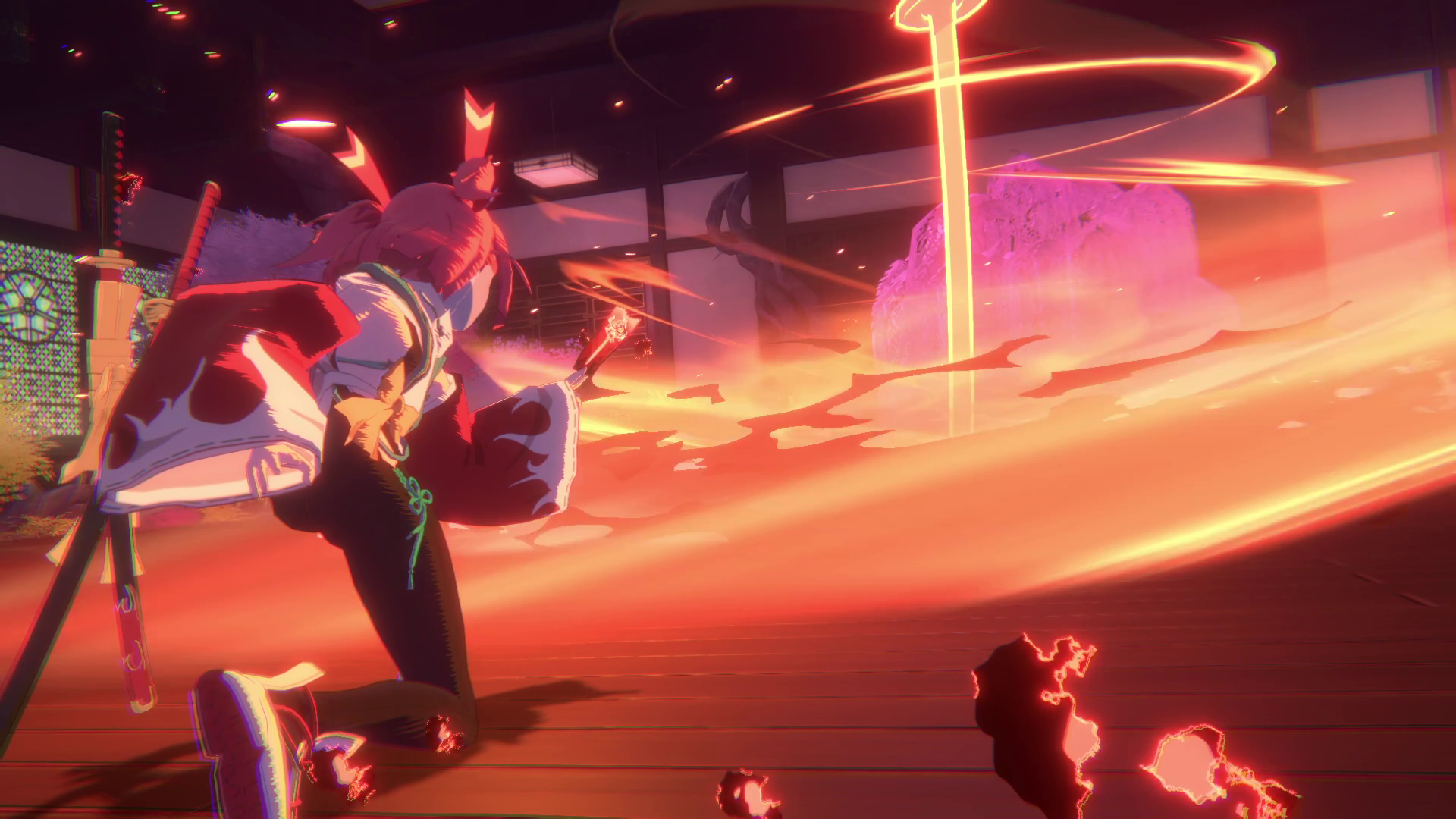
A Good Action Game That Stays Gentle for Too Long
In the end, Homura Hime’s biggest problem is not clumsiness, but excessive politeness. It knows how to combo, how to look stylish, how to deliver good bosses, and how to project a pleasing visual identity, but it never squeezes the player hard enough with enough consistency. For a while, the whole thing feels a little too easy, a little too safe, a little too eager to let you breathe.
Even so, there is plenty here to like. If you miss the era when an anime-styled action game did not feel compelled to bury you under ten subsystems, six hundred crafting menus, and half a roguelike handbook, Homura Hime can be a genuinely pleasant surprise. It is not a revolution, not a new king of the genre, and not the sort of game that blows the roof off the place, but in its bosses, its better fights, and its denser stretches, it clearly shows real promise. It is just a shame that it does not bring out its best face earlier, or more often.
-Gergely Herpai “BadSector”-
Pros:
+ The combat foundation is genuinely enjoyable, and the combo system pairs well with the bullet hell elements
+ The bosses deliver the game’s strongest moments, finally bringing real tension with them
+ Even with simple visuals, it has a distinct anime identity and atmosphere
Cons:
– The parry system is too generous, which leaves normal combat feeling harmless for too long
– The stages and enemy variety take too long to properly come alive, and the campaign opens too gently
– The camera, the platforming, and the environmental detail all show clear indie-budget limitations
Developer: Crimson Dusk
Publisher: PLAYISM
Genre: hack and slash, bullet hell, action game
Release: March 4, 2026
Homura Hime
Gameplay - 7.8
Graphics - 7.4
Story - 6.9
Music/Audio - 7.7
Ambiance - 8
7.6
GOOD
Homura Hime is exactly the sort of game you can dismiss with a shrug, only to catch yourself rooting for it once the better boss fights begin to land. Not because it is flawless, but because it is obvious what kind of action game it wants to be - it just does not always commit hard enough to that version of itself. The style, the combat, and the stronger moments carry it surprisingly far. You just keep thinking that with a little more severity and a little less mercy, it could have been something much sharper.




Leave a Reply