
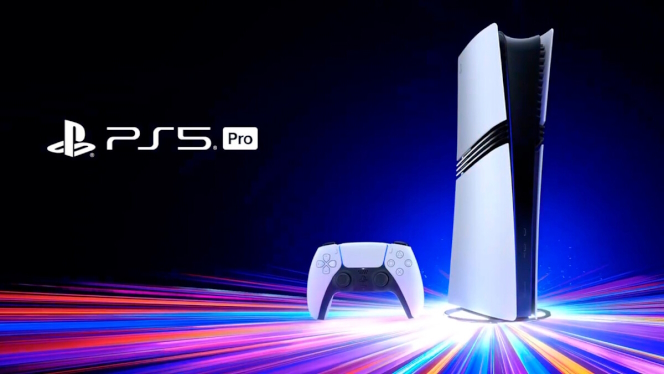
AMD launched FSR 4.1 on PC today, but PlayStation benefits as well because the updated PSSR on PS5 Pro is built on the same technological foundation.
For months, it had become increasingly clear that Sony and AMD were not collaborating on PS5 Pro just to squeeze out a few minor graphical tweaks. What was still missing was the clearest proof yet that the agreement between the two companies could benefit both PC gaming and PS5 Pro at the same time. That signal has now arrived, as Mark Cerny, the architect behind PlayStation 4 and PlayStation 5, has tested the new FSR 4.1 in several PC games and stated that the technology is based on the same neural network as the upgraded version of PSSR already released on PS5 Pro.
The important part of the story is therefore not just that AMD has rolled out FSR 4.1 with the new Adrenalin 23.3.1 drivers for the RX 9000 series. What matters just as much is that the improvement does not remain locked to PC. Cerny reacted to the launch on X by praising the technology and directly linking that advance to PlayStation. AMD executive Jack Huynh then responded by calling Project Amethyst a successful co-engineering effort between AMD and the PlayStation team.
FSR 4.1 is essentially a new image reconstruction method designed to make games look cleaner and more stable without demanding as much raw hardware power. PS5 Pro benefits because Sony is using that same underlying intelligence in its updated PSSR. This is not some vague piece of marketing language or a barely noticeable upgrade. These technologies allow a game to render a lighter image internally and then reconstruct it at higher quality.
The result is a cleaner presentation with fewer visual artifacts, less blur, and a smoother overall look without sacrificing nearly as much performance. Sony had already explained a few weeks ago that the updated PSSR on PS5 Pro was born out of its collaboration with AMD through Project Amethyst, and that the new version represents a more refined and promising technology moving forward. That makes this more than just good news for AMD. It is also a meaningful win for PlayStation.
Every breakthrough AMD makes in this field could eventually strengthen Sony’s graphics strategy for future hardware, potentially including the road to PS6. Huynh is already talking about more graphical advances on the horizon and a partnership designed to push the next era of real-time graphics. Right now, it is hard to imagine a PS6 without PSSR, but Sony and AMD still have a long road ahead. NVIDIA remains in front with features such as Multi Frame Generation, so this race is far from over.
Source: 3DJuegos





Leave a Reply