Three modes will also be removed from the game as a result… but how exactly is Epic Games CEO Tim Sweeney trying to explain this mess?
Here is how Sweeney justified a layoff wave that counts as severe even by Epic Games standards:
“Today we are laying off more than 1,000 Epic employees. I’m sorry that we are in this position again. The decline in interest in Fortnite that began in 2025 means that we are spending significantly more than we earn, and we need to carry out major reductions in order to secure the company’s financial footing. This layoff wave, together with the elimination of contract work, marketing costs, and some unfilled positions, represents more than $500 million in savings and puts us on more stable ground. Some of the challenges affect the industry as a whole: slower growth, weaker spending, tighter budgets, current console sales trailing the previous generation, and games having to compete for time with other increasingly attractive forms of entertainment.
And some of our challenges are specific to Epic. Even though Fortnite remains one of the most successful games in the world, we have struggled to consistently recreate the magic of Fortnite season after season; we are still only in the early stages of returning to mobile and optimizing Fortnite for the world’s billions of smartphones; and by operating at the front edge of the industry, we have taken a lot of hits in a battle whose rewards are only now beginning to bear fruit for us and for developers as a whole. Since this is a current topic, I should also note that these layoffs have nothing to do with AI. If AI improves productivity, we want as many great developers as possible working on great content and technology.
Our task right now is clear: we need to create fantastic Fortnite experiences through fresh seasonal content, gameplay, storylines, and live events; we need to keep improving our development tools so they become more stable and more efficient while we transition from Unreal Engine 5 and UEFN to Unreal Engine 6. Toward the end of the year, we will also launch Epic’s next generation with huge rollout plans. This is not the first time we have been here. Epic survived the changes of the 1990s when we moved from 2D to 3D with Unreal 1, the 2000s through Gears of War console development, and 2012 with online games like Paragon and Fortnite. Each time, we rebuilt our foundations and regained a leadership position.
Today’s market conditions are the most extreme we have seen since those early days: the industry is going through massive upheaval, but it also presents enormous opportunities for the companies that ultimately come out on top. That is exactly what we want to achieve for our players, and our goal is to bring other like-minded developers with us so that together we can build a more open and more vibrant entertainment future. At Epic, we are proud to hire only the best people in the industry, so it is deeply painful for us to say goodbye to so many talented employees. Those affected by the layoffs will receive severance packages that include at least four months of base pay, and more depending on their tenure. We are also extending Epic-paid healthcare coverage. In the United States, for example, employees will receive six months of paid coverage. In addition, we are accelerating the vesting of their stock options through January 2027 and extending the exercise period by up to two years. We will hold a company meeting on Thursday to discuss the next steps in more detail.” Sweeney wrote.
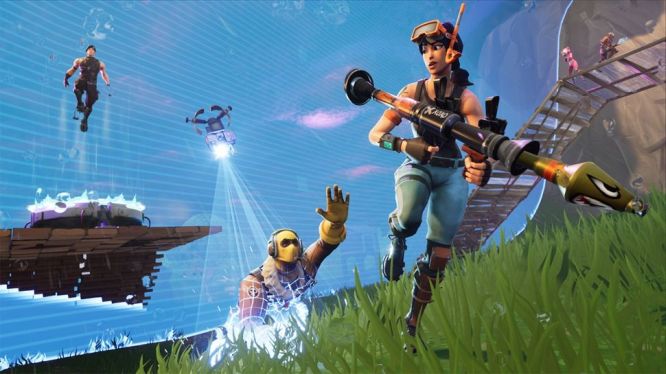
Three UEFN modes developed by Epic Games for Fortnite are being shut down. Two of them are disappearing sooner: Fortnite Ballistic, the first-person 5v5 tactical shooter that originally launched in 2024, and Fortnite Festival Battle Stage, meaning not the whole Fortnite Festival, only the Battle Stage mode, will both go offline on April 16. Rocket Racing, the UEFN mode that was one of the first major experiences added when Epic launched its islands alongside the main Fortnite Festival, will stay around a bit longer and leave in October. Starting next week, quests will no longer be available, and the current track-building template will also be removed from UEFN. Our vehicles, however, will remain, and car customization will still be available in the main game.
Even though these modes are disappearing, players will still be able to create similar experiences inside Fortnite using UEFN tools. It will still be possible to make FPS games in UEFN, since the tools themselves are not going away, and while the Rocket Racing track-builder template is being removed, the company will next month add vehicle physics, hazards, and track-building tools, including the Track Spline tool and Speed Boost tools, to the core UEFN toolset. Developers will also be able to build custom racing islands with jumps, boosts, and drifting.
Before Rocket Racing exits in October, developers will be given a chance to move compatible Rocket Racing content onto standalone UEFN islands. As for Fortnite Festival, Epic says music will remain an important part of Fortnite, and the company will continue expanding Festival Main Stage, Jam Stage, and the game’s broader music features.
As for the mass layoffs themselves, there is only one thing to say: the expectation of endless growth is impossible. Even if Fortnite remains one of the leaders in live service gaming, too many companies are still fighting for too little player time.
Source: Gematsu, Epic Games, WCCFTech, Twitter