
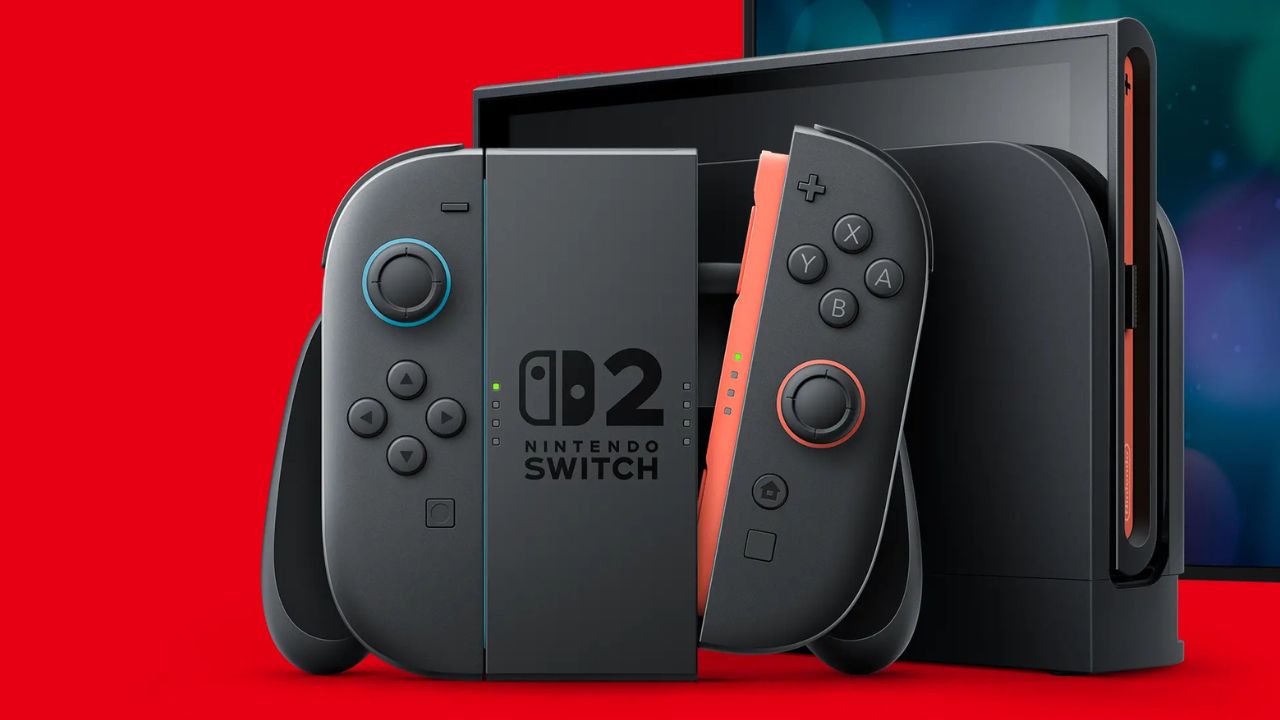
Nintendo‘s real trick has never been raw power alone, but the way it keeps portable hardware from falling apart under the usual pressure points. The Switch 2 is more powerful, but it still had to balance battery life, heat, size, storage, and price without wrecking the whole handheld pitch – and now Europe’s new battery obsession is closing in as well.
With handheld hardware, the least glamorous part is usually the one that matters most. More power, prettier visuals, higher refresh rates, and shinier feature lists all sound great, but the bill always shows up somewhere: power draw, heat output, battery size, runtime, and the final price tag. Nintendo has spent years avoiding the usual trap, not by crushing everyone on paper specs, but by making sure that entire fragile balance does not collapse in its hands.
That same balancing act sat at the center of the Switch 2‘s development. The processor, the memory setup, and battery life had to be kept in line with one another, because every technical upgrade brings an immediate energy cost. The response was classic Nintendo: the new machine’s battery was increased to 1.2 times the size of the original Switch, which is another way of saying the company did not want the leap in performance to bulldoze the whole handheld experience.
The Dirty Work Nobody Claps For
This is not some last-minute solution either. It follows the same logic the company has been using for years. Earlier internal revisions of the original Switch cut power consumption from roughly 12 watts to around 7 watts. In the right circumstances, that translated into a major jump in battery life, and the example everyone keeps going back to is still The Legend of Zelda: Breath of the Wild, which went from about 3 hours to 5.5 hours in portable mode. That is not flashy marketing magic. It is the kind of ugly technical grind that actually matters, even if it is much harder to sell than a shiny new buzzword.
The Switch 2, of course, is not pretending to be modest hardware. It comes with 256 GB of storage, support for 120 Hz, 4K output, and the usual modern talking points from Nvidia, including DLSS and ray tracing. On paper, it is clearly a much more capable machine. The problem is fitting all of that into a portable form without turning it into a battery-eating furnace that burns through a charge in no time. That is still the heart of the whole story: power is easy to advertise, but much harder to control.
Europe’s New Obsession Is Coming for the Battery
Based on the current figures, the Switch 2‘s battery life is expected to range from roughly 2 to 6.5 hours depending on the game and how the system is used. That alone shows how narrow the line is for any handheld device trying to push more performance. In a portable console, every extra bit of horsepower costs energy, no matter how cleanly the spec sheet is dressed up.
The difference now is that the usual technical trade-offs are no longer the only thing on the table. Europe is pushing a new battery-focused regulatory direction, and that changes the mood around devices like this. The pressure is no longer just about whether a battery works, but whether it lasts, remains usable over time, and fits into a longer product life cycle. In other words, it will no longer be enough for a handheld to be powerful, flashy, and easy to market. Durability, longevity, and practical battery behavior are moving much closer to the center of the conversation.
That leaves Nintendo in a position that is both comfortable and awkward. Comfortable because this is the territory it has been playing on for years, and battery life, heat, and portability are not new problems to it. Awkward because Europe is now turning those same concerns into something closer to a rulebook. That makes the Switch 2 interesting for more than just its extra power. It also raises the question of how well it can adapt to a period where the battery is no longer just a component, but part of a wider fight over how portable hardware is expected to behave.
Source: 3DJuegos












Leave a Reply