
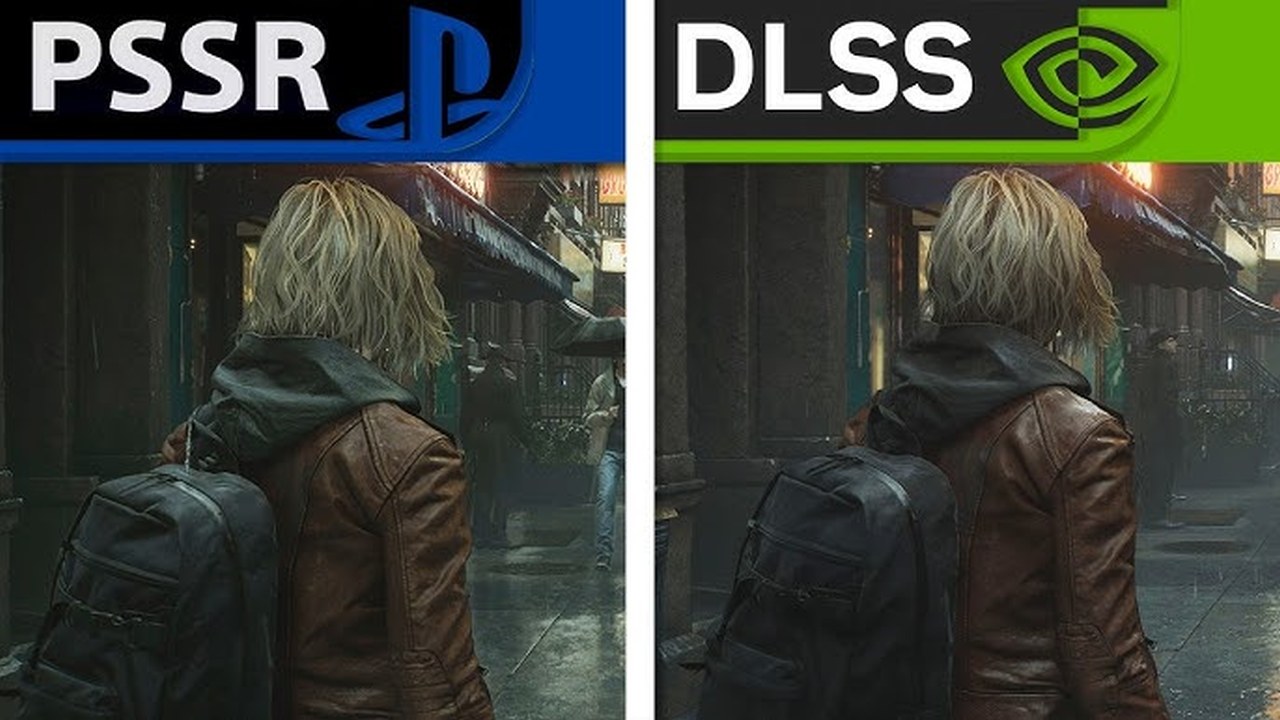
TECH NEWS – Experts agree that PSSR 2.0 has fixed most of the original version’s biggest flaws and noticeably improved image quality on PS5 Pro. Even so, Sony’s upscaling solution still falls short of NVIDIA’s DLSS 4.5, especially when it comes to fine-detail reconstruction and motion stability.
Sony previously promised that the PS5 Pro’s AI-based image upscaling would not be a static technology, but something that would evolve over time, and that now seems to have been more than just marketing talk. With the arrival of PSSR 2.0 a few days ago, the most powerful console on the market has taken a visible step forward in several AAA titles. After the first wave of serious testing, the overall verdict is fairly clear: the system has improved substantially, and many of the most obvious flaws of the earlier version have finally been addressed.
In the world of hardware upscaling, however, there is still one undisputed king, so the real test for PlayStation was always going to be how it stacked up against NVIDIA’s DLSS 4.5. According to El Analista de Bits, PSSR 2’s biggest gains are easy to spot: ghosting has been reduced, sharpness is better, and the overall image is cleaner than before. Even so, DLSS 4.5 still holds a clear edge in reconstructing fine details and in reducing visual artifacts during motion.
There is no denying that the quality gap between the two has narrowed, but DLSS 4.5 remains the strongest upscaling solution currently available, even if it is only accessible on RTX 4000- and 5000-series hardware. The difference becomes most obvious when you look closely at the image. In Final Fantasy VII Rebirth, for instance, Sony’s PSSR 2 delivers excellent results, but Digital Foundry argues that PlayStation’s technology still has a few stubborn weaknesses.
Where it improved, and where it still struggles
The main issue remains image stability during motion, along with a handful of very specific visual artifacts. In technically demanding games such as the Silent Hill 2 remake, PSSR 2.0 still has trouble correctly handling things like puddle reflections or ambient-occlusion lighting, while NVIDIA’s AI model deals with those scenarios far more confidently. At the same time, Digital Foundry also noted that Alan Wake 2 running on PS5 Pro at 864p and 60 fps in performance mode actually looks better than the standard console’s 1270p, 30 fps quality mode, which could give developers a meaningful advantage by letting them focus more on pixel quality than on sheer pixel count.
Beyond simply closing part of the gap with DLSS 4.5, the most important shift in PSSR 2.0 may be the way Sony is implementing it. According to Digital Foundry, PS5 Pro now includes an enhanced quality mode that forces the new algorithm at the operating-system level in a number of games, including some that never received a dedicated patch. Sony has also clarified that this version of PSSR is based on the super-resolution algorithm it developed with AMD under Project Amethyst, meaning it is effectively a console-adapted version of the same foundation used by FSR 4 on PC.
Experts insist that PSSR 2 is not just a mild tweak to the original algorithm, but a far more serious overhaul that directly targets the biggest complaints aimed at the first version. The new enhanced quality mode is not applied indiscriminately either: Sony only enables it at the system level in games it has internally tested and approved. Because of that, several titles that never received a dedicated PS5 Pro patch can still benefit from a cleaner and more stable image. Digital Foundry notes that only 13 games currently use the new PSSR natively, but more than 25 titles were examined with the updated system, and the result was described as a major success. In its view, this is a direct replacement that solves most of the first-generation upscaler’s problems without hurting performance, and while there is still room for improvement, image quality-wise it finally makes PS5 Pro resemble the machine it was always supposed to be.
That is also why more and more observers are starting to see PSSR 2 not merely as a mid-generation upgrade, but as a technical foundation for the next PlayStation. Mark Cerny has repeatedly explained that major rendering technologies that prove themselves on PC tend to make their way into the PlayStation ecosystem over time, and months ago he was already outlining the kinds of systems that could appear in PS6. The architect of both PS4 and PS5 has also spoken about frame generation as another technology that will eventually reach PlayStation as well, perhaps even after the next console is already in players’ hands.
Source: 3DJuegos















Leave a Reply