
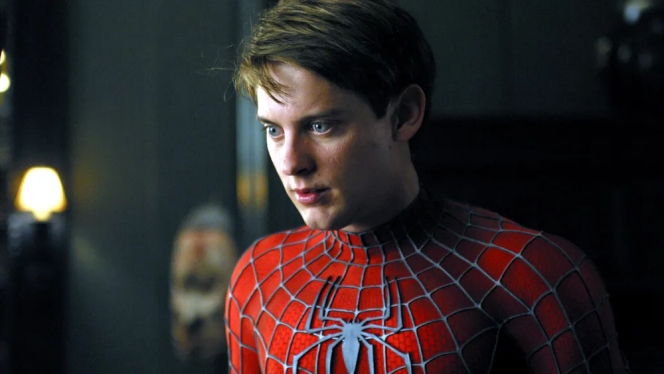
MOVIE NEWS – The Marvel Cinematic Universe is now borrowing from one of the most divisive ideas in Tobey Maguire’s Spider-Man movies. What once annoyed a sizeable chunk of fans now looks like it could become a key ingredient in Spider-Man: Brand New Day, while also pushing the MCU into a very different kind of evolution story.
The Marvel Cinematic Universe is now drawing from one of the most controversial elements of Tobey Maguire’s Spider-Man films. Sam Raimi’s trilogy is now widely regarded as one of the greatest superhero sagas ever made, and even the once-divisive Spider-Man 3 has enjoyed a major reevaluation in the years since its release. Yet there was one idea that sparked a lot of fan resistance both before the films arrived and during their initial run: Peter Parker’s organic web-shooters.
Removing the mechanical web-shooters undeniably stripped away one showcase of Peter Parker’s engineering brilliance, but it also made Maguire’s Spider-Man distinct from the versions that came before and after him. The idea became so iconic that Spider-Man: No Way Home turned it into one of the funniest and most memorable exchanges between the three Peter Parkers. On top of that, the loss of organic webbing, the famous “web block,” became a central emotional and thematic device in Spider-Man 2, helping define one of the strongest inner conflicts ever put into a superhero movie. Now, Spider-Man: Brand New Day appears ready to revisit that territory in a new form by giving Tom Holland’s Peter Parker a transformation that could include organic webbing of his own.
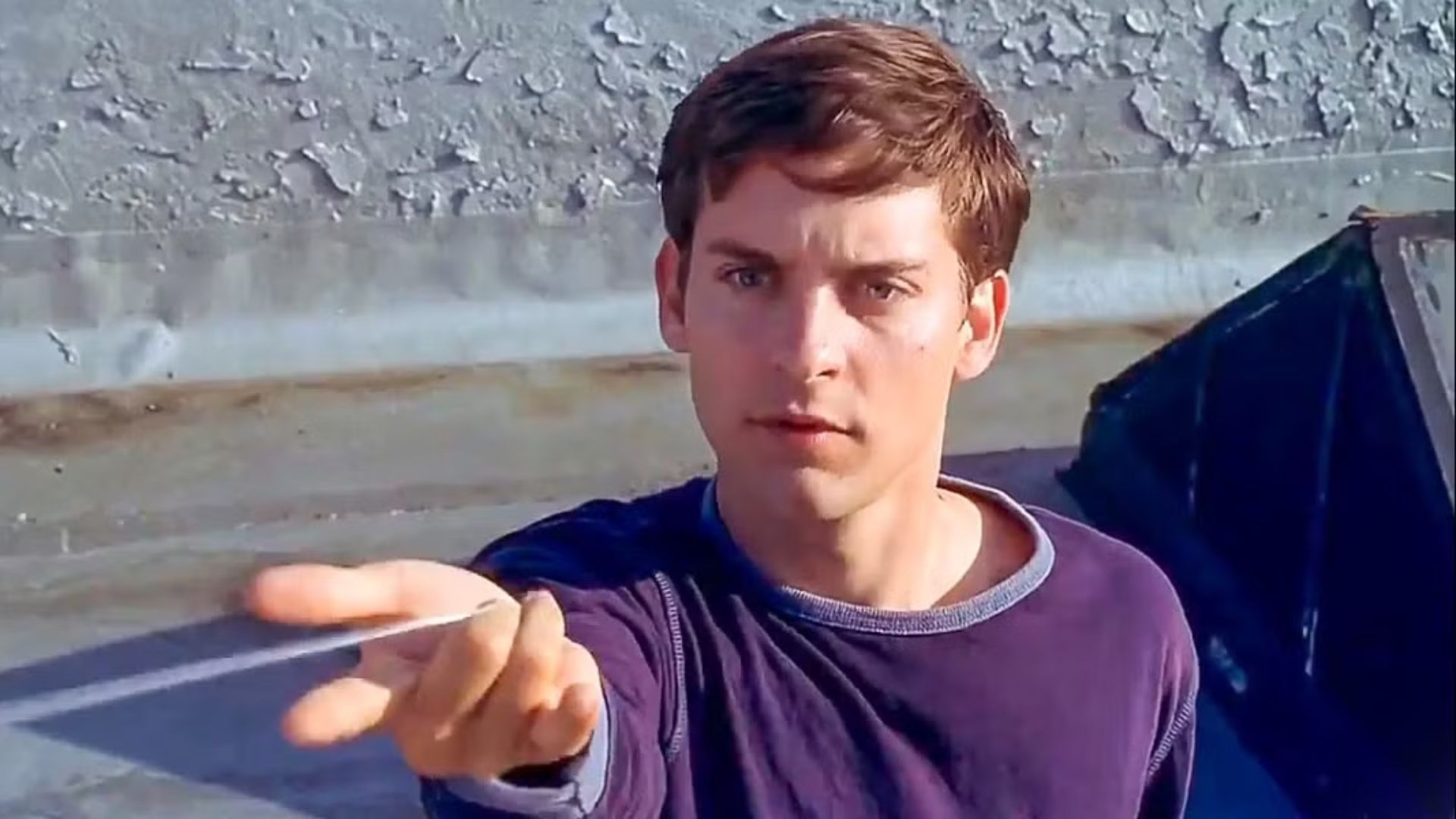
Organic Webbing Did Not Begin With Sam Raimi, but He Made It Famous
Most people associate organic webbing with Raimi’s 2002 Spider-Man, but the concept actually predates that movie. James Cameron’s 1994 draft of a Spider-Man film had already introduced the idea of Peter Parker producing webs organically, even if the specifics were not identical to what Raimi later used. Raimi’s version ultimately became a very different interpretation overall, but he held on to that one concept, treating the radioactive spider bite as the source not only of wall-crawling and spider-sense, but also of Peter’s ability to fire webs directly from his body.
When Sony rebooted the franchise with The Amazing Spider-Man, two of the major selling points were that Peter Parker would return to high school and that mechanical web-shooters would come back as well. In Andrew Garfield’s films, those devices were not incidental props. In the first movie, building them is part of Peter’s transformation into Spider-Man, while The Amazing Spider-Man 2 goes even further by making them central to how Peter and Gwen Stacy counter Electro’s powers. The MCU followed the same route, giving Tom Holland’s Spider-Man mechanical web-shooters too, which is exactly why Tobey Maguire’s organic ability stood out so much to the others in Spider-Man: No Way Home.
Brand New Day Is Taking Inspiration Not Only From Films, but From a Very Specific Comic Response to Those Films
Spider-Man: Brand New Day seems to be pulling from multiple Spider-Man comics at once. Its title directly references the 2008 Brand New Day storyline that ran from The Amazing Spider-Man #546 to #564. The trailer also recreates imagery from Amazing Fantasy #15 and The Amazing Spider-Man #134. More importantly, though, the footage strongly suggests that the movie is drawing heavily on “The Other,” a 2005-2006 crossover event in which Peter Parker emerged from a web cocoon with newly evolved powers, including organic webbing.
That comic storyline was itself created partly to bring Marvel’s comic-book Spider-Man closer to the Tobey Maguire version that audiences had embraced on screen. It was published in the gap between Spider-Man 2 and Spider-Man 3, during a period when Marvel Comics repeatedly adjusted characters to feel more in sync with their film counterparts. What is fascinating now is the reversal of that process: a new Spider-Man movie appears to be drawing inspiration from a comic that was originally written to reflect an older Spider-Man movie.
This Time the Crisis May Not Be About Losing Power, but Mutating Beyond Control
The trailer for Spider-Man: Brand New Day suggests that Peter Parker’s spider-powers are entering some kind of metamorphosis. The exact cause remains unknown, but the setup strongly implies it is connected to Peter discovering that MJ is now in a new relationship. That mirrors the emotional trigger in Spider-Man 2, where Peter’s web block first appears after seeing Mary Jane Watson with another man, later revealed to be John Jameson. In Raimi’s film, Peter’s emotional turmoil causes his powers to fail and briefly pushes him to abandon being Spider-Man altogether.
Brand New Day, however, seems to be flipping that formula. Instead of emotional pain making Peter weaker, it may be turning him into something stronger and more unstable at the same time. The web cocoon in the trailer strongly points toward the arrival of organic webbing, but it may also hint at Peter becoming more overtly spider-like in a broader biological sense. That raises an important question for the MCU: is this a permanent upgrade to Holland’s Spider-Man, or is it a temporary surge of mutated power that he will ultimately reject in order to stop himself from changing any further?
This is where Bruce Banner’s language in the trailer becomes especially telling. He describes Peter’s powers as “mutating,” and in Marvel terms that word immediately evokes the X-Men, even if Spider-Man himself is technically not a mutant but a mutate. The distinction matters because mutants are born with the X-gene, while mutates are altered after birth by external forces such as radiation, cosmic energy, or a radioactive spider. Even so, it makes perfect narrative sense that a story built around genetic change could quietly lay groundwork for an X-Men connection as well, which only adds more weight to the rumor that Sadie Sink may be playing Jean Grey.
So the decision to give Peter Parker organic webbing in Spider-Man: Brand New Day looks like far more than a nostalgic nod to Tobey Maguire’s films. It seems to be part of a larger creative attempt to evolve Spider-Man’s powers, recast one of the most famous emotional beats from Spider-Man 2, and potentially create a bridge toward the MCU’s growing mutation storyline. In other words, a once-hated change may end up becoming one of the most useful building blocks Marvel has found for Spider-Man’s future.
Source: MovieWeb










Leave a Reply