
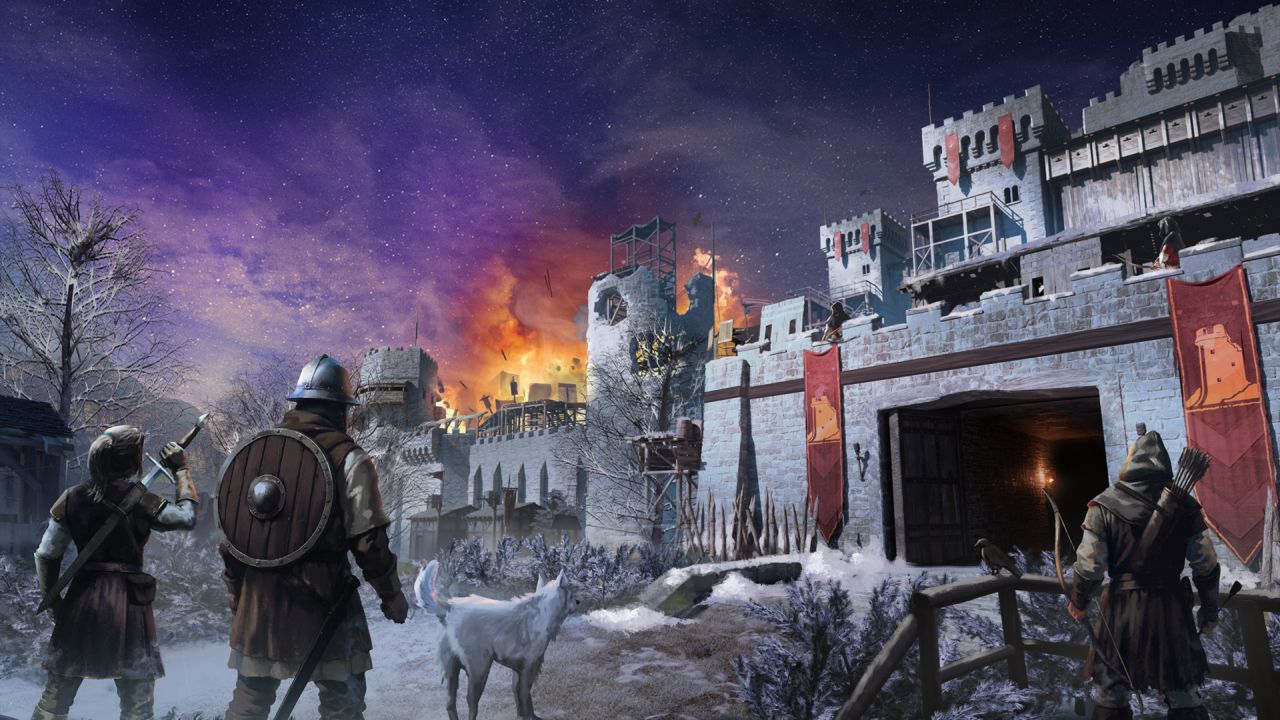
REVIEW – Foxy Voxel’s game is all about running a small medieval settlement while keeping an eye on what your people actually need, which can push the town’s growth in a bunch of different directions. Do it right and you end up with a tidy little success story; ignore the basics and your population either dries up or they’ll run you out with pitchforks. Don’t expect a big lore dump to justify any of it – the game mostly lets your decisions do the talking.
That last point is intentional: Going Medieval isn’t really a story-driven game.

The Story Is What You Do
There’s no real backstory here, and that’s fine – plenty of great games thrive without one (for example, RimWorld doesn’t exactly lean on plot either). You don’t write elaborate biographies for villagers, you just start with limited resources and a handful of settlers, each with their own needs and skills, and you build something livable: enough food, a bit of comfort, some entertainment, and, ideally, a roof that isn’t “optional.”
You set the orders. Need wood? Tell them to chop. Need a new building? Assign the work. The interface is refreshingly straightforward: pick a tool, click, choose what to build or gather, set priorities, and your villagers handle the rest. It’s clean, readable, and it mostly stays out of your way.
Of course, it doesn’t stop at peaceful planning – raiders will show up sooner or later. Combat is fairly hands-off: position your villagers, then let it play out. Early on it can be irritating when it looks like they’re aiming at the wrong target, but unless you crank the difficulty, it usually won’t spiral into disaster. In general, the game isn’t trying to crush you with challenge.
The real danger is your own decisions coming back to collect interest. You try things, some work, some don’t – and the early mistakes are the ones that bite later. Harvest too aggressively and forget to save seeds for winter. Build too much too fast and suddenly you can’t keep up. Balancing growth is the whole job here, and it’s not always easy. You learn it by doing it, usually after the game slaps your hand once or twice.
It also demands real multitasking once your population starts growing. More people means more systems to watch, and at some point you’re almost guaranteed to lose the thread for a moment. That tends to arrive later rather than sooner, though, and the game rarely feels outright frustrating – if you want that kind of pain, RimWorld is still the heavyweight.

Readable, Even at a Glance
Going Medieval could have stumbled on basic clarity – what’s harvestable, what’s interactive, who’s who – but it doesn’t. You’re not pixel-hunting, and the visuals generally communicate what matters. The characters stand out enough that you’re not triple-checking whether you selected the right villager. It’s the kind of usability that sounds boring until you play a builder that lacks it.
Is it fun? Yes, in a specific way. It’s the kind of game you can play while half-watching a show, and that’s not meant as an insult. It does lack a bit of wild unpredictability, and that’s probably what keeps it from scoring higher. There’s also a point where automation can be so effective that you’re left with less to actively do – which is exactly why it becomes easy “second monitor” material.
It’s also easy to see the audience: people who like building, but are tired of how hard Cities: Skylines 2 can slam a CPU (even an i9-14900K) and just want something lighter. That simplicity can absolutely be a strength.
An Entertaining Middle Ages
Going Medieval earns a 7.5/10. If it had a bit more madness in its veins, it could probably have nudged up to an 8, but what’s here is solid. It starts strong, then slowly turns into something you keep running in the background – enjoyable, but not the kind of obsession that permanently takes over your brain. Replayability is a question mark, too.
Still, it’s a decent game, even if the genre has produced better. If you liked RimWorld, it’s worth a look. If you’re into medieval settlement-building, it’s worth a look. Just don’t expect it to reinvent the wheel – it’s good at being what it is, and it doesn’t pretend to be more.
-V-
Pros:
+ Natural-feeling progression
+ Calm, easygoing audiovisual tone
+ Doesn’t overdo difficulty
Cons:
– Sometimes it still kicks you when you’re not looking
– The loop can wear thin over time
– AI targeting can be off…
Developer: Foxy Voxel
Publisher: The Irregular Corporation
Release Date: March 17, 2026
Genre: City-Building, Strategy
Going Medieval
Gameplay - 7.8
Graphics - 7.7
Story - 6.2
Music/audio - 7.3
Ambience - 8.5
7.5
GOOD
Medieval village-building can be relaxing, but it’s mostly about experimenting and learning as you go.













Leave a Reply