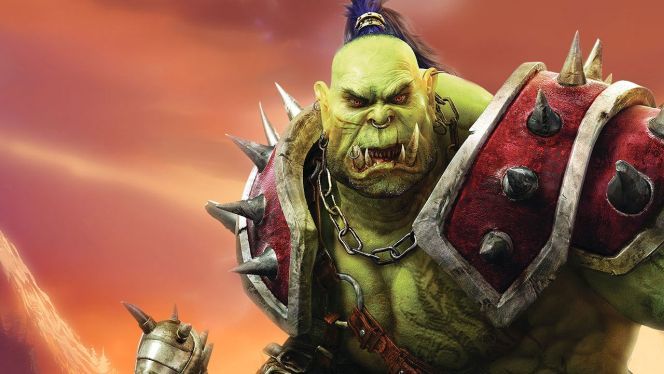
Blizzard Entertainment’s RTS remains a benchmark of the genre, but the market makes it difficult to imagine a possible return to its roots. Warcraft 4 therefore still feels more like a fantasy than a real project.
In the club of video games that would sell like hotcakes if they existed, and we’re not quite sure why they haven’t been made yet, there’s a short list of members, and one of the most distinguished – Half-Life 3 aside – is Warcraft 4, which has irritated a whole generation of enthusiasts who grew up playing Blizzard Entertainment’s legendary RTS and were confronted with a serious continuity problem as soon as WoW arrived. What happened there? Well, we have some clues: a few years ago, journalist Jason Schreier released a book titled Play Nice: The Rise, Fall, and Future of Blizzard Entertainment in which, among many other things, he explained through interviews why WC4 doesn’t exist yet.
According to his research, an internal team at the company, led by Tim Morten, was determined to continue making real-time strategy games in the post-StarCraft 2 era – without much success. Apparently, the American developer had presented his superiors with all sorts of ideas and suggestions, including, among other things, a Call of Duty RTS and the long-awaited Warcraft 4. However, the executive team rejected all these possibilities because the SC2 expansions hadn’t sold as expected. He did manage to get a remaster of Warcraft 3 approved, but it arrived in terrible condition.
Warcraft and Business Discouragement
Although Schreier doesn’t explicitly say so, remasters of classic games are very attractive to major publishers because they are relatively inexpensive to produce, help offset the development costs of other, larger projects, and also serve as a gauge of interest for market research specialists. It’s easy to imagine that, in a scenario where Warcraft isn’t taking off, Blizzard might, mistakenly, interpret this as a lack of interest in a sequel. Warcraft 3 Reforged had a disastrous launch that discouraged fans. It’s been a while since then, though, and the Blizzard desperate for loot boxes that the book depicted no longer exists because that business model has evolved considerably, and so has the market.
With the release of Diablo IV, I’m sure the company has taken careful note of just how much it can monetize the legendary classic IPs in its catalog – perhaps more than ever, with skins that compete in price with full games. And those lessons will surely apply to Warcraft as well. I also imagine that the talent under Johanna Faries’ leadership will be looking to the rest of the industry for clues: how many AAA studios are releasing RTS games these days? The biggest one that comes to mind is Creative Assembly, which is modest in size despite basically dominating the genre at this point.
Perhaps if their new Warhammer 40,000: Total War becomes a bestseller, it will encourage Blizzard to consider continuing the Warcraft franchise. Until then, I imagine the management has little interest in venturing into that territory right now. Leaving aside the economic implications of these decisions, I’m also certain that a Warcraft revival project would be incredibly difficult simply because Warcraft 3 has existed for many years. It’s a benchmark, has countless mods, and its small but dedicated community already plays it: the rest show no interest.
Warcraft 3’s legacy set an incredibly high bar and elevated the genre. The ability to control its heroes spawned some of the most successful games in the industry, and we still enjoy its universe today through WoW. I don’t know what kind of idea could justify developing a sequel, but I suspect we’d need a very ambitious premise to launch something like that because simply improving the graphics and adding quality-of-life features would leave us with a bleak and incredibly problematic situation for its creators. Blizzard wouldn’t want to release this haphazardly and be forced to support it for years without seeing any activity or revenue.
Many players would feel empty after a few weeks and return to Warcraft 3, leaving the sequel awash in negative reviews wherever it could be evaluated. That’s being pessimistic, I admit, but the reality is that Warcraft 4 probably needs a compelling reason to exist; to bring with it some kind of initiative that revitalizes the genre or at least sets fan expectations and proposes an exciting future for the fantasy saga. The problem is, I don’t know how many veterans Blizzard currently has up to the challenge. They certainly have more than capable designers, artists, and engineers; but gurus and true IP experts, that’s a different story.
For example, after a series of rejections, Tim Morten himself left Blizzard and joined Frost Giant to work on Stormgate, which currently boasts daily peaks of around 30 concurrent players on Steam and a 48% approval rating in reviews. This could be due to a thousand reasons, and in fact, just a few weeks ago we learned that Frost Giant is already working on its second video game, which may perhaps be released in a much better state. But the idea is that the current situation simply does not favor the arrival of Warcraft 4, and in an era in which development has become so expensive – around 300 million dollars per game, Schreier estimated – it is not possible to work on something that is not a guaranteed success. Time will tell whether that pessimism is justified, but for now it is easy to see why Blizzard still keeps this sequel locked away.
Source: 3DJuegos