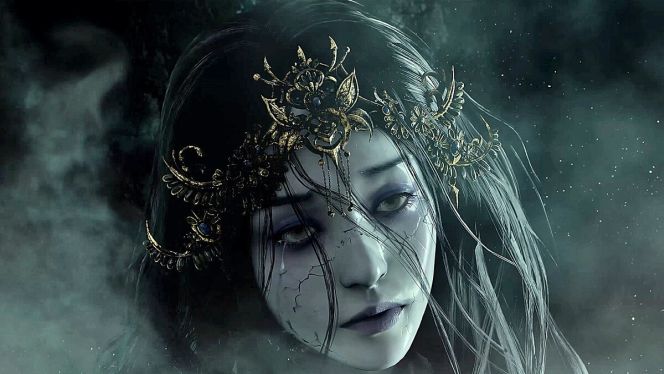
Phantom Blade Zero was already one of the year’s most anticipated action games, and now its developers have given people another reason to pay attention. S-Game‘s leadership has made it clear that the studio will not use visual AI technologies that could interfere with the original creative intent of its artists, which reads like a direct pushback against the direction more and more major tech players are trying to normalize across the industry.
The statement landed at a moment when debate around new AI-assisted visual tech, including the latest noise surrounding NVIDIA‘s direction, is already especially loud. Liang Qwei, founder of S-Game and director of Phantom Blade Zero, wrote on social media that the game is now in its intense final stretch of development, and that every available resource is being used to push it as far as possible before release. At the same time, he acknowledged that a profound technological shift is unfolding all around modern game development. But he immediately followed that by stressing that every piece of content currently available in the game has been made by the hands of real artists.
That alone would have been a strong message, but the key part came when he stated outright that the studio will not use visual AI technologies that could alter the original creative intent of its artists. That is more than a vague philosophical remark. It is a conscious line in the sand. What S-Game is saying here is that technology, in its view, cannot be allowed to overwrite handcrafted artistic choices or dilute the personality of the people actually building the game.
Phantom Blade Zero Is Not Just Talking About Authenticity, It Is Building It Into the Game
Liang Qwei did not stop at broad principles either, and instead backed the statement up with concrete examples of how the game’s combat and visual identity were built. According to him, the weapon designs were drawn from traditional Chinese arsenals, and in some cases master smiths were brought in to forge replica versions simply so the team could better understand the weight, movement, and physical behavior of those weapons. The combat itself relies on motion capture work from more than twenty experienced martial artists, and the developers also consulted masters and inheritors of traditional martial arts schools to capture more authentic kung fu techniques. When they needed sword combat, they brought in a sword master from Mount Emei, and when lion dance choreography was required, they turned to a master from Guangdong.
The same logic shaped the visual side. The team traveled across multiple locations in China, from ancient temples in Fujian to old cities in Zhejiang, and even visited ironworks in Beijing, scanning those places and then reimagining them into something stranger and more original. They call that visual identity Kungfupunk. Liang also specifically pointed out that the game’s orientation maps were not generated by AI and were not even digital paintings. They were hand-drawn with Chinese brushes and Xuan paper by young artists from the Central Academy of Fine Arts. In other words, the handcrafted nature of Phantom Blade Zero is not being used as a last-minute selling point. It is being presented as one of the core pillars of the project itself.
To close his message, Liang thanked players for their interest and said the team is eager for launch, because that is when the results of all these choices will really become visible. If everything stays on schedule, that moment is now only a few months away. What makes Phantom Blade Zero stand out is not just that it looks fast, stylish, and ferocious, but that its creators are openly insisting that human work is not some replaceable production step. For them, it is the value.
Source: 3DJuegos