
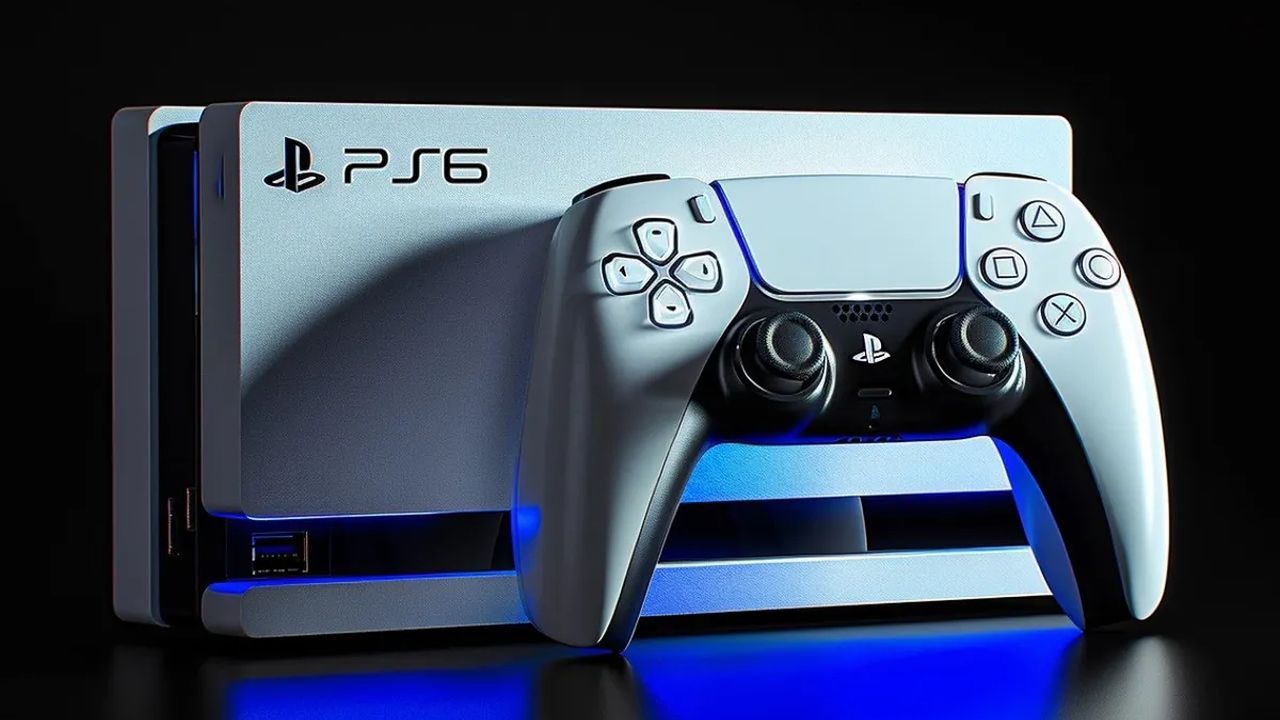
The situation surrounding Sony’s next-generation console, or consoles, is still far from ideal, and tariffs are playing a leading role in that.
Due to current trade and economic tensions, prices of computer hardware, including consoles, are rising. The PlayStation 5 is no exception and saw another price hike in April. Because of these increases, many speculate that the PlayStation 6 will launch at a high price. However, according to an in-depth analysis by Moore’s Law is Dead based on manufacturing data, the system’s price will only approach the $1,000 range if tariffs remain in place and current trade tensions do not ease by the end of 2027.
Tom from Moore’s Law is Dead, who previously worked as an engineering account manager on similar estimates, provided a detailed breakdown of the bill of materials for the current PlayStation 5 model with a Blu-ray drive, the PlayStation 6 desktop console, the handheld, and a potential PlayStation 6 S model powered by an APU similar to the handheld’s. The estimated bill of materials comes to $743, almost perfectly matching the estimate provided a few weeks ago by the well-known leaker Kepler_L2.
| Component | 2026 Disc PS5 | PS6S Canis | PS6 Handheld | PS6 Orion |
|---|---|---|---|---|
| APU Die | $81.53 | $46.08 | $46.08 | $110.50 |
| Board | $36.00 | $16.00 | $24.00 | $48.00 |
| Cooling | $16.00 | $7.80 | $7.80 | $18.00 |
| Screen | – | – | $65.51 | – |
| Battery | – | – | $19.80 | – |
| SSD at launch | $112.50 | $142.50 | $142.50 | $142.50 |
| RAM cost | $112.00 | $108.00 | $108.00 | $300.00 |
| Total BOM | $507.03 | $404.38 | $493.69 | $743.00 |
| Estimated MSRP | $499.00 | $399.00 | $499.00 | $749.00 |
| +30% Tariff | $649.00 | $529.00 | $649.00 | $949.00 |
Although the components for the PlayStation 6 are somewhat more expensive overall than those for the PlayStation 5, the cost of RAM is much higher, and that is what pushes the price up more than anything else. Even so, the next-gen console is expected to cost $750, only $100 more than the current PlayStation 5 Slim. However, tariffs could increase the final price by 30%, pushing it to $949, which would make the system very difficult to sell to most users. This price is possible even if DRAM prices do not fall before 2028 and the Strait of Hormuz remains closed in 2027.
If any of those conditions change, Tom believes the price could range from $600 to $800. That would still be high for a console, but it would remain better than a $1,000 price tag that would make the next generation inaccessible to many, unless Sony really does decide to release a weaker desktop model alongside the handheld. If DRAM prices fall and tariffs are eliminated, Sony may also decide to increase the RAM in both the home system and the handheld from an estimated 30 GB and 24 GB to 40 GB and 36 GB. That decision will only be made in early 2027, before production begins.
One might wonder whether Sony will ultimately delay the release of the PlayStation 6 to wait for more favorable economic conditions, but the company is unlikely to do so because delaying the system would be far more expensive. It appears that, in this case, the decision has already been made, as AMD would not waste resources on testing if it believed the launch of the PlayStation 6 could be postponed.
Since Sony’s next-gen system is not expected to arrive any later than late 2027 or early 2028, we likely won’t have to wait very long for its unveiling. Hopefully, what we are likely to see for the first time next year will be something most people can actually afford at launch.
Source: WCCFTech














Leave a Reply