
TECH NEWS – Samsung’s memory manufacturing division has already surpassed Amazon, Meta, and Microsoft, achieving explosive success.
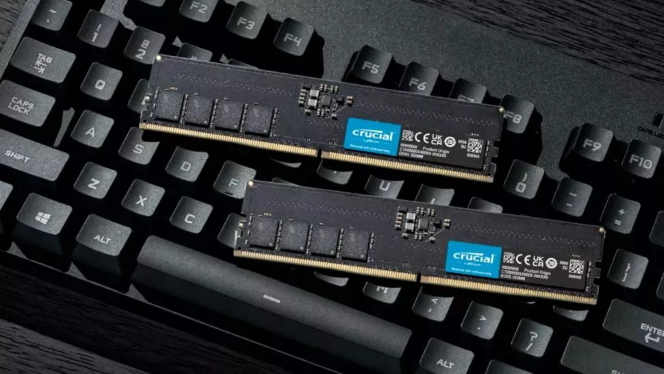
Demand for DRAM is extremely high in the AI industry, and suppliers such as Samsung, SK Hynix, and Micron are unable to meet it, leading to shortages throughout the supply chain. Counterpoint Research reported on Samsung’s first-quarter financial results and highlighted the interesting parallel that the South Korean giant’s operating revenue was higher than that of Amazon, Microsoft, TSMC, and Meta. This clearly indicates that the memory supercycle boosted the company’s business.
Samsung Electronics ranked first in memory revenue, earning $50.4 billion in the first quarter of 2026. The DRAM sector reached an all-time high of $37 billion, while the NAND sector reached $13.4 billion. Compared to the previous cycle, this represents a 167% increase from the $18.9 billion peak reached in the third quarter of 2018. A significant portion of Samsung’s revenue currently comes from the DRAM business, which has recently experienced strong customer adoption. There is strong demand for general-purpose DRAM products, such as LPDDR and DDR, from hyperscalers and neoclouds because memory has become a key component of broader infrastructure deployments.
Meanwhile, Samsung’s HBM segment and its HBM3E and HBM4 breakthroughs have played a pioneering role in modern architectures, such as the AMD Instinct MI355X and Nvidia Vera Rubin. According to Counterpoint Research, Samsung’s DRAM division alone will benefit significantly from rising DRAM prices. Demand is expected to grow in parallel, meaning the first-quarter figures are likely to improve in the future. Samsung has access to one of the world’s largest production lines, which puts the Korean giant in an excellent position to capitalize on enterprise and consumer demand. Although concerns have been raised about the sustainability of demand, Samsung is addressing this issue by entering into five-year long-term agreements with hyperscalers.
The level of demand experienced by DRAM manufacturers is staggering and translates into significant revenue for those participating in the supercycle. It will be interesting to see how the memory industry evolves, as right now, it’s all about capacity.
Source: WCCFTech, Counterpoint Research



![A God of War-Style Game With a Ballerina Fighting Slavic Gods Actually Exists, and Tsarevna: Age of Tales Already Looks Wild Enough to Stand Out [VIDEO]](https://thegeek.games/wp-content/uploads/2026/04/theGeek-Tsarevna-Age-of-Tales-302x180.jpg)








Leave a Reply