
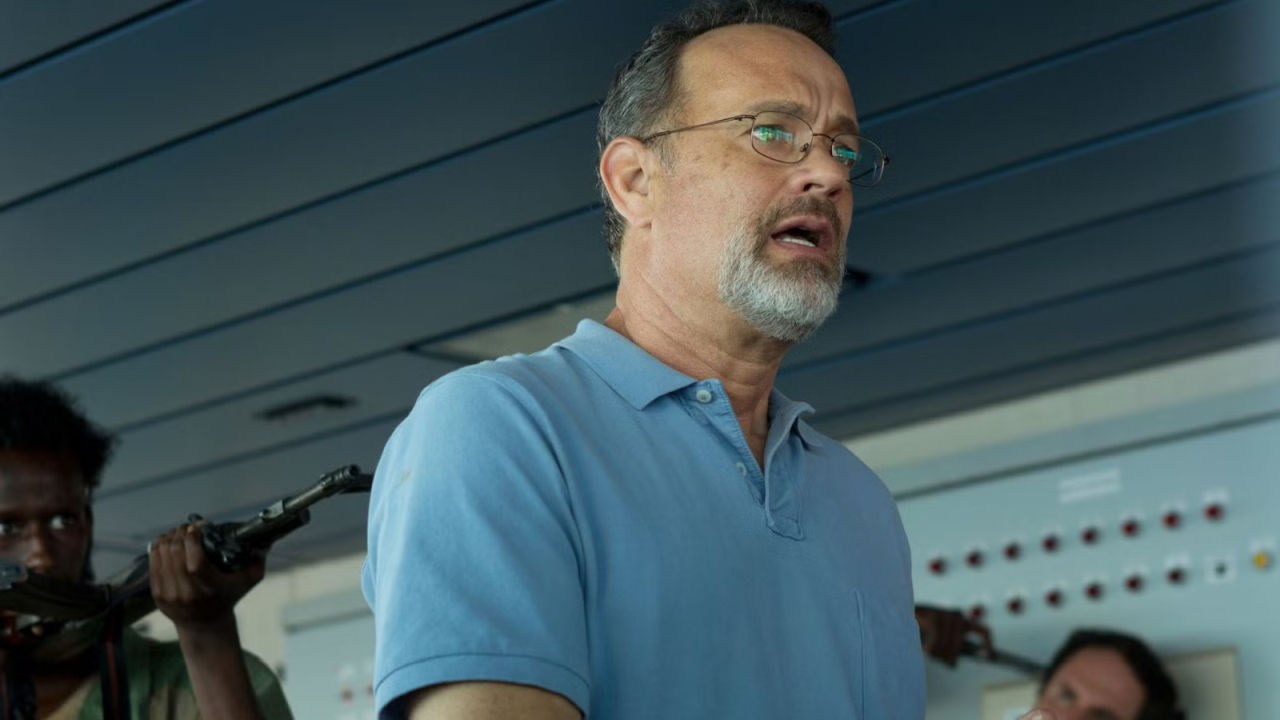
MOVIE NEWS – Captain Phillips remains one of Tom Hanks’ most effective and nerve-shredding fact-based thrillers, but the film’s heroic framing did not convince everyone. While the movie presented Richard Phillips as a brave survivor and self-sacrificing captain, several members of his real-life crew believed he had helped put them in unnecessary danger – and the story eventually ended up in court.
Paul Greengrass’ 2013 film was based on Richard Phillips’ memoir A Captain’s Duty and dramatized the 2009 hijacking of the Maersk Alabama by Somali pirates. As cinema, it worked extremely well: a tense, claustrophobic thriller in which Phillips is shown trying to protect his crew, stall the attackers, and survive a rapidly escalating hostage crisis until the U.S. Navy intervenes. The movie was a clear success, Hanks’ performance drew heavy praise, and the film has endured as one of the strongest modern thrillers set at sea.
The real story, however, was much less tidy. In April 2009, Phillips was commanding the Maersk Alabama with a crew of 20 off the coast of East Africa when pirate activity in the region was already a serious and well-known threat. Contemporary reports indicated that vessels in the area had been warned to stay at least 600 nautical miles off the Somali coast, yet Phillips’ ship was operating much closer, roughly 250 nautical miles away. Phillips later defended that decision by arguing that distance would not necessarily have made the ship safe anyway, and that the real question was not whether pirates might attack, but when.
Captain Phillips’ Nail-Biting Story Has Made It an Enduring Hit
The screenplay leaned into the version of events in which Phillips keeps the situation from spiraling further, tries to buy time, and puts himself between the pirates and his crew. The hijackers eventually boarded the ship, and after the crew partially regained control and captured the pirates’ leader, the crisis shifted into a tense exchange that resulted in Phillips being taken hostage. He was then held in a lifeboat for several days until the U.S. Navy ended the standoff. From a filmmaking standpoint, the material was close to perfect, combining confinement, fear, survival, and pressure-cooker negotiation in a way that kept audiences locked in.
The problem was that the film’s heroic structure did not line up neatly with the view held by several of the actual crew members. More than one of them later argued that Phillips had not simply managed the crisis bravely, but had made choices before the attack that helped expose them to it in the first place. That tension existed before the movie was released, but it became much harder to ignore once Hollywood had turned the incident into a clean and emotionally powerful survival story.
The Real-Life Richard Phillips Went From Merchant Mariner to Author
Richard Phillips graduated from the Massachusetts Maritime Academy in 1979 and spent decades at sea before the 2009 hijacking abruptly made him internationally famous. After the hostage ordeal, he took time away from work, published his book with journalist Stephan Talty, later returned to sea, and officially retired in 2014. Between the memoir and the film adaptation, a public image quickly formed around him as the American captain who had stared down modern piracy and lived to tell the tale.
That image, however, was not universally accepted by those who had been on the ship with him. Crew members and later reporting suggested that Phillips had made questionable navigational decisions before the attack even began. The central complaint was consistent across the criticism: the ship had sailed too close to dangerous waters despite known warnings, and the crew believed safety had not been given the priority it deserved. This was not merely grumbling after the fact. It became the basis of a legal dispute.
Not Everyone Thought Captain Phillips Was a Hero
The most serious development came when 11 of the 20 crew members sued the ship’s owner, Maersk Line Limited, and the operator, Waterman Steamship Corporation, with Phillips’ decisions also becoming part of the larger controversy. According to the lawsuit, the vessel had been knowingly sent into pirate-infested waters despite warnings to remain at least 600 nautical miles from the Somali coast. The plaintiffs argued that they had been exposed to unnecessary danger and that the company had failed to provide adequate protection for its employees.
The lawsuit was ultimately settled out of court before trial, and the terms of the agreement were not made public. Even so, the underlying conflict remained clear: several of the people who had actually lived through the ordeal did not share the heroic image that Captain Phillips presented to audiences. That leaves the movie with a more complicated afterlife than its triumphant reputation suggests. The question, in the end, was not only how Richard Phillips survived the hijacking, but also whether his own judgment helped create the conditions that led to it.
Source: MovieWeb




Leave a Reply