
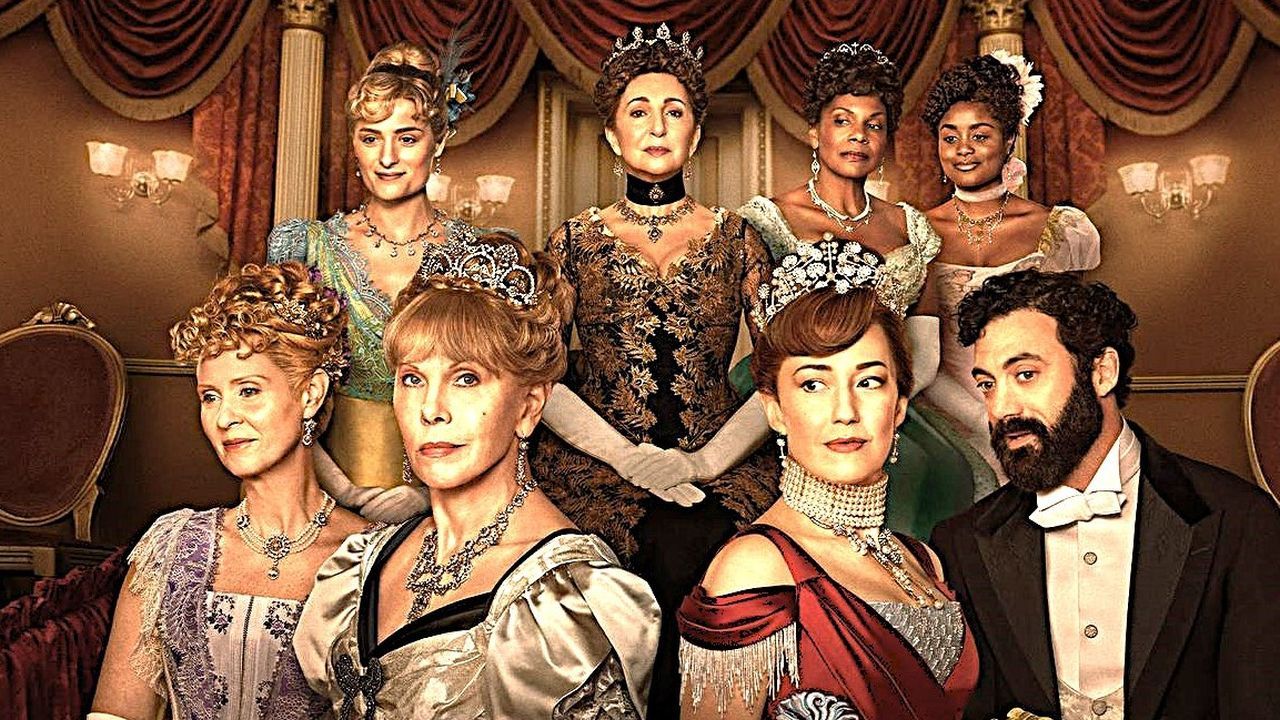
SERIES REVIEW – After two seasons of dancing between dazzling gowns and underwhelming plots, Julian Fellowes’ HBO drama finally hits its stride. The third season of The Gilded Age delivers more than just pageantry — it brings high-stakes drama, sharper character arcs, and a refreshing narrative pace to HBO Max’s opulent lineup.
It’s not every day a husband strolls in, admits he’s been unfaithful for months, and then — with the sheer audacity of a man untouched by consequences — demands a divorce. You might expect the wife to seize the opportunity for freedom. But no — she refuses. Because in the 19th century, a divorced woman wasn’t just socially shunned — she was erased. Friends vanished, reputations crumbled, and the church rarely showed mercy.
So despite the betrayal, she holds the line. She won’t reward his infidelity with a graceful exit. In her world, marriage isn’t just a contract — it’s identity. And with that moment, The Gilded Age finds its dramatic backbone.
Sure, previous seasons acknowledged New York’s aristocratic hypocrisy with polite nods and refined subtext. The clash between old money and nouveau riche played out through lavish soirées and strategic philanthropy. But now, those simmering tensions finally boil over, giving the story some long-needed heat.

Drawing Room Duels and Crystal-Cut Insults
Season 3 is all about relationships teetering on the edge. Divorce isn’t just a threat — it’s the elephant in every lavishly decorated room. Across eight brisk episodes, the show leans harder into the era’s injustices, building real momentum without losing its polished veneer. (Granted, a few plotlines still mysteriously vanish into thin air.) Fellowes and co-writer Sonja Warfield infuse each episode with urgency and bite, transforming what used to be a visual spectacle into an addictive, drama-fueled binge. It’s still unapologetically soapy — best enjoyed while yelling at your screen: “Go get her, Carrie! That backward Brit doesn’t get to trash suffragettes under this roof!” — but at least now, the shouting feels earned.
The characters finally feel alive. Ada (Cynthia Nixon) and Agnes (Christine Baranski) swap roles in a power-flip that’s equal parts amusing and insightful. Ada’s newfound wealth puts Agnes in the unfamiliar role of subordinate, forced to tolerate her sister’s occasionally questionable calls. Agnes’s sudden passion for temperance leads to some of the season’s funniest moments, and Baranski shines brightest when letting her razor-sharp sarcasm rip. When she bellows, “Let the sober circus begin!” it’s impossible not to smile.
Meanwhile, both Marian (Louisa Jacobson) and Peggy (Denée Benton) find themselves falling for new flames. Peggy’s budding romance with a supportive doctor — despite his family’s pointed disdain — introduces a well-executed expansion of the show’s class and racial dynamics. (Phylicia Rashad steals scenes as a matriarch who’d rather whitewash slavery than acknowledge its survivors.) Marian continues to pine after her across-the-street prince, Larry Russell (Harry Richardson), and while their love story often feels as glossy as a perfume ad, they’re far more compelling when tangled in other people’s affairs.

Alarm Clocks and Derailments
And then there’s Jack Trotter (Ben Ahlers), the unlikely hero of the downstairs crowd. His quirky quest to revolutionize alarm clocks has evolved from comic filler into a genuinely endearing subplot. It’s taken forever to get here, but now that we’ve arrived, every drawn-out beat and meme-worthy moment feels worth it.
Unfortunately, not all storylines sing. The ambitious coast-to-coast railroad deal from Russell Industries takes up too much airtime with comically simplistic business talk. One exec says, “We could lose money,” the other replies, “But we could make money.” Bravo, George — you financial wizard. Maybe skip the labor shootings next time and hire a strategist.
Still, the real heart of the show remains George (Morgan Spector) and Bertha (Carrie Coon), whose marital chemistry is nothing short of magnetic. This season pushes them further than ever, testing whether ambition alone can sustain a marriage. Their empire has always thrived on synergy: George funds the rise, Bertha crafts the image. But what happens when their visions diverge? When daughter Gladys (Taissa Farmiga) defies Bertha’s aristocratic matchmaking and insists on marrying for love, the parental unity starts to splinter.
George clings to the idea that marriage is pure — easy to do when you’ve never been punished for believing it. But Bertha knows better. A bad match for a woman doesn’t just lead to disappointment — it’s a societal death sentence. The more they clash, the more it calls into question everything they’ve built together. If George can’t trust Bertha’s instincts on their daughter, does he trust her at all?
Hysteria or Justified Fury?
The show doesn’t fully unpack the emotional fallout of this marital fracture, but the actors pick up the slack. Spector builds George’s rage slowly, embedding it beneath every smirk and sharp word. He’s a man used to winning — both at work and at home — and it’s fascinating to watch that confidence unravel. Coon matches him beat for beat, channeling Bertha’s frustration into desperation. To some, her growing fervor might read as hysteria, the classic “shrill wife” trope. But as the show wisely reminds us: “Society is not known for its logic, especially where women are concerned.”
-Gergely Herpai “BadSector”-
The Gilded Age Season 3
Direction - 7.4
Actors - 7.6
Story - 7.2
Visuals/Music/Sounds - 7.8
Ambience - 7.4
7.5
GOOD
Season 3 of The Gilded Age finally elevates the show to where it always aimed to be — dramatic, funny, and surprisingly poignant beneath the satin and lace. Its characters are fleshed out, its stakes real, and its pacing tighter than ever. The gilding has cracked — and underneath, there’s actual gold.



![Dexter Returns in the First Look at Dexter: Resurrection Season 2 [VIDEO]](https://thegeek.games/wp-content/uploads/2026/07/theGeek-Dexter-Season-2-302x180.jpg)







![[TGA 2025] Tomb Raider: Legacy of Atlantis: Another Remake of the First Game! [VIDEO]](https://thegeek.games/wp-content/uploads/2025/12/theGeek-Tomb-Raider-Catalyst-Legacy-of-Atlantis-Remake-Crystal-Dynamics-300x365.jpg)


Leave a Reply