
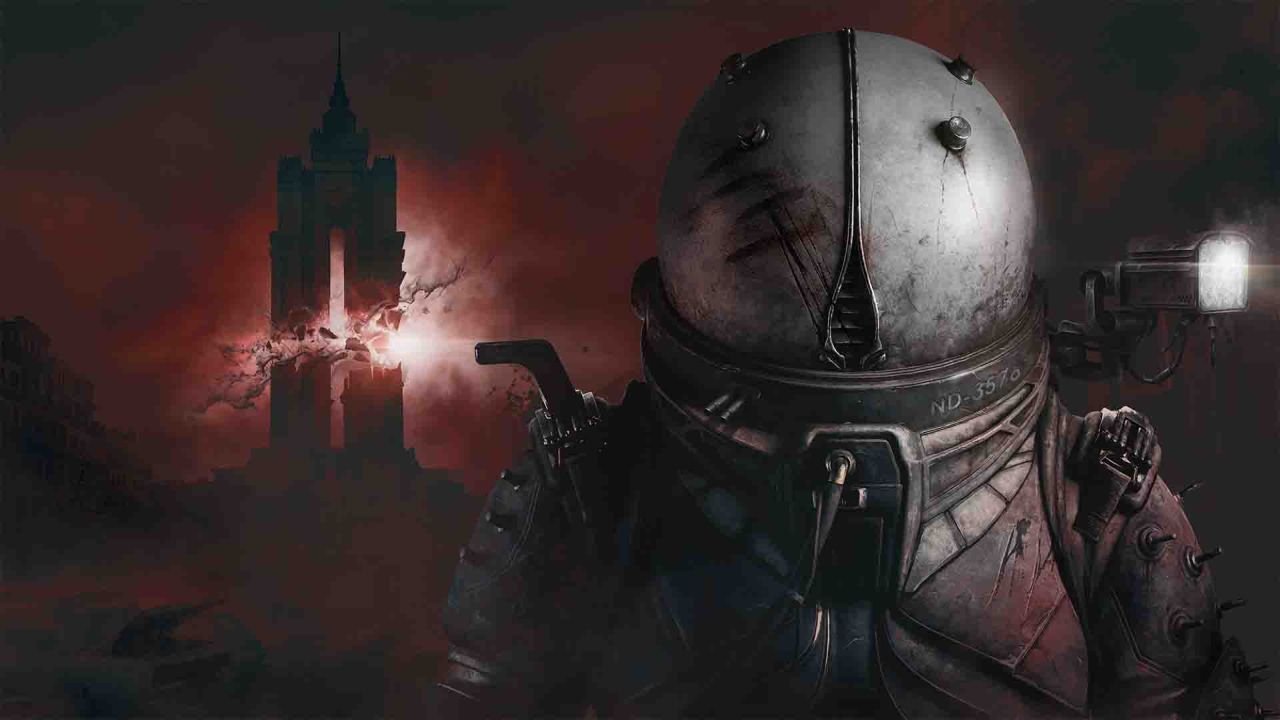
REVIEW – Bloober Team’s latest, Cronos: The New Dawn, isn’t just a spine-chilling horror game; it’s a suffocating journey into the dualities of 1980s Poland, where the Cold War, the Iron Curtain, and socialism left scars on everyday life. Tested on PlayStation 5, the studio finally proves it can deliver mature storytelling, refined atmosphere-building, and gameplay that channels the spirit of survival horror classics while adding something strikingly new. The mechanics aren’t flawless, but the overall package is stronger and more convincing than anything the team has done before. Cronos shows that Bloober Team has moved past its old shortcomings and at last delivered a genuine masterpiece of its own.
After two Layers of Fear games, The Medium, and most recently Silent Hill 2, I have a long history with Bloober Team’s catalog. Their intentions have always been good, and they’ve built intriguing frameworks for their narratives, but precision and sharpness often slipped through their fingers. Many players share this impression, even if they don’t phrase it so bluntly. Now, however, with Cronos: The New Dawn—an entirely original creation, unlike the Silent Hill 2 Remake—everything feels different.

Cold War, Travelers, and Orphans
Cronos: The New Dawn tells an original sci-fi story about “Travelers,” individuals awakened one by one and sent to the Polish city of New Dawn in 1981—right in the heart of the Cold War, when the Iron Curtain weighed most heavily on everyday life. But this world has collapsed, dystopian and abandoned. Something terrible has happened: reality itself has fractured, and the only beings left to roam are monsters the Travelers call “Orphans.” They’re hungry, feral, mindless beasts that merge with human bodies to grow and fuse into grotesque, horrifying abominations.
Why we’re really in New Dawn, how this fractured reality ties to the virus that spawned the Orphans, and how powerful the Travelers truly are—that’s the hook that grips you from the first eerie frame to the rolling credits. Without spoiling anything, the mythology around the Travelers, the Orphans, and this shattered world is so rich and distinctive that it can stand shoulder-to-shoulder with the genre’s heaviest hitters. Before long, you forge a strong bond with what your character calls “The Vocation,” a Mandalorian-like creed of honor underscored by phrases like “such is our calling.”

Survival Horror, Back to Basics
Survival horror—as Cronos: The New Dawn undoubtedly belongs—lives and dies on atmosphere, narrative, and the world you’re asked to explore, chart, and ultimately survive. This world is packed with distinctive details, unveiled at a deliberate but steady pace that never feels bloated or clumsy. There’s a level of sophistication here that Bloober has never reached before. Whether it’s the environments you traverse, the way your Traveler describes their surroundings, or the more direct story structure, Cronos should be studied as an example of strong horror storytelling.
The gameplay is intentionally stripped down, much like the genre’s greats. Your Traveler wields a single weapon with multiple modes, and the inventory system borrows heavily from Resident Evil, where managing limited space is crucial. Resources can be spent to upgrade your suit, weapons, and tools, offering steady progression.
Every action carries weight: the echo of heavy boots striking the ground, the feel of aiming your Terminator-like gun at an Orphan before pulling the trigger. Every sound, every animation, every design choice emphasizes heft and connection to your character. There’s no twitchy arcade speed here; instead, the grounded mechanics make every action meaningful. Some may call it simplistic—I call it intentional.

Hungry Monsters, Scarce Ammo
As you push deeper into this fractured world, you face more and more Orphans. The variety isn’t enormous, but the constant fight for survival masks the limited roster, much like Dead Space Remake disguised a small bestiary through the strategies players developed. Cronos leaves you truly “ammo-starved,” forcing you to scrape by from one encounter to the next. That pressure comes from the game’s standout “merge” mechanic.
Every enemy you kill creates an opportunity: other Orphans can use their remains to fuse and grow stronger. Leave corpses unattended, and they’ll evolve into tougher versions that demand more ammo to take down. You’re constantly forced to burn Orphan bodies, draining even more resources. The balance is tight, sometimes maddening, and there were moments I thought the game had starved me too far—yet I always managed to scrape through. That, perhaps, is the point.

Technical Performance on PlayStation 5
I tested Cronos on PlayStation 5, which offers two graphics modes (quality and performance). Running in performance mode, the frame rate held at 60 fps most of the time, but Bloober stumbles into the familiar Unreal Engine 5 trap: noticeable frame drops during extended sessions. The game’s slower pace makes these dips tolerable, but a patch is sorely needed. The silver lining: I never encountered serious bugs or crashes, only a few low-resolution textures, especially during cutscenes, that blemished the otherwise strong presentation.
Visually, Cronos is cohesive and striking. Environments are richly detailed, and the lighting is fantastic. NPC animations could use more polished motion capture, but the overall look convinces. Acoustically, the game leans on minimalist ambient soundscapes, and the restraint amplifies the tension beautifully.

When Ideas Fall Short
Not all of Bloober’s ideas land cleanly. The “merge” mechanic, heavily promoted in trailers, doesn’t always feel as impactful as advertised. Failing to burn enemies lets other monsters absorb their traits—suddenly a quick infected spits poison because it fused with the wrong corpse. As a tactical system, it’s compelling, but flamethrower ammo is so scarce that I often had to trek long distances back to refill stations. It leads to tedious backtracking, especially if you’re trying to play optimally. While the flamethrower’s capacity can be upgraded, the mechanic still feels undercooked.
Your Traveler can also stomp downed enemies, Dead Space–style, but oddly enough this doesn’t prevent them from being absorbed by others. It’s a cool concept, but one that begs for fine-tuning.
Bloober’s True Breakthrough
Major complaints are few and far between. Occasional PS5 frame dips are practically tradition at this point, but aside from that, Cronos looks stellar and sounds even better. Some players may feel it runs a little long without sharper story beats, but I was engaged from start to finish. Sure, a few stretches could use more dramatic punch, but the experience overall is commanding.
This is Bloober Team’s triumph. While Silent Hill 2 Remake was a return for many, it was still a reinterpretation. Cronos is wholly original—and there’s no better word for it than masterpiece. At last, Bloober has proven it can stand tall on its own. This isn’t just another horror game; it’s the studio’s calling fulfilled.
-Gergely Herpai “BadSector”-
Pros:
+ Refined atmosphere and strong narrative design
+ Intense survival horror built around the “merge” mechanic
+ Gorgeous environments and powerful lighting
Cons:
– Limited ammo leads to frustrating backtracking
– Few enemy types
– Occasional frame rate dips on PS5
Publisher: Nacon
Developer: Bloober Team
Genre: Survival Horror
Release: September 5, 2025
Cronos: The New Dawn
Gameplay - 8.8
Grafika - 8.6
Story - 8.4
Music/Audio - 8.5
Ambience - 9.2
8.7
EXCELLENT
Cronos: The New Dawn is Bloober Team’s best work yet, pairing suffocating atmosphere with tense survival horror gameplay and a completely original story. Despite technical blemishes and balance issues, the game cements itself among the genre’s finest. This isn’t just another horror title—it’s Bloober’s breakthrough moment.




![[TGA 2025] Tomb Raider: Legacy of Atlantis: Another Remake of the First Game! [VIDEO]](https://thegeek.games/wp-content/uploads/2025/12/theGeek-Tomb-Raider-Catalyst-Legacy-of-Atlantis-Remake-Crystal-Dynamics-300x365.jpg)



Leave a Reply