
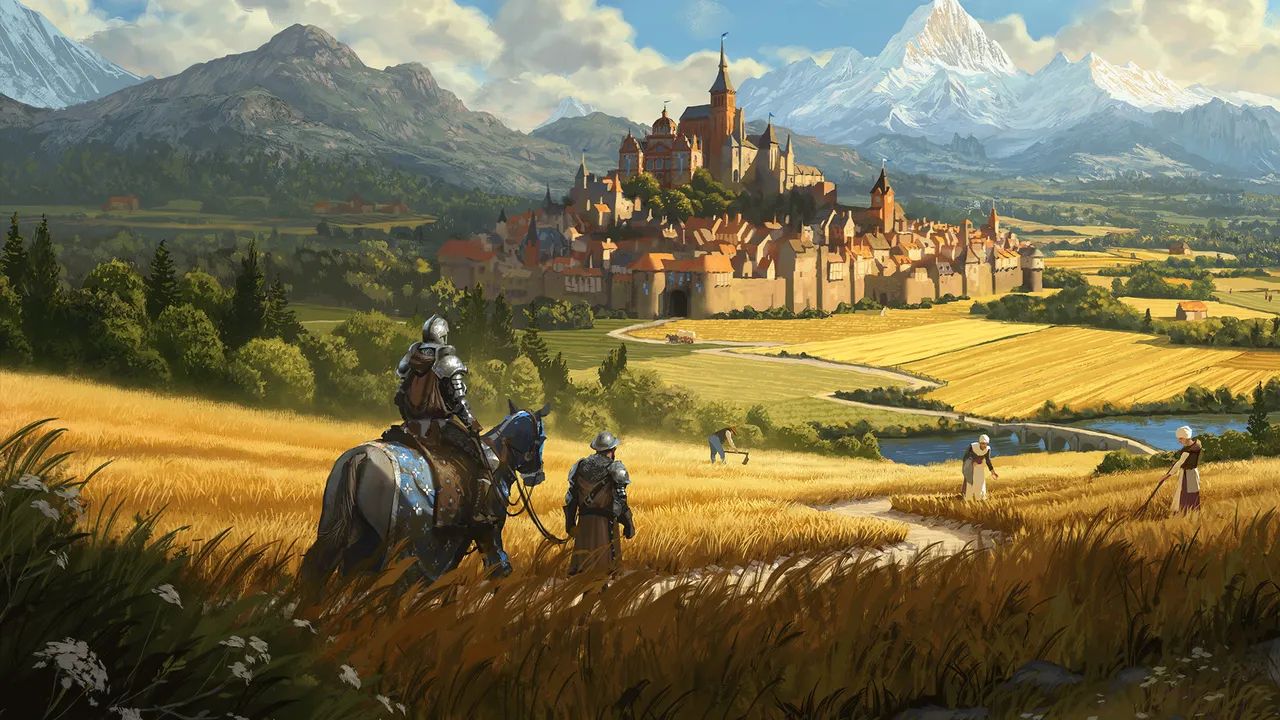
REVIEW – A city builder stepping out of early access right as you read this. Crate Entertainment’s long-simmering project puts everything at your fingertips: resources, crafting, trade, consumption, and even combat. Weather or raiders, plague or famine—keep your head and the town stays afloat.
It’s approachable without being shallow: you won’t spend hours lost in menus, yet the systems interlock in satisfying ways.

At the edge of the map
The title fits: this is the farthest frontier—not space in a Star Trek sense, but the harsh wilds. You juggle 16 resources (honey to timber), 19 food types (fishing and hunting included), and 32 craftables. More than 190 buildings can be raised, while a 140+ node tech tree in 1.0 fuels steady growth. Build a temple and find relics to sway religion; upgrade production chains for better efficiency and outputs. No city without fields: a dozen crops with distinct growth traits, fenced plots to keep wildlife out, and rotation to preserve fertility. Illness, heat waves, and frostbite are real threats. Your people live in real time, so roads, transport gear, and storage capacity matter—or your harvest rots.
Maps are procedural and difficulty is granular: toggle disease, play pacifist for peace, or crank it to raider where survival rules. Trade remains core—lean into what you can gather locally and barter crafted goods for what you lack. Clean water is non-negotiable; neglect produce and health tanks. Clothing and shoes save lives; rats can even reintroduce bubonic plague. Steam Workshop integration promises longevity through mods.

Our little town
Micromanagement fans will feel at home. The visuals don’t peacock, but the UI is clean and the loop gets a light tower-defense twist. Building designs are charming, the challenge is fair and rewarding, and citizen routines are modeled with care. The map size feels modest, and in-game tips are thin—late-game will spring a few “wait, what?” moments. Farming is underexplained in places, and while resources are varied, some distributions run stingy, which can grate. Then you blink and three hours are gone—always a good sign. Flashy budgets aren’t required; fun is. Seasons and audio work nicely, and 1.0 adds more buildings, bridges, rules, and tech to chew on.
Time well lost
Farthest Frontier brushes up against an 8/10, but its rough edges tug it down to a comfortable 7.5. It’s a generous package at ~€35 instead of €60–80. The long early-access road paid off: launch feels refined rather than half-baked. If you have a soft spot for Anno, this is an easy recommendation.
-V-
Pros:
+ Flexible difficulty and rules (disease toggle, pacifist–raider scale)
+ Deep systemic city-building (16 resources, 19 foods, 32 crafts, 190+ buildings, 140+ tech)
+ Robust micromanagement and logistics; real-time pops, roads and storage that truly matter
Cons:
– Sparse guidance; farming systems underexplained in spots
– Modest map size and occasionally stingy resource distribution
– Minor QoL gaps and small bugs; occasional script hiccups
Developer: Crate Entertainment
Publisher: Crate Entertainment
Release date: October 23, 2025
Genre: City Building / Tower Defense
Farthest Frontier
Gameplay - 8.2
Graphics - 6.3
Campaign - 7.2
Music/Audio - 7.8
Ambience - 8
7.5
GOOD
The only real question is how easily you’ll lose track of time.












Leave a Reply