
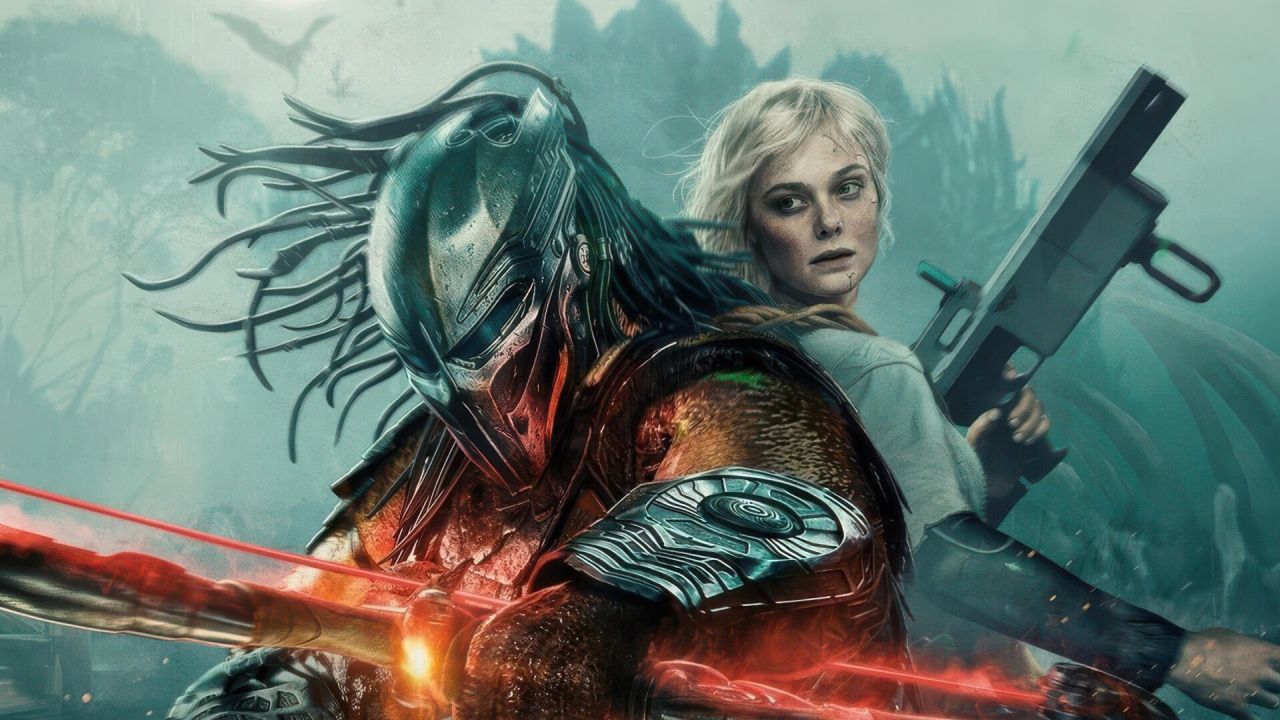
MOVIE REVIEW – Dan Trachtenberg’s latest chapter doesn’t just tweak a decades-old Predator playbook; it flips the vantage point. Instead of watching quarry run from a cloaked hunter, we follow the hunter into a hostile world where every step can bite back. Ingenuity, survival skills, and an unlikely partnership take center stage while the lore widens and blunt carnage gives way to clever, readable action. The PG-13 label may raise eyebrows, but the intensity shifts pace rather than dropping off. What lands is a brisk, idea-driven, unexpectedly affecting entry that respects the roots while pointing the franchise somewhere new.
In the mainline Predator films the formula has been reliable: humans wind up in the crosshairs of a galactic trophy hunter. Predator: Badlands inverts that setup. Coming off Prey, Trachtenberg puts a young Yautja, Dek (Dimitrius Schuster-Koloamatangi), at the center, a warrior his own clan considers a weak link. His proving ground is Genna, the infamous “Death Planet,” where strangling trees, grenade-like worms, and razor grass make the landscape as lethal as any opponent. On paper that sounds radical; on screen it clicks with the series’ DNA. The focus moves from body count to resourcefulness and tactics, and the Yautja code gains shades we rarely see.
Back on Yautja Prime’s ruthless ladder, the clan’s apex fighter, Njohrr, doesn’t see Dek as a prospect but as a problem to be removed. Dek survives only because his brother Kwei intervenes, and the price is exile. Shot toward Genna in a pod, he takes on a mission that reads simple but plays brutal: bring home the head of the “unkillable” Kalisk. Within hours it’s clear the environment is both his toughest enemy and, if he’s smart, his best armory.

From Lone Hunter To Two-Person Survival
Yautja culture glorifies the lone-wolf hunt. Genna rewrites those rules. Dek teams up with a damaged Weyland-Yutani synthetic, Thia (Elle Fanning), who, despite missing her lower half, brings hardwired field knowledge and bone-dry wit. Together they turn the planet into a toolset: vines become snares, blade-grass turns into guided projectiles, exploding worms become ambush starters. On the other side stands Tessa (Fanning’s second role), a corporate-minded synthetic chasing a live capture of the Kalisk with protocol-tight efficiency.
Family tension keeps the engine revving. Njohrr’s brutality and Dek’s insecurity charge every clash. The standout action beats are staged in space, not salvaged in the edit: clean geography, readable ideas, and a constant sense that one nudge from the terrain can flip the power balance. It feels like learning a punishing but fair boss fight where the map itself supplies the tactics.

Rituals, Ranks, And A Broader Mythology
This series rarely lets us inside Yautja traditions; here it does. Patrick Aison and Brian Duffield’s script, built from Trachtenberg’s story, adds motivation to the gestures. The cloak, the trophy, the right to wear the mask all carry personal stakes rather than serving as cool ornaments. Schuster-Koloamatangi communicates through stance and tempo shifts, sliding from showy bravado to split-second fear, giving Dek a pulse beneath the mask. The PG-13 rating stems largely from the absence of human victims; most blows land on creatures or synthetics. The result isn’t softer, just more inventive.
Genna isn’t window dressing. It’s the challenge. The film carries over what made Prey pop — reading the environment and adapting on the fly — and drops it into a science-fantasy sandbox. The vibe is part Predators survival trek, part corporate sci-fi pragmatism. The bestiary is playful and nasty, the danger rules stay consistent, and the worldbuilding actually matters to how scenes play, not just how they look.

There’s A Heart Under The Armor
For a Predator movie, leaning into emotion can be a minefield. Predator: Badlands threads it carefully. Family, grief, and belonging shape the story without turning syrupy. Schuster-Koloamatangi gets a lot done from behind the creature face — small gestures, controlled pacing, real weight — and Dek reads as a character, not just an icon. Elle Fanning anchors both sides of the human factor. Thia provides the warm point of view, Tessa embodies cold logic, and the friction between them keeps raising the stakes as the finale approaches. Across the big swings, Trachtenberg tips his cap to the Alien and Predator legacies without slipping into checkbox fan service.
Bottom Line: A Course Correction That Hits
Predator: Badlands isn’t the jolt that Prey was, but it walks the same trail with new markers. Mask, thermal vision, the signature sounds — the comfort food is here — yet the playbook favors adventure beats over slasher rhythms. If you roll with that shift, you get a propulsive, inventive, surprisingly human chapter that opens up the franchise instead of just swapping backdrops.
-Gergely Herpai “BadSector”-
Predator: Badlands
Direction - 7.2
Actors - 7.8
Story - 7.1
Visuals/action/music/audio - 8.4
Ambiance - 7.2
7.5
GOOD
Predator: Badlands refreshes the series with a point-of-view change and turns the setting into a smart arsenal. The action stays intense, the worldbuilding is consistent, and the characters get more shading than usual. Not flawless, but a confident, memorable pivot that pumps new energy into the brand.













Leave a Reply