
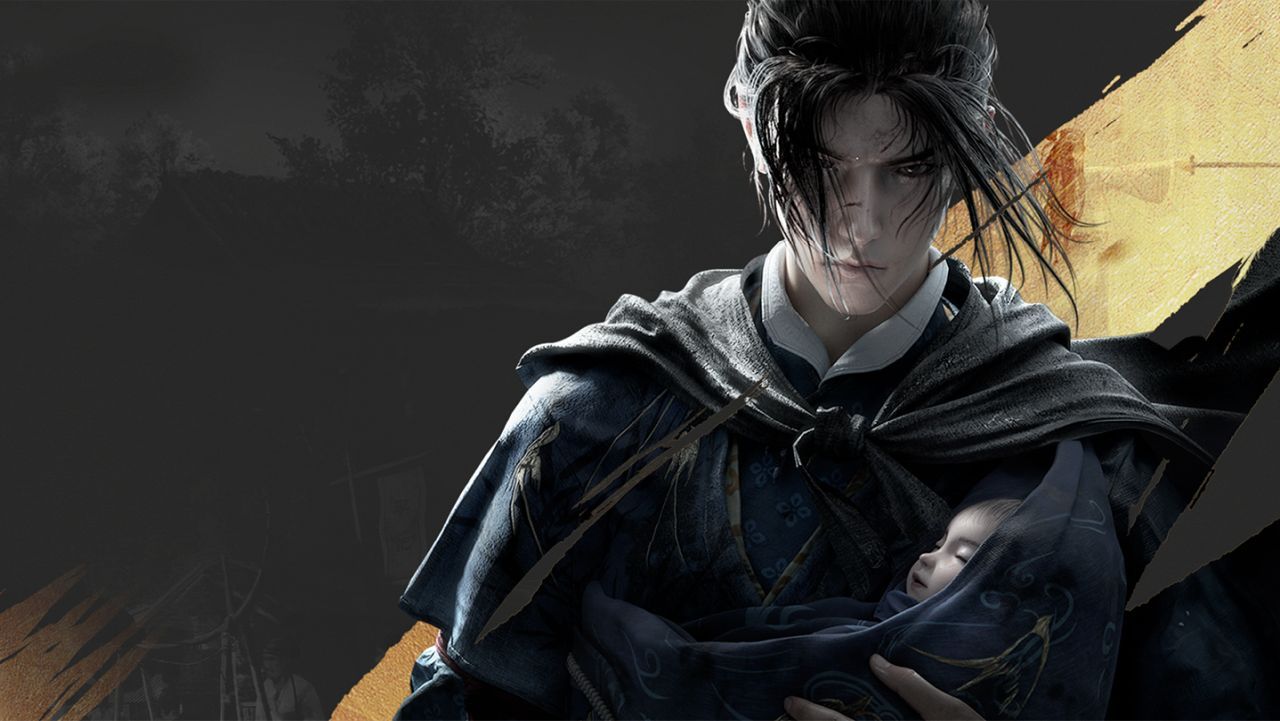
REVIEW – In a free-to-play scene that is packed full of cynical money traps, a Chinese wuxia epic promising that your legend is written by your reactions and persistence rather than your credit limit sounds almost too good to be true. Where Winds Meet really does dump a huge, spectacular slice of fantasy-tinted medieval China in your lap for free, letting you sprint along walls, leap between mountaintops with sword and spear in hand, and carve bosses into tiny pieces. The problem is that the wind does not always blow your way – between the thrilling duels and memorable boss fights you slam beleaguered into UI chaos, pointless minigames and a lurching story, so the result is a very likable but just as contradictory action RPG.
On paper, the premise of Where Winds Meet is pure wish-fulfillment: a free-to-play online wuxia action RPG set in the turbulent Ten Kingdoms era, where you play a young swordsman trying to piece together who you really are while empires crumble around you. Right from the start the game throws it in your face that your legend is not supposed to depend on the thickness of your wallet, and for the most part it actually sticks to that – you cannot buy stat-boosting weapons, armor or levels with real money, and monetization mostly lives in skins, outfits, mounts and a season pass.
That means the spine of the experience is not the cash shop, but combat, exploration and character progression. Most weapons, skills and upgrade materials can be earned naturally out in the field, in dungeons, through quests or events, so if you are willing to commit to the grind, you really can build a strong character without ever feeling forced toward the store. In a market where a huge chunk of free-to-play titles is aggressively pay-to-win or constantly nudging you toward microtransactions, that alone is a massive plus.

Wuxia Open World Where Something Always Happens
The open world is one of Where Winds Meet‘s biggest selling points. You get a huge map of mountains, rice fields, misty marshes, villages and bustling cities, and at any random bend in the road you can bump into something bizarre: a haunted, smoke-covered ruin with its own investigative side quest, a monastery where the monks still attack you long after death, or yes, overpowered wild geese that practically shred careless swordsmen. It often feels like the game is trying to pour the best bits of a multi-day wuxia movie marathon on you all at once, with mixed results.
What keeps exploration fun is how good basic movement feels. You sprint along walls, dash up cliffs, chain double and triple jumps in midair, slide on cushions of wind and then slam down into groups of enemies with a ground-pound attack. Climbing uses a stamina meter that clearly nods to Breath of the Wild, but the game is more forgiving – in return there are areas where the game suddenly strips you of some of your fancier traversal tricks, which comes off as a cheap restriction. The map is packed with chests, collectibles and hidden nooks, so if you are the type who likes to strip a world completely clean, you can disappear in it for hours.
The puzzles, on the other hand, feel more like solid contract work than genuine bursts of creativity. You mostly read the environment, levers and symbols, then do exactly what the game quietly expects. Solutions are almost always one-size-fits-all, there is little room for experimentation or clever shortcuts, so while they are entertaining at first glance, you rarely get that feeling of having truly outsmarted the system.

Visual Spectacle That Eats Your SSD Space
Look at it from a distance and Where Winds Meet easily stands next to big budget action RPGs. Character models are rich in detail, armor and outfits are intricately decorated, sword slashes shower sparks, trees glow under a red moon and villages emerge from thick fog to create the kind of moments that make you instinctively reach for photo mode. Animations are flashy too, especially when the hero goes full wuxia, sprinting up walls, vaulting onto enemies or blocking volleys of arrows with an umbrella.
There is a price for all this spectacle: on PC and PS5 the game happily eats around 100 GB of storage, and even on a powerful machine you will see the occasional technical hiccup. Frame rates can dip in dense city areas or big crowd scenes, and you will sometimes notice textures popping in late. It never collapses into a slideshow, but you can tell the engine is struggling to keep up with its own ambitions. Consoles feel a bit more stable, but even there you can sense the heavy compromises made to keep the visuals and performance in balance.
What really stings across all platforms is the interface. The menus look like someone mashed up a spreadsheet and a mobile MMO UI. A dozen different currencies, separate upgrade trees, submenus inside submenus, a map covered in tiny icons – no wonder a big chunk of the community jokes that the UI is a tougher boss than anything you fight in game. Using a controller is especially painful: you can navigate with the D-pad and the analog stick, but in some places one of them just stops working, and hitting back can suddenly throw you to the very top of the menu. Mouse and keyboard improve things slightly, yet the whole setup still feels like a handful of different systems slapped together without anyone checking how they work as a whole.

Wuxia Combat Where Parry And Reflex Rule
Combat is, without question, Where Winds Meet‘s strongest pillar. You can clearly see how much the team has learned from soulslike games, especially the pacing of Sekiro, although this system is much more forgiving. Perfect guards and well-timed counterattacks are crucial, but you can afford more mistakes, you can take more hits and your cooldown-based special moves let you string together some very flashy combos. You can fight with swords, spears, fans or even a deadly umbrella, each with its own moveset and specials, so the game actively encourages you to experiment.
Instead of rigid classes you build weapon and role combinations. You can become a classic tank with shield-like skills that protect you and pull aggro, or a more aggressive spearman who constantly keeps pressure on enemies. In co-op this flexibility really shines, because your group can freely swap roles, decide who buffs, heals or holds the line in each encounter. As you progress, new weapons, stances and abilities keep unlocking, so there is always a reason to head back to an old boss and test a freshly minted build.
Against regular enemies though, the whole thing can feel surprisingly clumsy. Trash mobs often have weightless, choppy hit reactions, hitboxes are not always clear and the camera likes to fight you in tight spaces. The moment a serious boss shows up, it suddenly feels like a different game: multi-phase showpiece encounters, higher difficulties that offer a real challenge, where parry timing, positioning and build choices actually matter. These fights deliver the kind of high you are willing to forgive a lot of other issues for.

Free-To-Play System That Is Fair But Emotionally Flat
Because this is an online free-to-play title, you cannot avoid a gacha layer. The good news is that you are not rolling for stat-stacked weapons or armor pieces here, but for cosmetics: outfits, weapon skins, horses, mounts and smaller visual extras. Many costumes can be unlocked just by playing well, clearing events or building reputation, so if you do not want to spend a cent, you do not have to wander the world as a fashion disaster.
The bad news is that the gacha side itself feels pretty limp. The reward pool is full of upgrade materials, crafting items and various tokens that barely feel valuable in actual moment-to-moment play, so when you finally scrape together enough in-game currency and spin a banner, you often walk away feeling like you tossed your chips into a void. It is genuinely commendable that the system does not slide into hard pay-to-win territory, but the psychology of rewards is completely off here – in sharp contrast with combat and exploration, where every new weapon, skill or freshly unlocked zone feels like a tangible step forward.

Story That Starts Strong Then Loses Its Way
On the narrative side, Where Winds Meet is just as uneven as it is in gameplay. The prologue hits hard: stylish introduction, court intrigue, political tension, a layer of mysticism – everything you need for a great wuxia story. Character creation gives you a ton of options to fine tune your hero, and in the first few hours it genuinely feels like you have stepped into a sweeping personal drama. Once you cross over into the “real” game though, the pacing of the story falls apart, cuts awkwardly from scene to scene and often makes you feel like the protagonist and the world exist in two different realities.
One moment you are risking your life in a deadly trial, solving a mystery or taking down a serious opponent, and in the next scene important NPCs react as if nothing had happened, or scold you for not staying home to study. Coherence frequently goes out the window, character motivations are hard to track, and while there are individually strong, emotional scenes, the big picture is broken up into disjointed episodes.
From a co-op perspective the game also feels half-baked. You can team up with friends to farm dungeons, hunt world bosses, tackle events and chew through side quests, but only the host can advance the main story. Guest players cannot talk to NPCs that push the narrative forward and do not progress their own campaign, so if you play mostly in a group, you quickly develop the habit of skipping dialogue just to get back to the shared grind. It is the kind of design choice that unnecessarily kneecaps the narrative in a game that otherwise leans heavily into co-op systems.
Demonic Geese, Talkative NPCs And A Future In The Wind
Where Winds Meet is one of those Chinese games that is not afraid to experiment. On one side you have already meme-worthy, brutally strong geese that happily dismantle careless swordsmen unless someone figures out how to herd them into the water. On the other you have NPCs enhanced with AI chat systems that are supposed to make conversations more open-ended, but for many players they do the exact opposite and snap immersion in half. Taken together, these ideas show where the game wants to go: it wants to be a tech showcase and a giant playground for every wild concept the team can think of.
The price is a wildly uneven experience. When you are in the middle of a well crafted boss fight or quietly perched on a mountain ridge looking down into fog-filled valleys, it is very easy to fall in love with this world. Then you open a menu, get dragged into an annoying minigame or watch the story trip over its own feet, and the whole spell breaks in an instant. It is the textbook seven-out-of-ten experience: if it plays to its strengths, it could easily be one of the year’s big surprises, but until the rough ideas are trimmed back, it remains a very promising yet compromise-heavy wuxia adventure.
-Gergely Herpai “BadSector”-
Pros:
+ Gorgeous, atmospheric wuxia world packed with secrets and memorable locations.
+ Flexible, flashy combat system that really shines in boss encounters.
+ Fair free-to-play model with no real pay-to-win hooks and plenty of unlockable weapons and skills.
Cons:
– Chaotic, hard-to-read UI and menu system, especially when using a controller.
– Uneven, sluggishly paced story that often undercuts its own dramatic moments.
– Main story progress is locked to the host in co-op, and the gacha rewards rarely feel truly exciting or valuable.
Developer: Everstone Studios
Publisher: NetEase Games
Genre: Action RPG, wuxia, online open world role-playing game
Release date: November 14, 2025
Where Winds Meet
Gameplay - 7.6
Graphics - 8.4
Story - 6.5
Music/Audio - 8.2
Ambience - 7.4
7.6
GOOD
Where Winds Meet is a huge, spectacular wuxia sandbox, where the combat system, boss fights and exploration can make you forget most of the hassles of free-to-play online games. However, the opaque menus, the bumbling, logically-tricked story and the one-armed co-op can quickly dampen enthusiasm for many. If you can tolerate its flaws and get a feel for its rhythm, you get a very lovable wuxia epic that offers serious content for free, but you may not love every minute of it.

![An ex-Bethesda Dev Says Including More than 1,000 Planets in Starfield Was a Bad Decision! [VIDEO]](https://thegeek.games/wp-content/uploads/2025/09/thegeek-starfield-nagy-1-302x180.png)








![An ex-Bethesda Dev Says Including More than 1,000 Planets in Starfield Was a Bad Decision! [VIDEO]](https://thegeek.games/wp-content/uploads/2025/09/thegeek-starfield-nagy-1-300x365.png)
![A Modder Has Turned GeForce Now into a High-End Cloud PC! [VIDEO]](https://thegeek.games/wp-content/uploads/2026/08/theGeek-GeForce-Now-cloud-PC-300x365.jpg)
Leave a Reply