
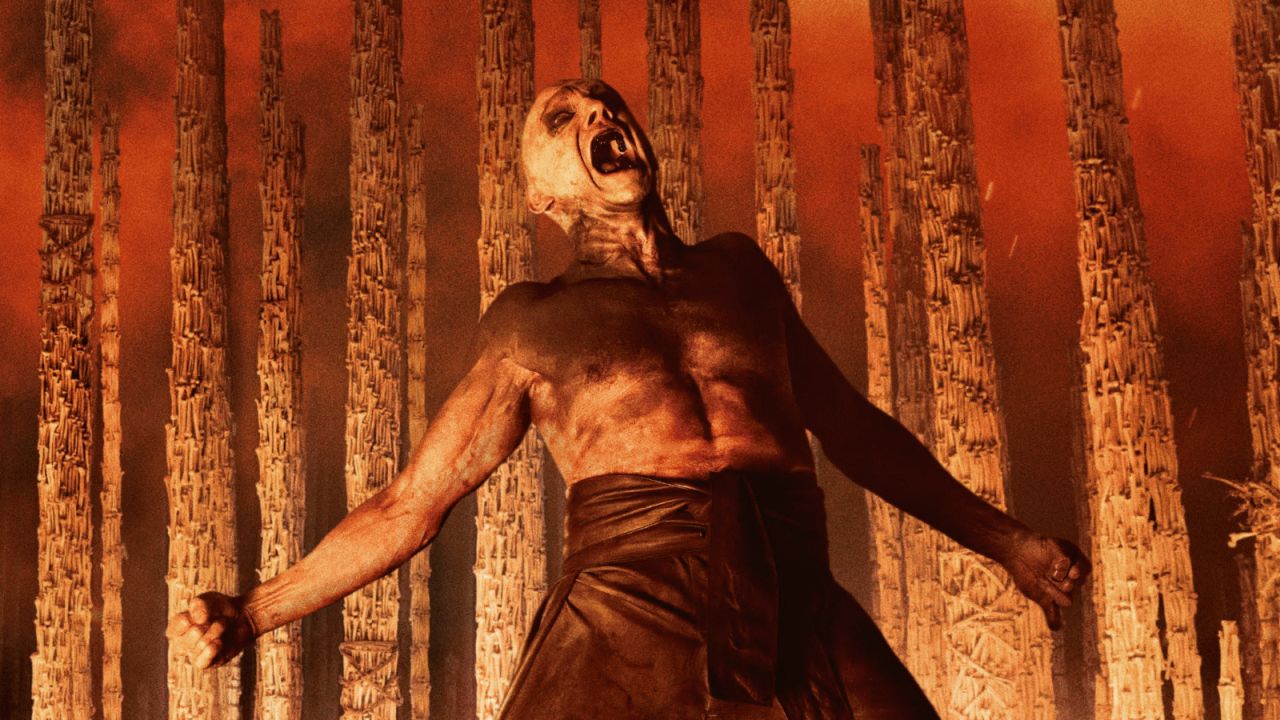
MOVIE REVIEW – Ever since the genre first clawed its way onto screens, zombie cinema has rarely been “just” about the dead walking – it’s been a way to talk about the living. Sometimes it’s the collapse of society being laid bare like an autopsy, sometimes it’s a jab at consumer culture, and often it’s that familiar, ugly question: what people will do to gain power and cling to it. Most of the time, these stories use flesh-eating horrors as a blunt mirror, forcing us to face humanity’s worst instincts. But what do you do when the real world already feels like a horror movie, and you don’t need fiction to spot the cracks in reality?
The surprisingly excellent 28 Years Later: The Bone Temple has a clear answer: instead of amplifying the darkest parts of us, it argues that hope, care, and compassion may be the last things capable of saving humanity. Alex Garland – yes, the same Alex Garland behind Ex Machina, Men, and Civil War – delivers an unusually optimistic script, brought to the screen by director Nia DaCosta, who after Candyman (2021) and last year’s Hedda now manages to find unexpected warmth in this franchise’s bleakest corners. As a direct continuation of Danny Boyle’s 28 Years Later, the film insists that what holds the world together isn’t cruelty, but those rare, stubborn fragments of humanity we refuse to let die. That tonal pivot injects real energy into a genre that often feeds on nihilism, and it makes this entry one of the first truly major film experiences of 2026.
‘The Bone Temple’ Continues Exactly Where ’28 Years Later’ Ended
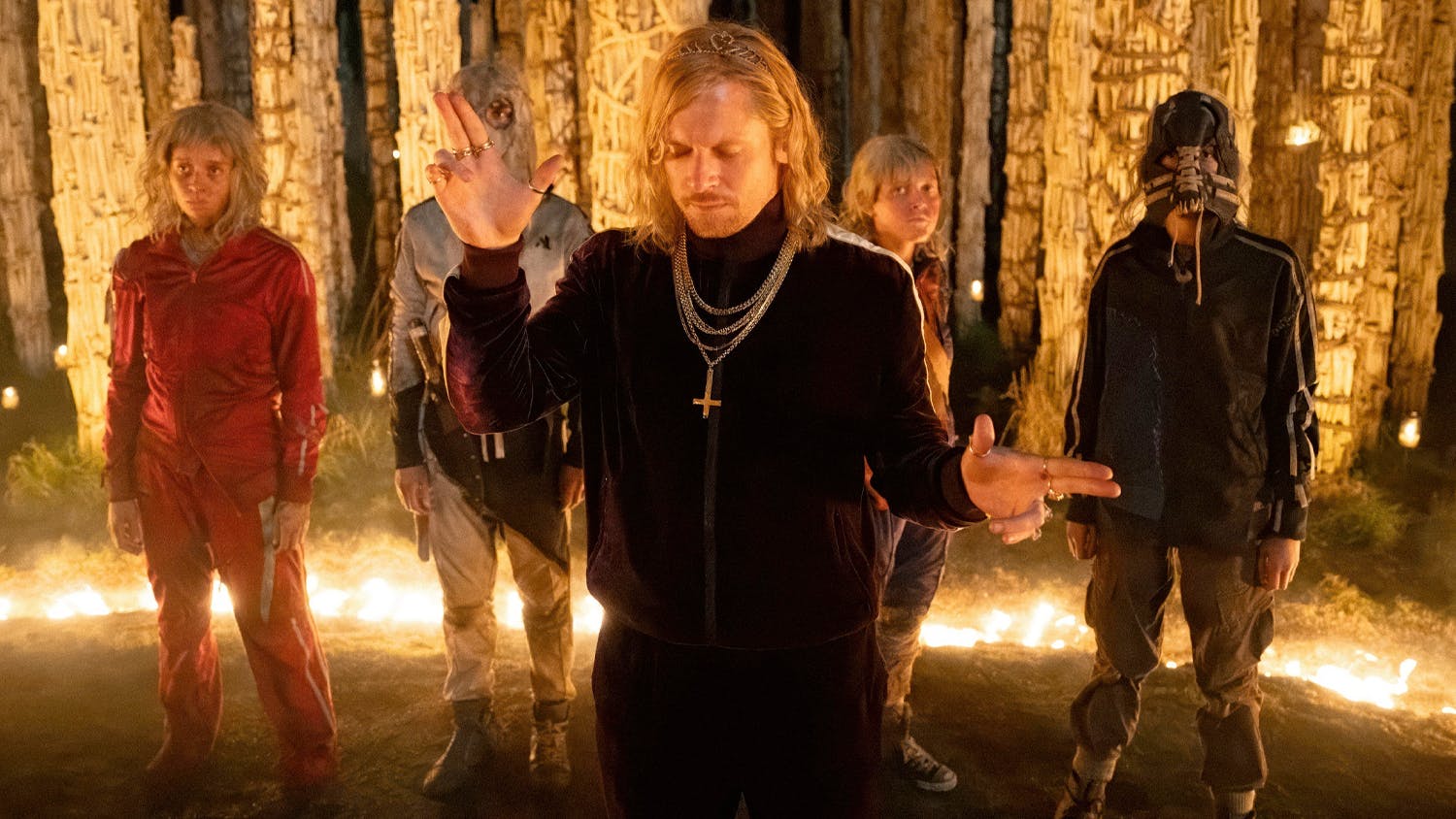
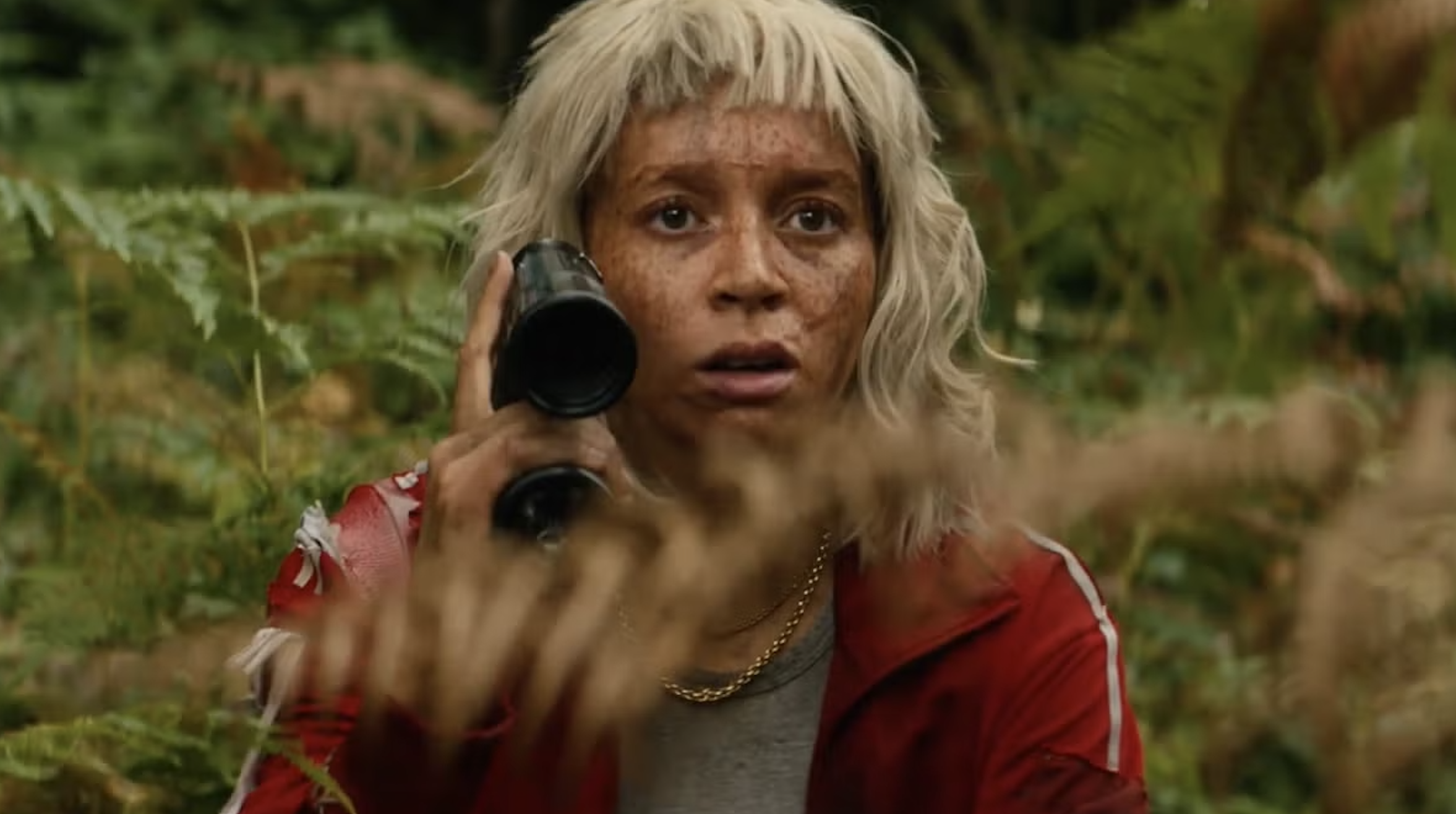
Last time around, Spike (Alfie Williams) was taken in by Sir Lord Jimmy Crystal (Jack O’Connell), the leader of the “Jimmys” – a gang in tracksuits, blond wigs, and disturbingly devoted to the Teletubbies. If the ending of 28 Years Later made that reveal feel almost ridiculous at the time, the sequel quickly clarifies what the joke was hiding: the Jimmys are rotten to the core. After Spike is forced into a fight to the death against another gang member, he’s dragged deeper into a self-styled cult of murderers and fanatics. Lord Jimmy spouts increasingly deranged claims – including that he’s the son of the devil, whom he calls Old Nick – yet one member of the gang, Jimmy Ink (Erin Kellyman), begins to openly question whether their leader’s mythology is anything more than delusion.
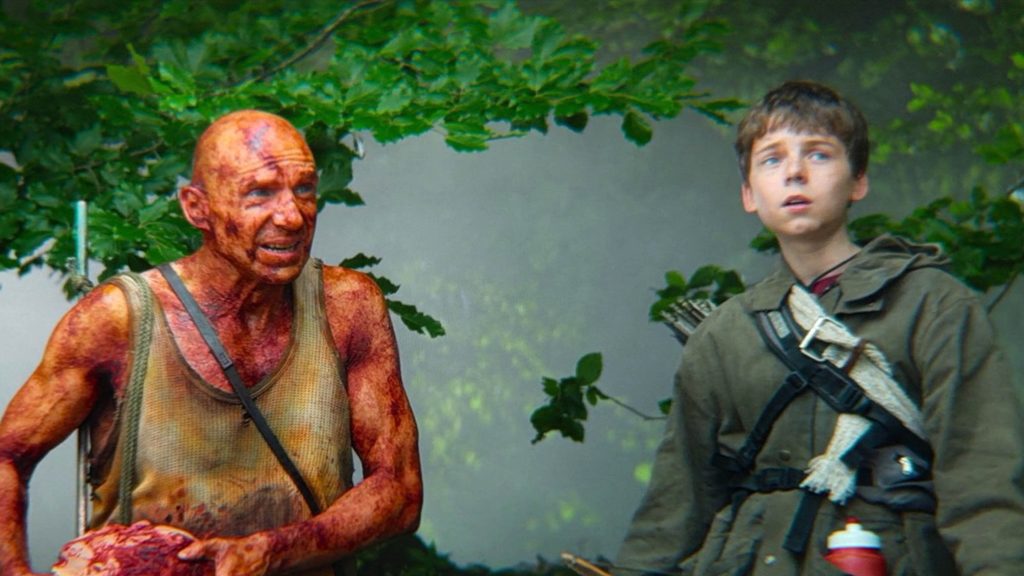
Meanwhile, Dr. Ian Kelson (Ralph Fiennes) makes unsettling breakthroughs while studying the infected Alpha leader known as Samson (Chi Lewis-Parry), a towering figure who keeps returning to the doctor’s bone temple even after being hit with morphine darts. Kelson realizes Samson isn’t simply driven by rage – their meetings seem to calm him, as if there’s comfort in the ritual of returning. Kelson takes advantage of that opening, using it to chase deeper answers about what the infected truly are. As Kelson and Samson form an improbable bond, the film begins to suggest that the infected might not be defined solely by uncontrolled violence and endless fury.

Why Compassion Still Matters – Even in the Last Minutes of the World
DaCosta and Garland make a calculated, effective move by opening The Bone Temple with the Jimmys, because nothing communicates this world’s moral collapse faster. The gang savagely attacks and tortures anyone they meet, describing it as “charity,” as if cruelty were simply play. Horror has long explored what people become after the world ends, but rarely does it get this sadistic, this stomach-turning. Here, brutality isn’t a byproduct – it’s the point, pushed so far that Spike can’t witness it without turning away or vomiting, which only makes the Jimmys treat him as the real outsider. Yet in showing how low humanity can sink, the film also reveals why even the smallest act of kindness becomes priceless. In one “charity” sequence, Jimmy Ink takes pity on Spike, and it’s obvious this isn’t just sincere – it’s an emotion she hasn’t allowed herself to feel in years.
That thread of compassion becomes even more vital through Kelson and Samson, whose relationship creates one of the film’s most unexpectedly charming dynamics. In a genre that often treats care and empathy as weakness, The Bone Temple refuses that cynical rulebook. We instinctively expect Samson to retaliate, to answer kindness with violence, but instead he accepts it – and responds in kind. The film somehow turns the friendship between a man and a giant, naked infected Alpha into something genuinely moving, while elegantly twisting zombie-horror conventions in ways you don’t see coming. It’s rare to watch a genre film reinvent itself and still land emotionally at the same time.
DaCosta and Garland Tear Down Zombie Horror’s Familiar Rules with a Smart New Angle
With 2002’s 28 Days Later, Garland and Boyle created a harsh, stripped-down vision of zombie terror – but one that treated its characters with more intimacy than the genre usually allows. For years viewers wondered whether they would ever return to expand that world, and in hindsight it’s a blessing they waited: the growth in storytelling between 28 Days Later and 28 Years Later is undeniable. In 28 Years Later, Garland already leaned into tenderness by focusing on Spike and his family. Jodie Comer’s Isla could have been dismissed as another expected casualty, but Garland made the loss personal, specific, and impossible to shrug off. He even transformed a massive tower of skulls into a haunting, deeply emotional monument to world-ending grief. The Bone Temple continues that approach, constantly reminding us that infected and uninfected alike are still human – even if the world would rather forget it. That insistence on humanity fuels some of the franchise’s most beautiful moments, and it results in one of the most compelling recent reframings of zombie horror.
DaCosta brings all of this to life in what feels like the strongest film of her career so far. Where Boyle’s directing in 28 Years Later was faster, louder, and more self-conscious – particularly in the iPhone-shot sequences – DaCosta chooses steadier control, letting the viewer sit uncomfortably with the horrors and also with the small flashes of beauty. She holds a dying victim in frame longer than we’d like, forcing the weight of consequence, and then gives us quiet space for connection between Kelson and Samson. When the film demands frenetic chaos, especially in the third act, DaCosta knows exactly how to ignite it without losing precision. She may once have seemed like an unexpected choice, particularly since 28 Weeks Later proved that stepping outside the Boyle/Garland partnership could disappoint, but DaCosta proves she belongs in this universe. Even as a direct sequel, the film carries its own identity and momentum. Sean Bobbitt’s cinematography is superb – he previously earned an Oscar nomination for Judas and the Black Messiah, has worked with Steve McQueen on most of his films, and collaborated with DaCosta on her last two projects. Through his lens, light and darkness are balanced with equal authority, and this may well be the best-looking entry in the series yet. The score comes from Oscar-winning composer Hildur Guðnadóttir (Joker, Tár, Hedda), and while it doesn’t dominate the film the way the Young Fathers music did in 28 Years Later, it simmers underneath every scene, pulling you deeper into a world of unease and uncertainty.
Ralph Fiennes and Jack O’Connell Play Two Extremes – and the Film Gets Stronger Because of It
This kind of emotional intelligence wouldn’t work without actors who can carry it, and The Bone Temple is packed with excellent performances on both ends of its spectrum. Ralph Fiennes is pure pleasure as Dr. Kelson, portraying a man who has witnessed unimaginable horrors yet still refuses to abandon the idea of mercy. Continuing from 28 Years Later, Fiennes plays Kelson with the same warmth and love, even as the character lives surrounded by the bones of the dead. It’s obvious Fiennes is having a blast, whether Kelson is working in his bunker – stocked with vinyl from Duran Duran and Radiohead – or delivering an unforgettable showpiece near the end of the film. It’s a role made for him, giving him room to be playful, magnetic, and terrifying depending on what the moment demands.
-Gergely Herpai „BadSector”-
28 Years Later: The Bone Temple
Direction - 8.2
Actors - 8.4
Story - 8.2
Visuals/Music/Sounds - 8.4
Ambiance - 8.4
8.3
EXCELLENT
The Bone Temple doesn’t just extend the world of 28 Years Later - it raises the emotional stakes by making compassion the key to survival. DaCosta’s direction is both brutally uncomfortable and unexpectedly tender, while Garland’s script keeps reminding us there’s still a human being behind every “monster.” The end result is a sharp, fresh, resilient zombie horror film - and one that could easily become one of 2026’s first major genre standouts.







Leave a Reply