
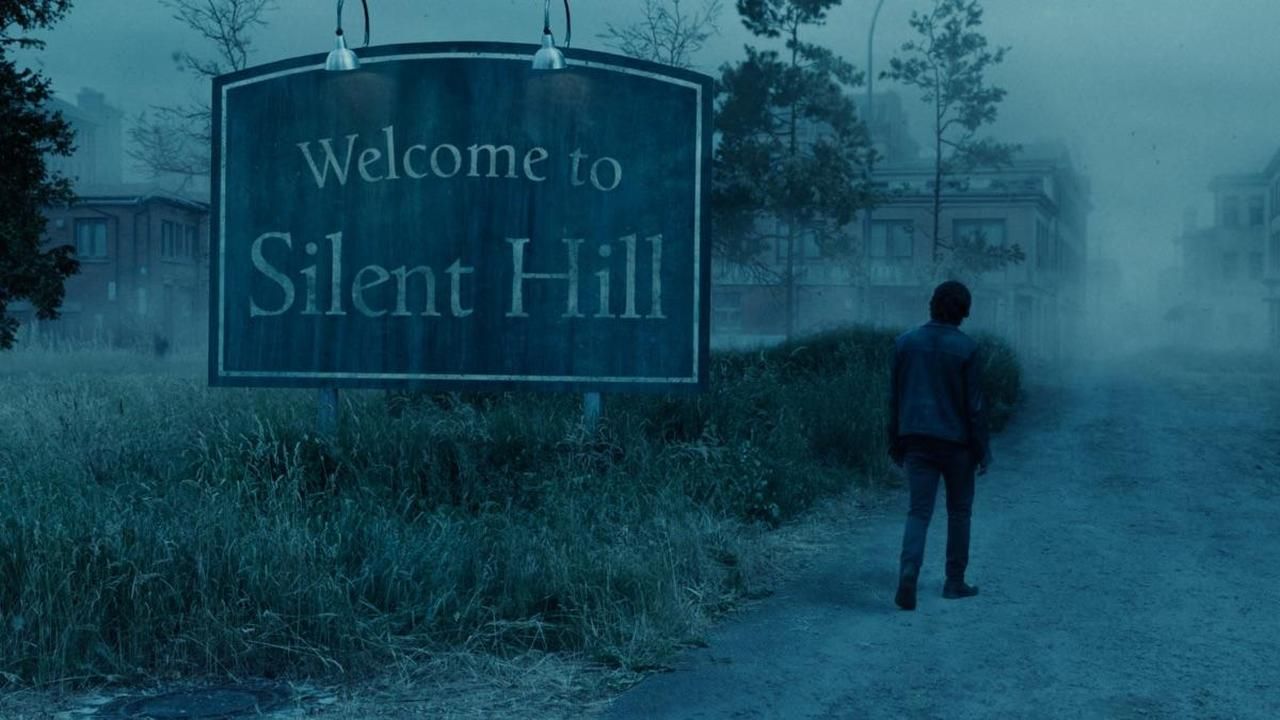
MOVIE REVIEW – Video game adaptations are judged very differently today, but not long ago the landscape was dominated by painfully misguided efforts and earnest yet clumsy attempts. Into that era arrived Christophe Gans’ Silent Hill in 2006, a film that, while overly tangled in its attempt to build the franchise’s mythology and craft its own take on the first game, still approached the material with clear respect. That makes it especially striking to see how Return to Silent Hill manages to go so noticeably off course, even in areas where it seems determined to remain faithful.
Before The Last of Us and the Sonic the Hedgehog films elevated the prestige of video game adaptations, the genre swung wildly between laughable disasters and well-meaning but uneven experiments. It was in that climate that Gans delivered Silent Hill, a movie that may have overcomplicated its lore-building but nonetheless demonstrated a genuine understanding of the source. That history makes Return to Silent Hill both fascinating and frustrating — a near textbook example of how a strong foundation can still be mishandled.
Gans and co-writers Sandra Vo-Anh and Will Schneider clearly set out to translate Silent Hill 2 to the screen as faithfully as possible. Yet unnecessary mythology revisions and a noticeable lack of thematic weight in key narrative beats create a strange blend of faithful recreations, impressive imagery and disappointing dramatic execution. The film finally fulfills Gans’ long-held intention to directly adapt the 2001 game widely regarded as the franchise’s high point and one of horror gaming’s masterpieces. The story centers on James Sunderland, a man submerged in grief after the death of his wife Mary, who suddenly receives a letter from her urging him to return to their “special place” — Silent Hill.

Familiar Faces, Distorted Reflections
Upon arriving, James encounters a cast of troubled figures: the tragic runaway Angela, the volatile Eddie, the defiant orphan Laura who claims she knew Mary, and Maria, a more assertive woman who bears an uncanny resemblance to his late wife. Even more unsettling are the creatures that stalk Silent Hill, from grotesque insect-like beings with human faces to the towering Pyramid Head, as the fog-bound ghost town mutates into a corroded nightmare landscape.
As with his first Silent Hill film, Gans proves exceptionally skilled at capturing the visual horror of the games. Practical and CGI creatures alike feel as though they have stepped directly out of the source material into live action, evoking the same uneasy tension players experienced navigating the semi-open environments of the game. Though this adaptation leans more heavily on CGI, it rarely becomes distracting across the film’s 105-minute runtime. One late-arriving monster is so intricately designed that it’s a welcome surprise to realize how much of it was achieved through practical effects, with digital enhancement merely amplifying its presence.

Where Psychology Gives Way to Lore
However, Gans falls into the same trap as in 2006 by devoting too much focus to Silent Hill’s backstory. That earlier film loosely combined elements from multiple games, which at least justified expanding on The Order, the cult whose actions led to the town’s downfall. Silent Hill 2, by contrast, was notable for shifting away from cult mythology toward psychological horror, with every creature James encounters serving as a manifestation of his subconscious and the darker aspects of his relationship with Mary.
In Return to Silent Hill, Gans once again centers the cult, and it becomes one of the adaptation’s most significant missteps. Attempting to tie Mary more directly to the cult not only introduces forced melodrama but actively pulls focus away from the story’s core themes. The result is a narrative that increasingly favors external mythology over James’ internal emotional struggle.

Supporting Characters Pushed Aside
James and Mary’s love story should revolve around guilt as much as hope, his search driven by unresolved emotions tied to her final days. While Gans retains this framework in theory, the over-explanation of their past weakens its impact. The same issue plagues the supporting characters. Laura, Eddie and Angela each arrive in Silent Hill with deeply personal traumas meant to shape their journeys, but the film sidelines these arcs in favor of keeping James at the center.
Laura’s connection to Mary remains partially intact, yet shifts in emphasis diminish the importance of her role as the story’s lone innocent. The supporting cast ends up functioning more as narrative devices than as fully realized characters, which is particularly disappointing given how central they are to the emotional weight of the original game.
A Visually Striking, Thematically Misguided Return
All of this makes the elements Gans does understand work frustratingly well. Maria’s portrayal, James’ gradual realization of the town’s true nature and his final journey through Silent Hill all suggest a partial grasp of the game’s psychological depth — one that never fully coalesces on screen. The cast strengthens this uneven experience. Jeremy Irvine convincingly conveys James’ grief and guilt, while Hannah Emily Anderson sharply differentiates between Mary and Maria.
Yet the film’s inconsistent approach makes it difficult to determine who this supposedly “faithful” adaptation is meant for. Return to Silent Hill excels visually and frequently captures the game’s atmosphere, but its tendency to replace psychological nuance with overdeveloped mythology results in a film that is impressive to look at, yet emotionally and thematically compromised.
-Gergely Herpai “BadSector”-
Return to Silent Hill
Direction - 5.8
Acteurs - 6.8
Histoire - 5.1
Visuels/Musique/Sons - 7.8
Ambiance - 6.2
6.3
FAIR
Return to Silent Hill delivers strong imagery and often nails the game’s mood, but repeatedly trades psychological depth for overwritten lore. By sidelining the supporting characters’ drama and overemphasizing cult mythology, the film disrupts the delicate balance that defined the original narrative. The result is a visually striking yet emotionally uneven adaptation that reveals both an understanding and a misunderstanding of its source material.

![Warhammer 40K: Dawn of War IV Will Be Delayed! [VIDEO]](https://thegeek.games/wp-content/uploads/2025/08/thegeek-Warhammer-40000-Dawn-of-War-IV-nagy-1-302x180.jpg)



![The X-Files may finally continue with Mulder and Scully back in action [VIDEO]](https://thegeek.games/wp-content/uploads/2026/08/theGeek-X-Files-season-12-302x180.jpg)
![Pierce Brosnan’s box-office flop becomes a surprise Netflix hit [VIDEO]](https://thegeek.games/wp-content/uploads/2026/08/theGeek-Fast-Charlie-Pierce-Brosnan-302x180.jpg)
![Warhammer 40K: Dawn of War IV Will Be Delayed! [VIDEO]](https://thegeek.games/wp-content/uploads/2025/08/thegeek-Warhammer-40000-Dawn-of-War-IV-nagy-1-300x365.jpg)
Leave a Reply