
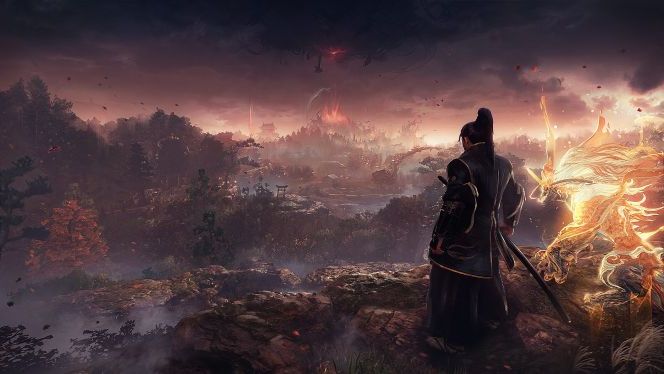
REVIEW – Nioh 3 doesn’t just iterate on Team Ninja’s formula, it widens the entire playing field. An open-world structure, two distinct combat identities, and a deeper pile of systems make this feel like a more ambitious game than the first two entries. It’s still demanding, still obsessed with precision, and still built to punish sloppy decisions. But it also feels like a series that’s stopped borrowing labels and started writing its own.
Calling Nioh 3 a “Souls clone” is getting harder by the hour. The difficulty curve and the discipline are familiar, sure, but the game stacks enough of its own mechanics on top that it lands closer to “Team Ninja’s action-RPG problem set” than anyone else’s template. When it clicks, it’s the kind of loop that eats evenings: explore a little, tweak your gear, test a new approach, get humbled, come back sharper.

Two Styles, One Open World
The headline change is the structure: Nioh 3 goes open world, and that alone reshapes how you approach everything. The other big swing is the ability to swap between two combat styles on the fly. The samurai side feels like a natural continuation of what Nioh 2 built, while the ninja style leans into a faster, more aggressive rhythm that’s closer in spirit to Ninja Gaiden 4. One minute you’re stalking, the next you’re exploding into a back attack, chaining flashy combos, and moving like you’re late for something important.
Ninja play also opens up a more tactical use of distance: smoke bombs, shuriken pressure, and quick repositioning that keeps fights moving. The open world itself stretches across different periods of Japanese history, which helps the game avoid feeling like one long samey hallway. There’s plenty to collect, plenty worth poking into, and yes, the exploration sometimes echoes Elden Ring for a reason: optional boss encounters are out there, and some of them are designed to test whether you’ve actually learned anything.
There’s also a faint metroidvania edge to the map design. Keys unlock additional areas, and certain segments demand specific abilities – wall running being a clear example. Even with the broader spaces, the level design still feels deliberate and crafted, not just “big because big.” None of this makes the game easy, though. Early on, regular enemies can feel shockingly tough, but as you explore, experiment with equipment, and settle into a build that suits you, you’ll eventually realize you’re cutting through walls that used to stop you cold.
Bosses remain the real checkpoints. There are plenty of them, and most will force you to adjust strategies that worked everywhere else. Element-based damage and environmental effects come into play, so preparation matters. The good news is you’re not helpless: special abilities (including transformations that enable elemental damage) and quick-use items give you real counterplay. You can also tackle the experience cooperatively, even with an AI partner if you don’t have a human teammate, and working together to break an enemy for a finishing execution can be genuinely satisfying.

Evolution
Send out player spirits to gather items or reveal points of interest, and the world can throw more encounters your way. Progression is also a playground. A weapon proficiency system tracks how comfortable you are with a given weapon, and it doesn’t take long to max it out. Level-ups improve stats, every weapon type has its own skill tree with unique moves, and using enemies’ hearts lets you summon them, adding another layer to how you shape your loadout.
You can spend an absurd amount of time tuning your character, and the game rewards that kind of tinkering because it always seems to have something to offer. Optional missions expand the story and, importantly, they’re varied enough to feel worthwhile. New weapons invite experimentation. The rhythm rarely feels like filler for filler’s sake – it’s busy, but it’s busy with intent.
That said, flaws exist. The open-world approach blunts some of the tight focus the first two games had, and while Nioh 3 is still challenging, it’s a bit more forgiving overall. Performance can dip in spots across platforms, and the camera can be clumsy in cramped environments, which chips away at the atmosphere and flow. None of it sinks the game, but you do feel the rough edges where ambition outpaced polish.
Worth the Money
If you like Souls-style action-RPGs, download the demo – because yes, there is one. If the demo lands for you, you already know what happens next. Nioh 3 earns a 9/10 not because it’s flawless, but because it feels like a confident new statement rather than a safe repeat. It isn’t trying to win by imitation, it’s building a lane that looks more and more like its own genre.
It might even be the action game of the year – and it’s only mid-February. That’s a dangerous claim this early, but Nioh 3 makes it hard not to say out loud.
-V-
Pros:
+ Multiple eras and a more varied world
+ Two genuinely different combat styles
+ Deep systems that support personal playstyles
Cons:
– Performance dips and a rough camera in tight spaces
– Overall a bit easier than the previous two entries
– The open-world structure occasionally drags the pacing and dulls some of the tight focus the earlier games had
Developer: Team Ninja
Publisher: Koei Tecmo
Release date: February 6, 2026
Genre: Action RPG
-Gergely Herpai “BadSector”-
Nioh 3
Gameplay - 8.4
Graphics - 8.9
Story - 9.1
Music/audio - 9.4
Ambiance - 9
9
EXCELLENT
The series keeps getting better. But maybe, just maybe, it would be smart to stop at the peak.








![The Alighieri Circle: Dante’s Bloodline: A Divine Drama Amid September’s Flood of Games [VIDEO]](https://thegeek.games/wp-content/uploads/2026/08/theGeek-Alighieri-Circle-1280x720-1-302x180.jpg)
![Clive Barker’s Hellraiser: Revival Is Already in the Works for the Nintendo Switch 2! [VIDEO]](https://thegeek.games/wp-content/uploads/2026/08/theGeek-Hellraiser-Revival-1280x720-1-302x180.jpg)
![Head to the Pondverse in The James Pond Legacy: The Pond Is Not Enough [VIDEO]](https://thegeek.games/wp-content/uploads/2026/08/theGeek-James-Pond-Legacy-1280x720-1-302x180.jpg)




Leave a Reply