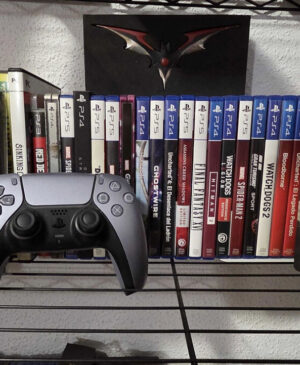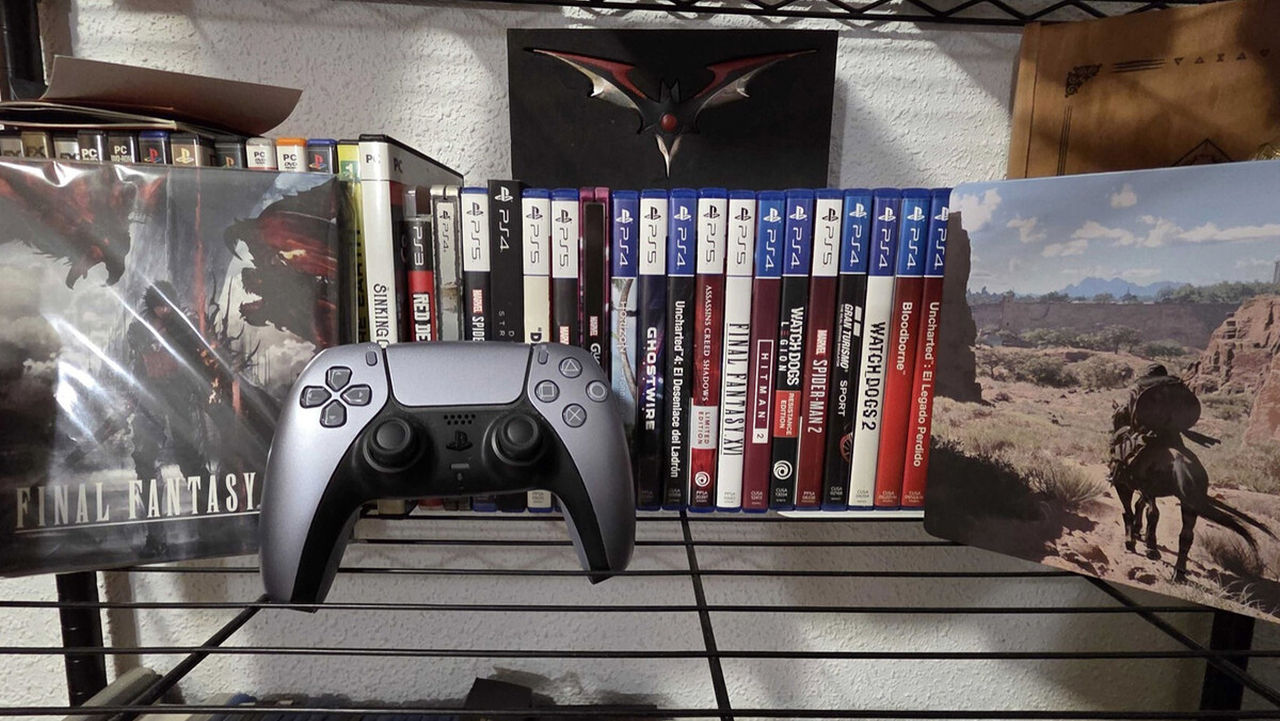
Sony’s plan to phase out physical PlayStation 5 game discs by January 2028 has grown into far more than a dispute with angry players. A Dutch consumer organization has launched a $457 million lawsuit, arguing that the disappearance of physical alternatives could give Sony even greater control over game pricing. According to one expert, the company may also be dismantling the very legal argument it previously used to defend itself against monopoly allegations.
Sony’s proposed phaseout of physical PlayStation 5 discs has quickly moved from a public-relations controversy into a major legal dispute. Dutch consumer organization Stichting Massaschade & Consument filed the case on behalf of approximately 1.7 million PlayStation users in the Netherlands and is seeking the equivalent of $457 million. At the center of the complaint is the 30% commission applied to digital sales through the PlayStation Store. The organization argues that prices could rise once physical competition is removed from the market.
The lawsuit arrived after Sony had already faced an unusually hostile response from parts of its audience. Thousands of players filled the relevant PlayStation Blog post with criticism, disappointment and threats to abandon the brand. Their concerns extend beyond collectible boxes or the sentimental appeal of owning a disc: removing physical games could also eliminate the second-hand market, taking away the ability to buy cheaper copies or recover part of a purchase price by reselling a finished game.
Eliminating Discs Could Undermine Sony’s Own Legal Defense
The increased level of control created by an all-digital ecosystem may make the strategy legally riskier than Sony anticipated. Andrew Ching, marketing chair at the Johns Hopkins Carey Business School, told Fortune that the 30% commission often described as the “Sony tax” applies specifically to digital software sold through the PlayStation Store.
Physical retailers operate under a different model. They pay Sony a lower fixed royalty based on the number of copies manufactured rather than the number ultimately sold to customers. Retailers can then compete on price, discount excess stock and sell games through a market in which the value of older copies naturally declines. Used games introduce another layer of competition because the same disc can return to the market without generating a new full-price sale.
Sony has previously relied on the existence of these alternatives when responding to antitrust accusations. Retail stores, physical releases and second-hand transactions could all be presented as evidence that the company did not exercise exclusive control over the distribution of PlayStation games.
“By phasing out physical discs, Sony essentially destroys its own defense,” Ching argued.
Once discs disappear, price-sensitive consumers would lose several escape routes at the same time. They could no longer compare competing retailers, search for inexpensive used copies or sell games they no longer wanted. The official digital store would become the only straightforward marketplace within the PlayStation ecosystem, leaving customers dependent on the prices and commercial conditions established there.
The Backlash Sony Did Not Fully Price In
Sony has presented the transition as a response to changing consumer behavior. Roughly 85% of PlayStation software sales are already digital, but that figure also leaves a remaining 15% of buyers who continue to choose physical editions. Ching considers that group too large to dismiss as irrelevant.
From a purely economic perspective, the attraction of abandoning discs is easy to understand. Manufacturing, packaging, transporting and distributing physical products all create costs that do not exist in the same form with digital downloads. The response from players, however, demonstrates that the value of physical ownership is not limited to nostalgia or shelf space.
Resale directly changes the effective cost of a game. Someone who pays $60 for a new release and later sells or trades it for approximately $20 has effectively spent $40 on the experience. In a closed digital system, that residual value disappears. The license remains attached to the account, cannot normally be transferred to another player and gives the buyer no way to recover part of the original expense.
Removing that option could reduce the amount consumers are willing to pay. Some may move to another platform, while others may simply buy fewer full-price games or wait for major digital discounts. The disappearance of physical sales therefore does not guarantee that every former disc purchase will automatically become a new digital transaction.
Alinea Analytics analyst Rhys Elliott noted that value generated by resale and rental currently flows to consumers and retailers rather than to the platform holder. Without discs, Sony would face two possible outcomes: a player purchases a new digital copy, or the transaction never happens. From the company’s perspective, either result may be preferable to a strong second-hand market in which one copy changes owners repeatedly.
Ching’s earlier research nevertheless suggests that publishers may exaggerate the threat created by used games. Many customers place a premium on buying a release while it is still new, culturally relevant and surrounded by launch excitement. A cheaper second-hand copy appearing months later may therefore be a weaker substitute for a new game than publishers often assume.
The anger surrounding Sony’s plan is ultimately less about economic theory than about losing a familiar choice. Consumers had grown accustomed to deciding whether to buy new, buy used, trade a game in or keep it permanently, and taking away an established option can provoke a stronger reaction than a conventional price increase.
Xbox Has an Opening but Is Facing a Crisis of Its Own
In theory, Sony’s decision creates a rare opportunity for Microsoft. Ching believes Xbox could reassure consumers by making a clear commitment to physical gaming for the foreseeable future. Such a promise might strengthen loyalty among existing Xbox owners and attract PlayStation players who still value discs and resale rights.
The industry has already experienced the reverse situation. During the original Xbox One reveal in 2013, Microsoft proposed restrictions affecting used games and physical ownership, triggering intense opposition from its own audience. Sony responded by publicly emphasizing its continued support for discs and straightforward game sharing. The damage to Xbox was substantial, and the current controversy could become a mirror image of that moment.
Microsoft, however, is dealing with major problems of its own. During the same week in which Sony appeared to create an opening for its rival, Xbox announced the largest restructuring in the division’s history. Approximately 3,200 positions, representing around 20% of the workforce, are affected, while four studios are also set to be spun off.
Xbox CEO Asha Sharma told Fortune that the company pursued too many different growth strategies and ultimately “spread ourselves too thin.” Gaming revenue declined, while Xbox hardware revenue fell by 33%. Sharma also described operating margins as three to ten times lower than those of comparable businesses, despite more than $20 billion being invested in content and hardware during the previous five years.
Annual revenue still fell by nearly half a billion dollars.
PlayStation and Xbox remain direct competitors, but neither company is entering this confrontation from a position of complete strength. It remains unclear whether Sony’s disc strategy will become Microsoft’s major opportunity or whether Xbox will be too occupied with restructuring its own business to capitalize on its rival’s mistake.
Neither Sony nor Microsoft responded to Fortune’s requests for comment.
The Era of the Finished Standalone Game May Also Be Fading
Ching views the decline of physical media as part of a broader transformation in the industry. Publishers connected to both PlayStation and Xbox increasingly rely on expansions, seasonal content and additional paid material for established successes instead of approving entirely new projects.
A modern high-budget game can require up to six years of development and hundreds of millions of dollars in investment. A DLC expansion attached to a proven hit is far less risky. The audience already exists, the underlying technology has been built and publishers can estimate demand with considerably greater confidence.
That security has a cost. Fewer resources may be directed toward original stories, unfamiliar worlds and experimental gameplay systems, while successful games remain active for longer periods as commercial platforms.
The change also affects how buying a game feels. Players increasingly describe the original purchase as an “entry fee” into a system that continues to offer expansions, passes and additional payments. This differs sharply from the traditional model in which someone bought a complete standalone work, finished it, experienced a sense of closure and then moved on to another game.
According to Ching, the satisfaction associated with completing a finished product is gradually being displaced by an open-ended model built around continuous additions and recurring spending.
Source: Fortune